Village Gardens Cultivates Community

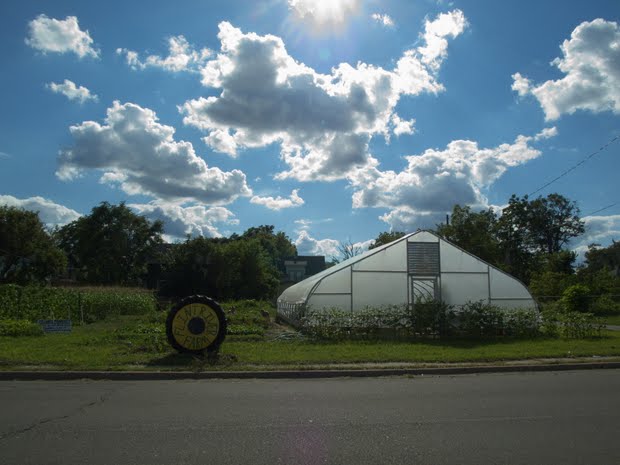
Village Gardens saved my life,” Helen Nash exclaimed at the nonprofit’s recent 10th anniversary celebration in the St. Johns neighborhood of Portland. What started off as a simple community garden has grown to affect countless people like Helen with a youth-run organic farm, garden programs for kids, a livestock committee, community health workshops, and a healthy corner store.
b
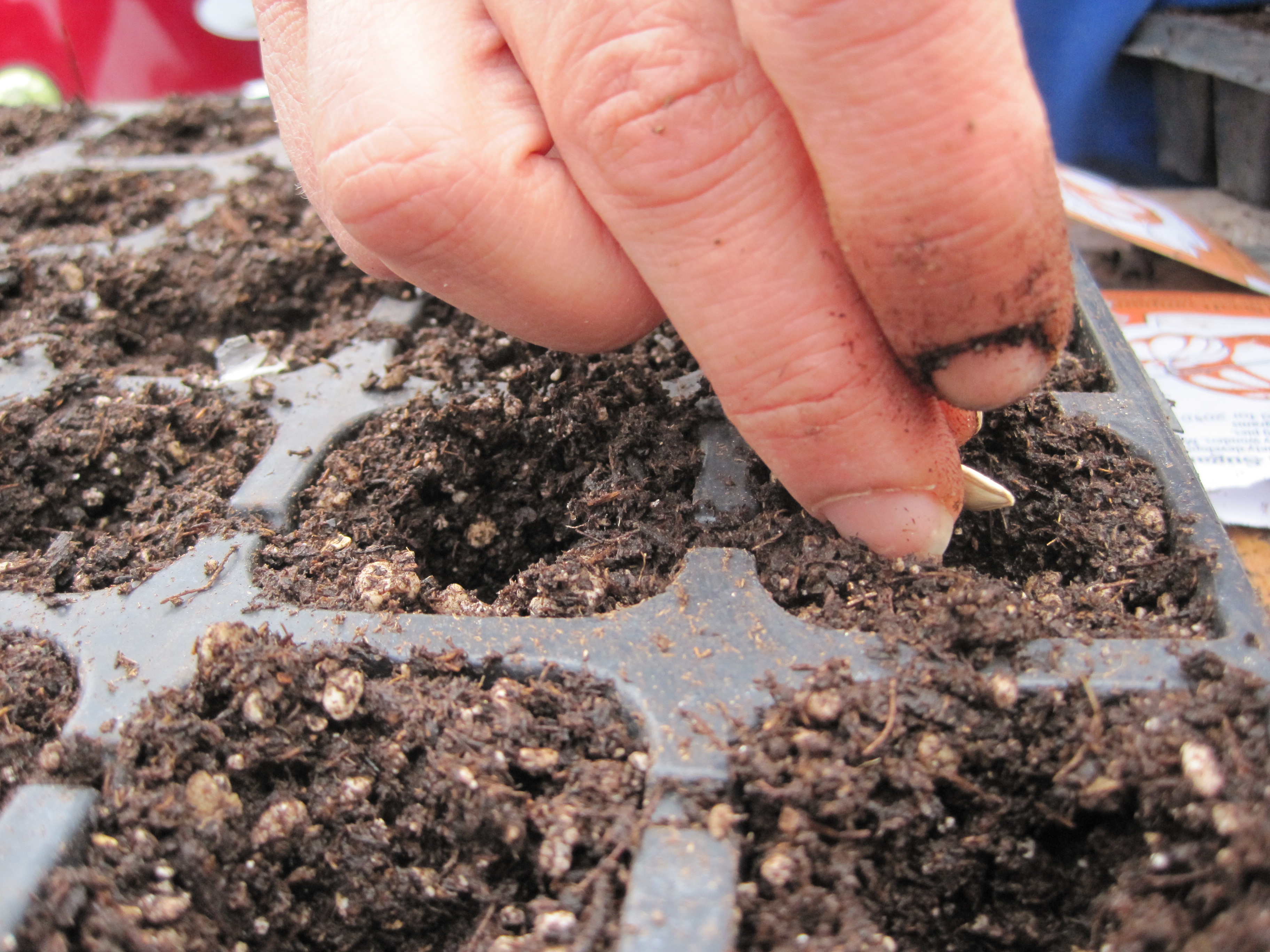
One of the most notable projects, Food Works, uses an urban farm to teach young adults from ages 14-21 about farming, business, community, and themselves. The youth operate a 2.5-acre certified organic farm on Sauvie Island where they grow over 40 different types of vegetables. In this past year alone, they produced 12,919 pounds of food. They sold their produce at the Village Market, New Seasons, the St. Johns Farmers Market, and the Portland State University Farmers Market, bringing in a total of $14,000.
b
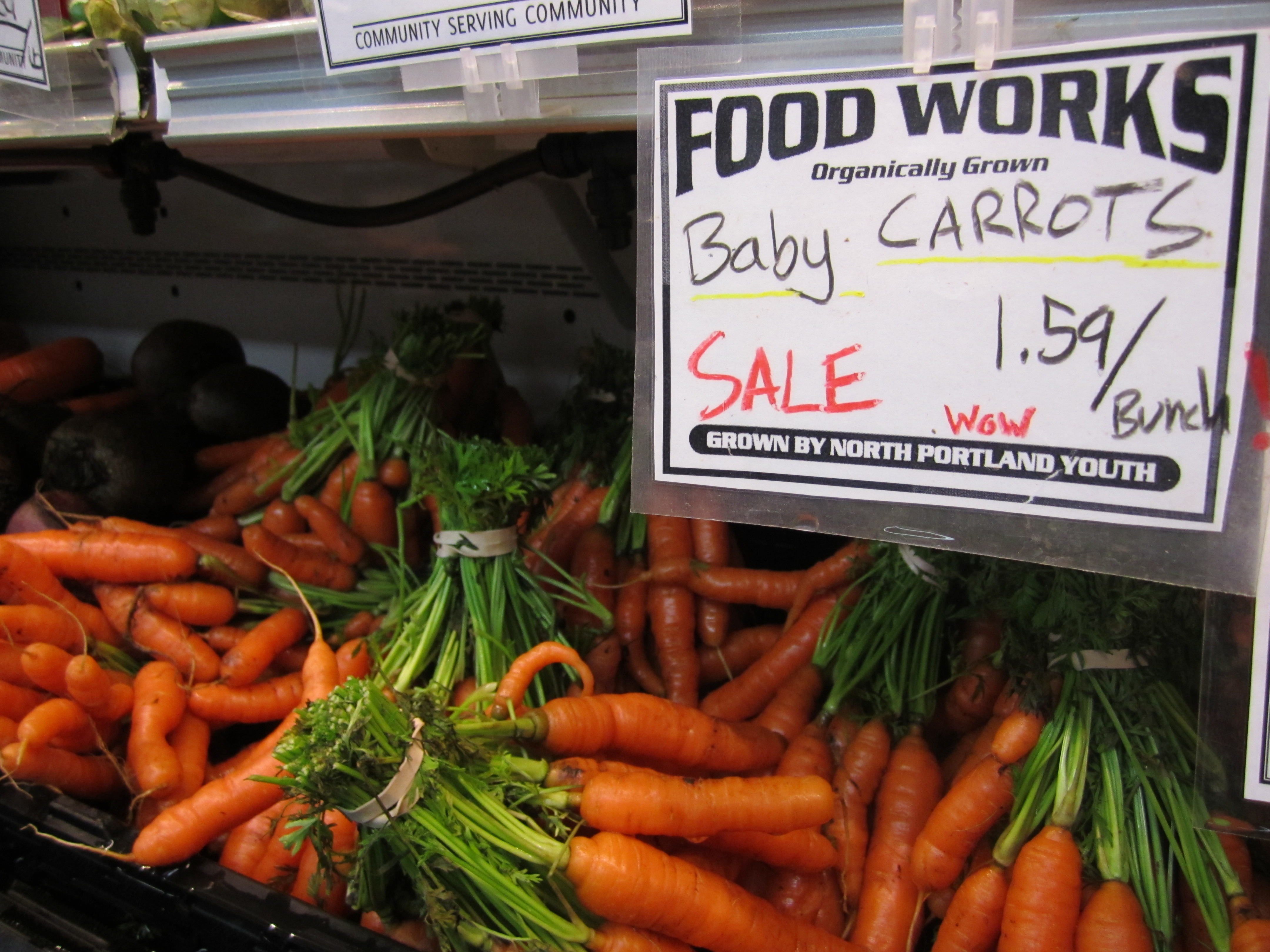
While those statistics are impressive, they don’t account for the immeasurable impact this program has on its young participants and their community. The Food Works youth tirelessly give their time, energy, and carefully cultivated produce to their neighbors. They package oats, beans, and rice at the Oregon Food Bank, volunteer at the community gardens, and pass out fresh vegetables (for free!) every Thursday.
b
The participants learn many job skills, including time management, communication, and leadership. In fact, I watched firsthand as the Food Works youth gained public-speaking experience during their presentation at the 10th anniversary celebration of Village Gardens. These young adults also learn a great deal about nutrition. They learn how to grow fresh vegetables and how to cook them, and in turn, they share these healthy habits with their families and friends, creating a strong, healthy community.
b
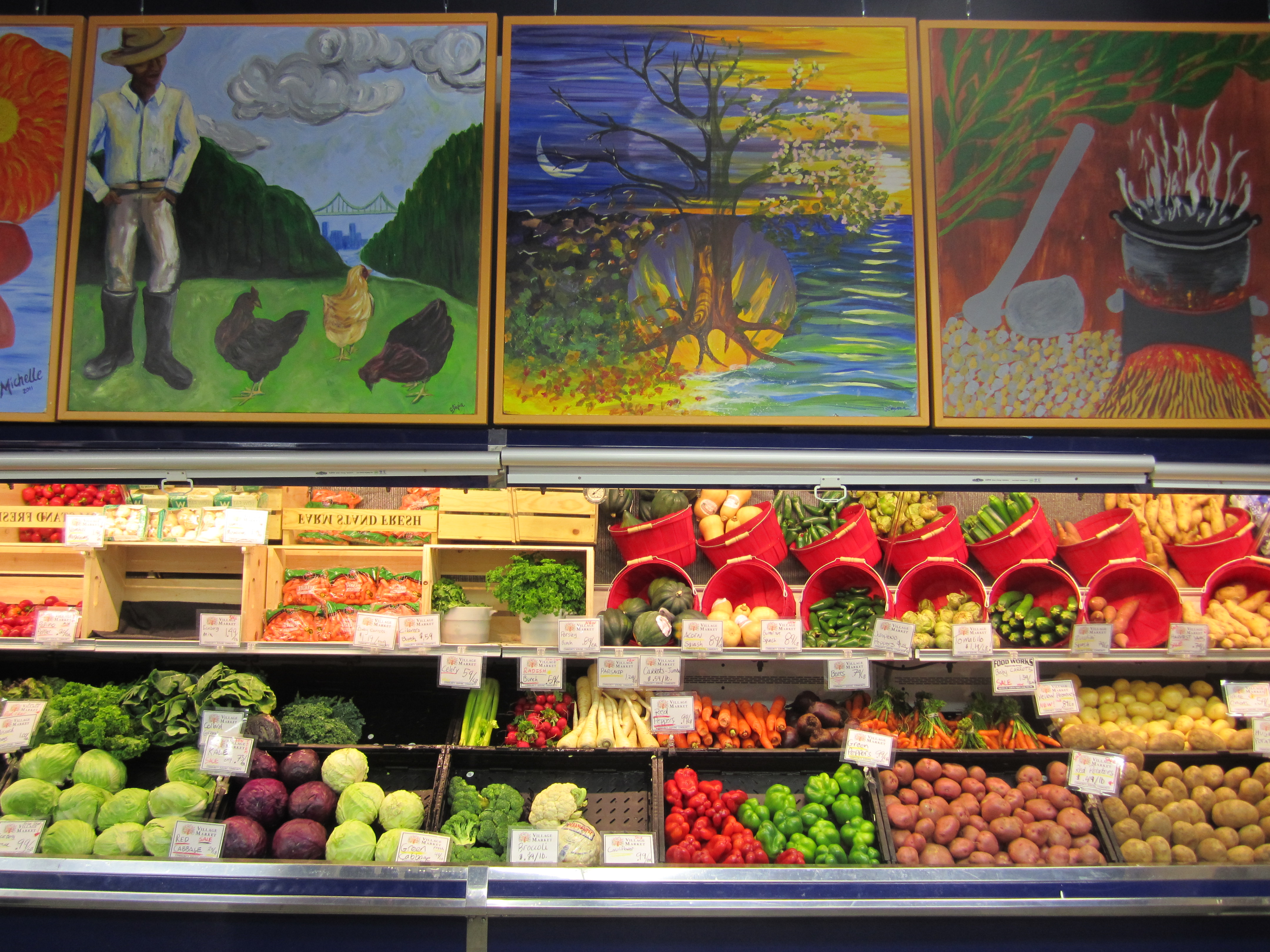
The newest installment of the Village Gardens program—the Village Market—offers a consistent outlet for Food Works produce. The market is a “healthy corner store project” that aims to bring fresh produce to the New Columbia neighborhood of North Portland where healthy food is rather inaccessible to its diverse residents.
b
Instead of selling chips, soda, alcohol, and tobacco, the Village Market is a convenient, affordable corner store that offers meats, produce, dairy, and bread. The store also includes a small deli and selection of grab-and-go foods that provide a healthy alternative to fast food meals. The Village Market makes the most convenient option also the healthiest—it’s brilliant!
b
In addition to cultivating physical health, the Village Market also strengthens the health of the New Columbia, Tamaracks, and St. Johns Woods communities. The store is completely run by residents of these neighborhoods, and the staff boasts some of the friendliest people around.
b
I am fortunate enough to live three short blocks from the market, and I can personally attest to this claim. Often, I find myself buying one or two items at a time to ensure that my visits to the store will be frequent. I also make it a point to purchase my bus tickets at the Village Market, even when my wallet is stuffed with one-dollar bills. These decisions all come down to one thing: the people. Sure, affordable, fresh food is enough to bring a smile to my face, but it’s the people who work here that keep me smiling even after I walk out the door.
b
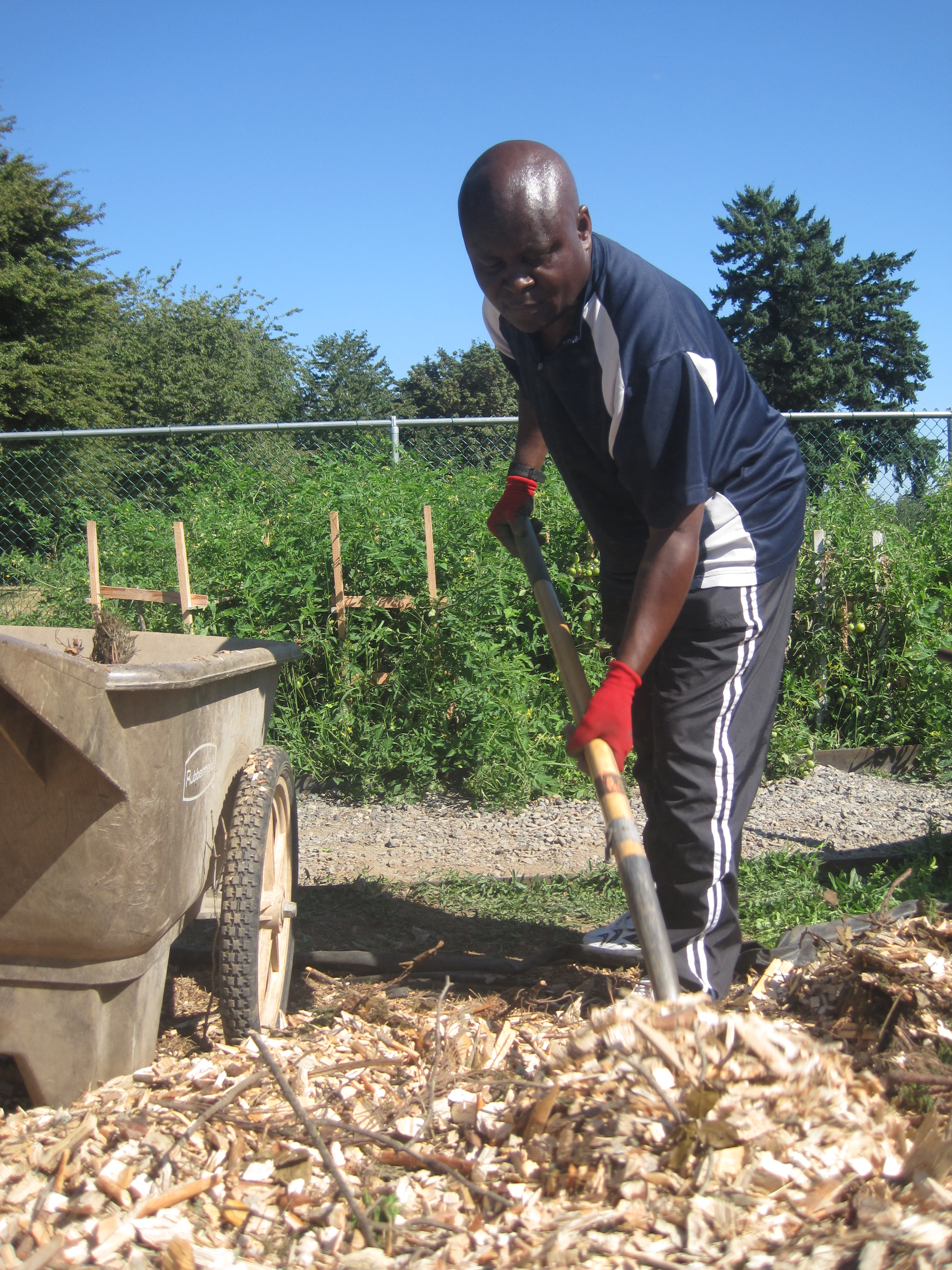
Village Gardens has done amazing work over the past ten years, from Food Works to the Village Market and beyond. Helen Nash explained, “It’s not just a garden,” and as I watched community members talk about foods they’ve grown, meals they’ve shared, and friendships they’ve formed, I began to understand what she meant. It’s not just a garden–it’s a family.
b
Gina Lorubbio
Fall 2011 Portland Fall Food Warrior
b
This post is from one of the interns in the Real Time Farms Food Warrior Fall Internship Program. These interns were in Asheville, Austin, Nashville, Portland and San Francisco, collecting data, pictures, and video on the growing practices of our nation’s farms, gathering food artisans’ stories, and documenting farmers markets. We all deserve to know where our food comes from! (Winter/Spring 2012 Interns will be blogging from Atlanta, Austin, the Bay Area, and throughout Hawaii soon!)
Posted in Food Warrior Interns | Tagged , , , , , , , | 2 Comments

Aw Snaps!

Check out our favorite photos from the past week – and then share your photos of a farm, food artisan or farmers market. You might be one of our favorites next week!

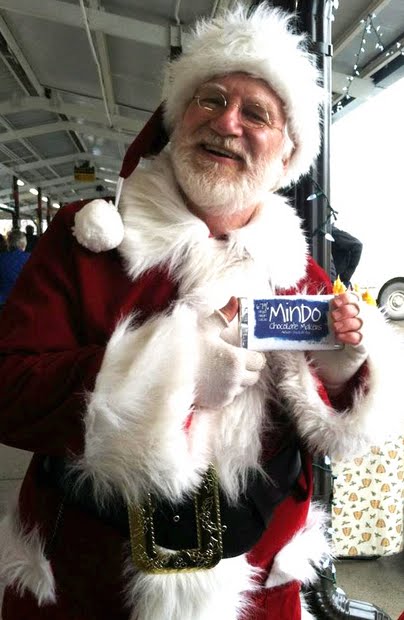
Mindo Chocolate Makers – Dexter, MI

Shetler’s Organic Produce – Homer, MI

Mill Pond Bread – Chelsea, MI

the girl & the fig farm project – Glen Ellen, CA

Tantré Farm – Chelsea, MI

Posted in Aw Snaps! (our best photos) | Tagged , , , , , | 1 Comment

Video Blog: Surfing Goat Dairy

b
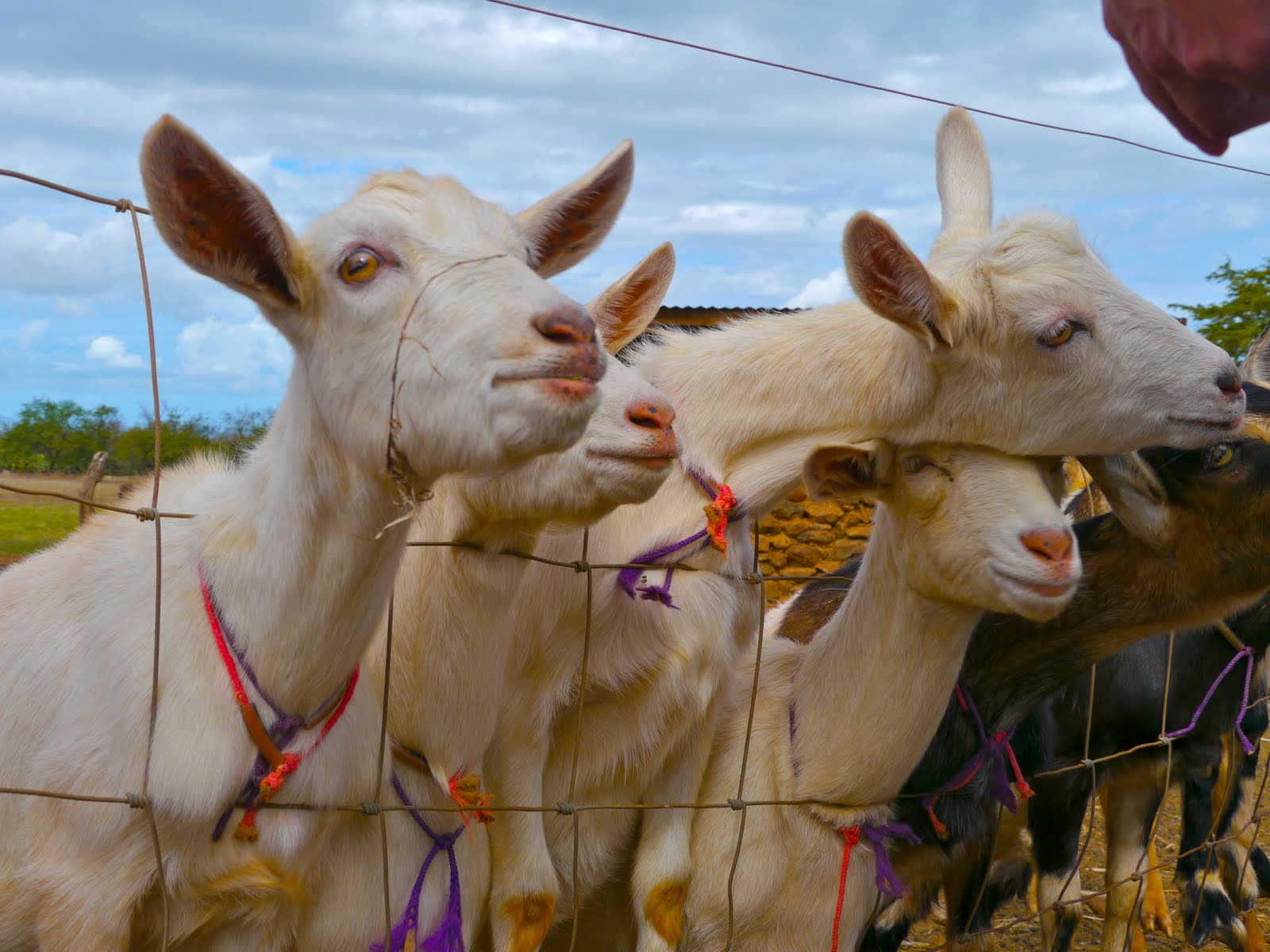
Weave down the slopes of Maui’s Haleakala Crater through shimmying palm trees and sugar cane, ecstatic in the wind, to acclaimed Surfing Goat Dairy. You may be surprised to find German expats Eva and Thomas Kafsack tending their goats and producing Certified Humane, gourmet cheese and chocolates on these 42 acres overlooking the sea. The Kafsack’s moved to Maui from the German Island Sylt in the North Sea over a decade ago. Sylt hosts a world competition for windsurfing, yet Maui’s world famous windsurfing tempted the adventurous duo to relocate.
b
The Kafsack’s make their artisan cheeses daily from freshly pumped milk. The Certified Humane production does not use growth hormones, antibiotics, preservatives or hidden ingredients. The pastures are organic. Surfing Goat cheeses have received eighteen awards in the past three years from various associations such as the American Dairy Goat Association and the American Cheese Society.
b

Carrie Stiles

Fall 2011 Portland Food Warrior

This post is from one of the interns in the Real Time Farms Food Warrior Fall Internship Program. These interns were in Asheville, Austin, Nashville, Portland and San Francisco, collecting data, pictures, and video on the growing practices of our nation’s farms, gathering food artisans’ stories, and documenting farmers markets. We all deserve to know where our food comes from! (Winter/Spring 2012 Interns will be blogging from Atlanta, Austin, the Bay Area, and throughout Hawaii soon!)
Posted in Food Warrior Interns, In the Pantry (food artisans) | Tagged , , , , | Leave a comment

Fall Food Warriors: A Force of Change

This slideshow requires JavaScript.

120 farms visited, 195 markets documented, 55 food artisans interviewed, 9,050 photos uploaded by Food Warriors so far. Here are some of the best photos from our fall interns, located in the Bay Area, Portland,  Nashville and North Carolina. Accepting winter applications until December 30th!

Stay Fresh,

Lindsay Partridge, Kernel Colonel: Food Warrior Program

Posted in Food Warrior Interns | Tagged , , , , , , , | 4 Comments

Aw Snaps!

Check out our favorite photos from the past week – and then share your photos of a farm, food artisan or farmers market. You might be one of our favorites next week!

Flint River Farm – Flint, MI

Mountain View Farm – Ellijay, GA

Clear Spring Creamery – Clear Spring, MD

Simple Gifts Farm – Addy, WA

McPhee’s Bees – Kauai, HI

Nonna’s Noodles – Tigard, OR

Cultivate – Kapaa, HI

Phillips Farm – Milford, NJ

Sogno Toscano – Italy

Posted in Aw Snaps! (our best photos) | Tagged , , , , , | Leave a comment

Ambacht Crafts Balanced Belgian Brews

Ambacht Brewery, located just outside the IPA-crazed city of Portland, is not ashamed to tell people they do not make an IPA. In fact, they consider it one of their main selling points.
b
Ambacht, which translates to “craft” in Flemish and Dutch, is a Belgian-inspired brewery that produces beers that are sweeter than the hoppy IPAs Portlanders are accustomed to. Partners Tom Kramer and Brandy Grobart decided, “We’re going to have to drink all of this beer, so we might as well make stuff we like.”
b
b
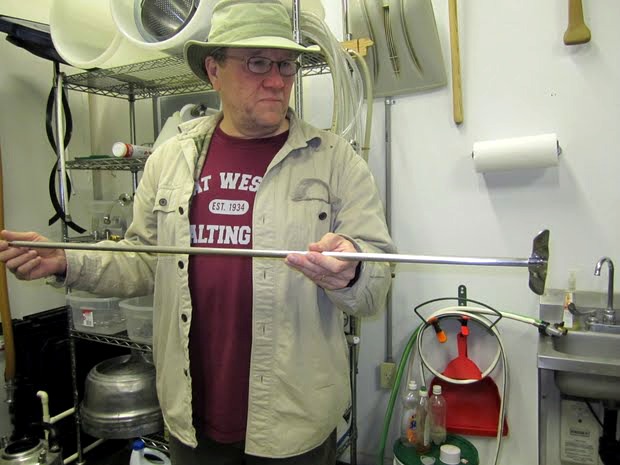
Tom laughs as he explains how he and Brandy bought the brewing equipment before they decided to open a brewery. Tom used to volunteer at Tuck’s Brewery, and when the space was turned into a synagogue, he bought the equipment from them. This was a bold move, considering neither partner had been in the business before.
b
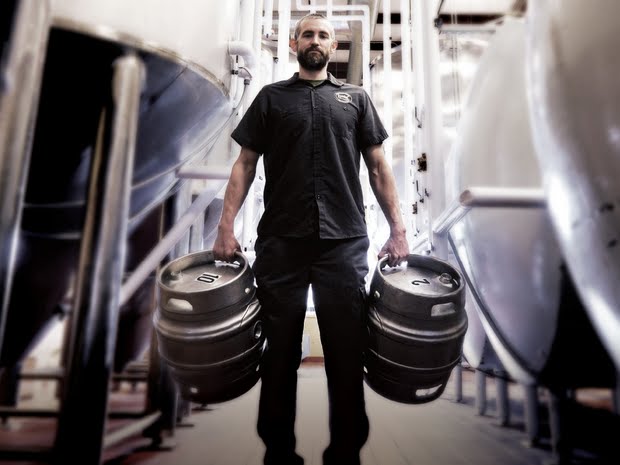
This transaction took place about five years ago, and the partners have been busy ever since. The equipment now resides in Ambacht’s cozy 1200 square foot brewery in Hillsboro, where the owners brew every three weeks (not everyday like larger operations).
b
b
The small brewery is dedicated to sourcing organic ingredients from local farmers. They use organic malts, buy honey directly from a local beekeeper, and drive down to Goschie Farms to pick up their hops. Goschie, like many other hops farmers in the region, used to sell to Budweiser. But after a Belgian company purchased the beer giant, “a lot of hops farmers had to tear out their vines,” Tom explains.
b
In supporting these local farmers by using their ingredients, Ambacht crafts dry beers that get a hint of sweetness from honey. Tom explains that their process “leaves flavors that make you think sweet—I call it virtual sweeteners.” This occurs because honey is 100% fermentable. At the end of the brewing process, there is not a lot of sugar that has not become alcohol. Hence, it makes you “think sweet” without actually containing an overwhelming amount of sugar.
b
The brewer tells us that most beers “would be sweeter than Coca-Cola without hops.” At Ambacht, they strive to achieve balanced beers without relying too heavily on the hops. Tom claims that people can suffer from “beer burnout” if they saturate their taste buds by drinking hoppy IPAs all the time. He wants Ambacht to be the beer people turn to when they need to give their taste buds a break. “That way, they don’t have to resort to Coors,” Tom jokes.
b
Currently, the Honey Triple is brewing, and it is scheduled to be ready next spring or summer. When I asked Tom if investing this kind of time (and money) into a process with uncertain results makes him nervous, he replied, “It’s not nerves, it’s more like, ‘How do I schedule this beer?’ and ‘I need more space!’” With the growth Tom and Brandy have experienced in the past year alone, more space might not be out of the question.
b
Gina Lorubbio
Fall 2011 Portland Fall Food Warrior
b
This post is from one of the interns in the Real Time Farms Food Warrior Fall Internship Program. These interns are in Asheville, Austin, Nashville, Portland and San Francisco, collecting data, pictures, and video on the growing practices of our nation’s farms, gathering food artisans’ stories, and documenting farmers markets. We all deserve to know where our food comes from!
Posted in Food Warrior Interns, In the Pantry (food artisans) | Tagged , , , , , , , | Leave a comment

Video Blog: Portland’s Burnside Brewing Co.

Learn more about Burnside Brewing Company on Real Time Farms!

Carrie Stiles

Fall 2011 Portland Food Warrior

This post is from one of the interns in the Real Time Farms Food Warrior Fall Internship Program. These interns are in Asheville, Austin, Nashville, Portland and San Francisco, collecting data, pictures, and video on the growing practices of our nation’s farms, gathering food artisans’ stories, and documenting farmers markets. We all deserve to know where our food comes from!

Posted in Food Warrior Interns, In the Pantry (food artisans) | Tagged , , , , , | Leave a comment

Aw Snaps!

Check out our favorite photos from the past week – and then share your photos of a farm, food artisan or farmers market. You might be one of our favorites next week!

Amantaia Farm – Breinigsville, PA

Surfing Goat Dairy – Kula, HI

Founders Brewing Company – Grand Rapids, MI

Mikuni Wild Harvest – New York, NY

Christensen Farm – McMinnville, OR

Posted in Aw Snaps! (our best photos) | Tagged , , , , , | Leave a comment

Savory Cakes for a Sweet Tooth

Hilary, of Food Lush, started developing her business at age 13 when she baked her first cheesecake for her own birthday. Her consummate skill in the kitchen had her friends encouraging her to explore cooking as a career option. Now Hilary does more than bake for herself, she bakes for a living. One year into running her own business, Hilary makes more than 16 dozen of her bite-sized cheesecakes a week.

Making cheesecake, exclusively cheesecake, might sound routine and prescriptive, but Hilary avoids the pitfalls of boredom in the kitchen by continually experimenting with new flavors. She’s even pioneered savory cheesecakes. Hilary pushes the limit of the palate with concoctions like Leek and Gorgonzola cheesecake, Maple Bacon, Roasted Red Pepper and Sun-dried Tomato Cheesecakes. You can also find more traditional cakes like Cardamom Cinnamon or Lemon Blueberry. But in one sense, her cheesecakes will never be traditional. They are all gluten-free (since Hilary is herself). Hilary also makes an effort to buy local and organic. At least 50% of her cakes, by weight, are local and organic. Her eggs are from weekly farmers market, the sugar beets from a farm in Washington. She buys Dagoba chocolate and Bob’s Red Mill flour mixes.

All the different potential flavors are vetted by a board of veteran tasters.  Hilary hosts tasting parties where she introduces her newest flavors to a group of friends and colleagues.   She’s never shy about showing a rough draft of a recipe. It’s hard to find a group of people who could overcome the divinity of a cheesecake and critique it, but she’s trained her friends to be honest and discerning.

And the unique flavor profiles? They come from a wellspring of internal inspiration, as well as from suggestions from friends, clients, and strangers. Her most recent addition to the annals of flavors is the Cinnamon Cardamom that was inspired by a stall-mate at a Farmers Market. She was tweaking the recipe when she gave us a tour of her home kitchen. Spoiler Alert! It was elegant and light and delicious.

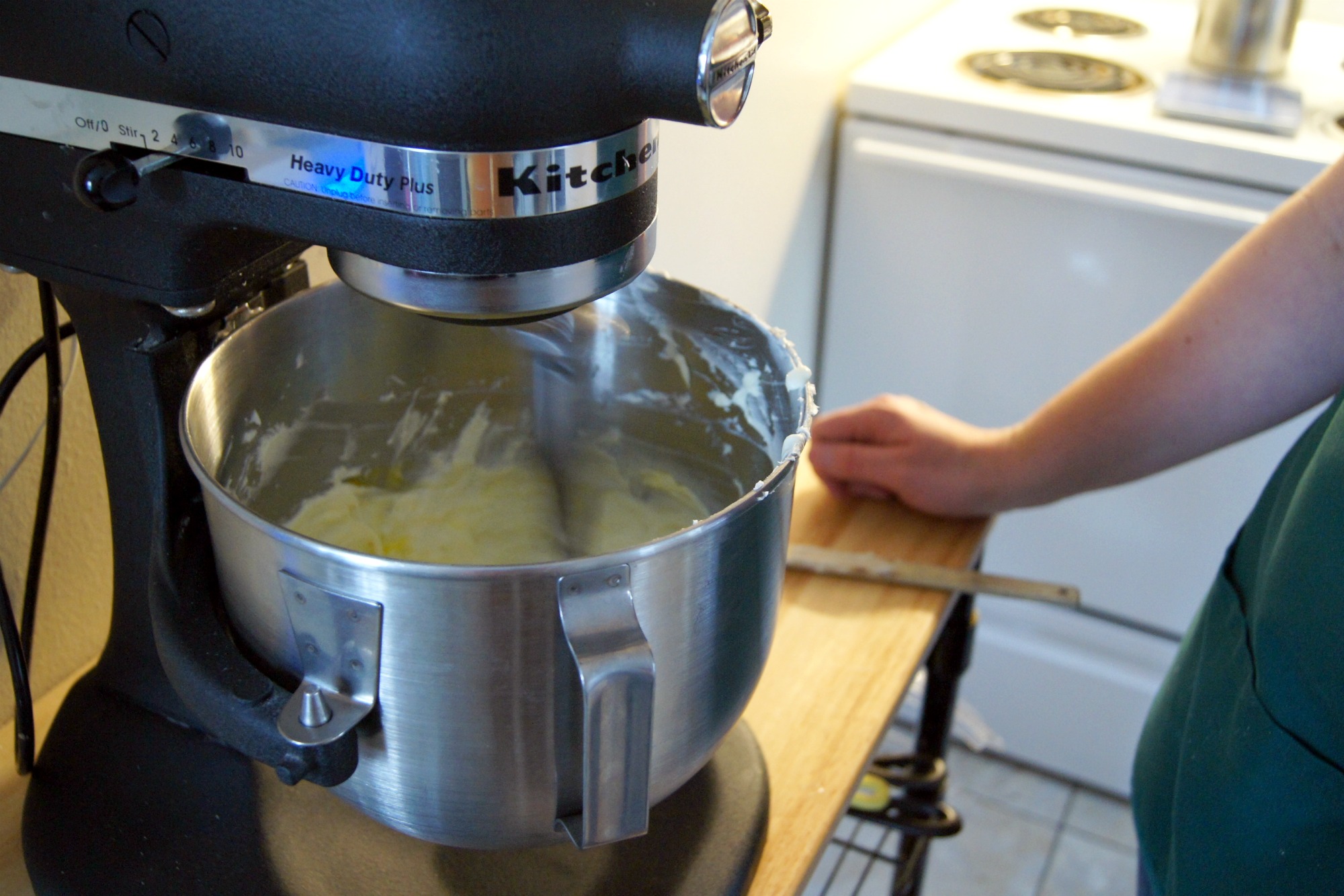
Even though her business is still young, she’s anticipating eventually having a storefront. Her home kitchen, which she certified recently for commercial cooking, is very small and forces her to exercise economy of space.  The kitchen suits her needs for now. In fact she shares her workspace with other food artisans; her friends and neighbors, the owners of Fatdog Mustard.

Even though an artisanal cheesecake business sounds like the baby of Portland, which has become synonymous with good food, Hilary still struggles. She keeps a part-time job, even though baking is a full-time job. She can’t count the hours she devotes to Food Lush. In her mind, they don’t always fall under the purview of work because it’s her passion.

Hilary has a hard time paying herself well. Like any artist she has to factor into the value of her goods the quality of her craft making. It’s hard to sell an artisan good in a market that doesn’t know its true value. She struggles to find the sweet spot, the point at which her art is valued, but not so exorbitantly priced that it becomes prohibitive. She’s currently taking a business seminar and what she is learning is that if you make a valuable product, you’ll find your niche market.

Good Grubbing

Ava Mikolavich

Fall 2011 Portland Food Warrior

This post is from one of the interns in the Real Time Farms Food Warrior Fall Internship Program. These interns are in Asheville, Austin, Nashville, Portland and San Francisco, collecting data, pictures, and video on the growing practices of our nation’s farms, gathering food artisans’ stories, and documenting farmers markets. We all deserve to know where our food comes from!

Posted in Food Warrior Interns, In the Pantry (food artisans) | Tagged , , , , , | Leave a comment

My Thanksgiving: Dedicated to Farmers and Animals Everywhere

Just a little warning: This post is about how turkeys end up on our tables. I chose not to include any really crazy pictures. But the writing may be graphic. It is honest, it is my experience, and I encourage you to read on.

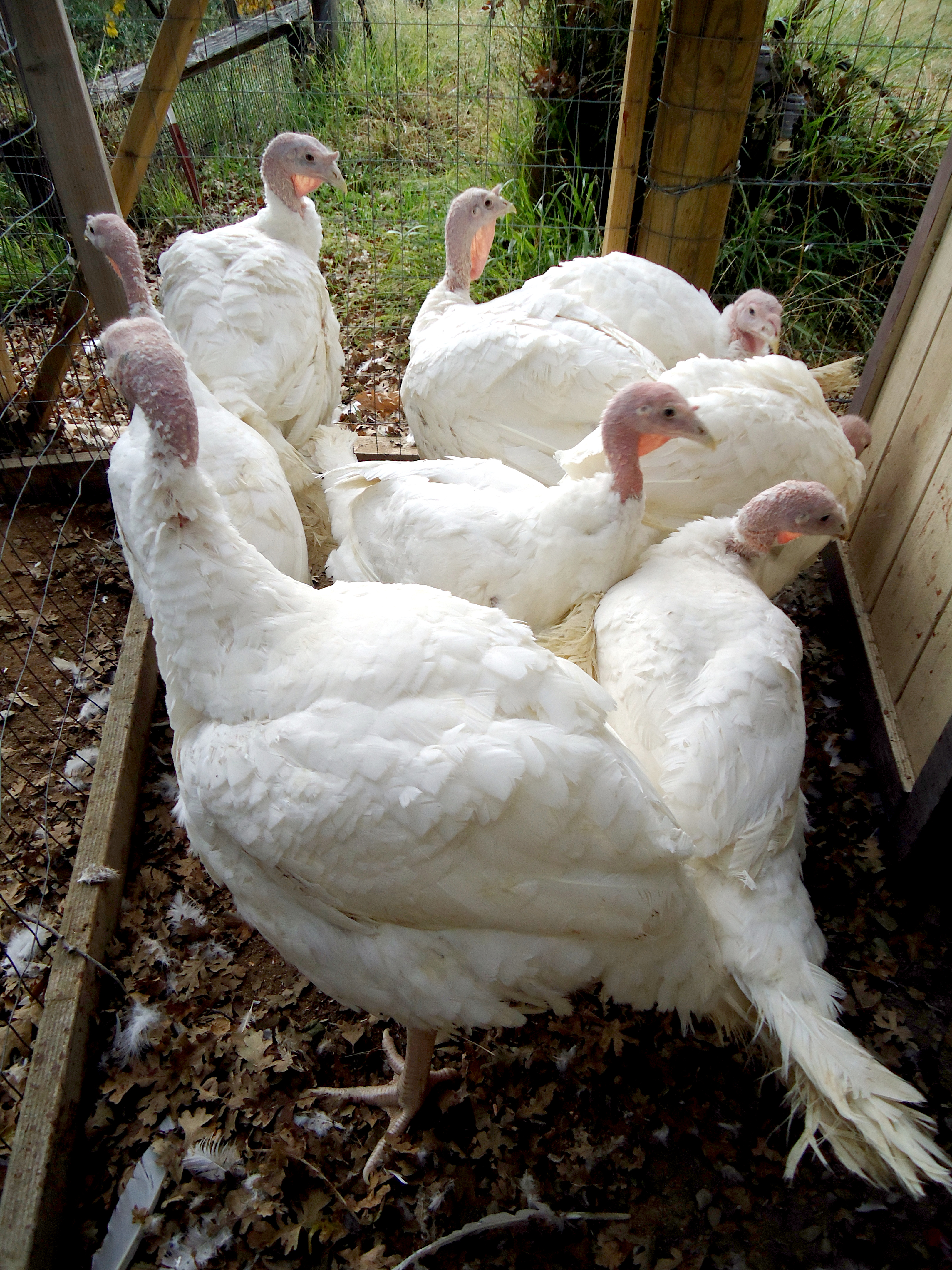
We are used to seeing turkeys in a few different ways,
blank

as fully feathered, breathing, blinking, gobble-gobble sound making creatures:


or (hopefully) roasted to golden perfection and dished up with the usual suspects.
blank
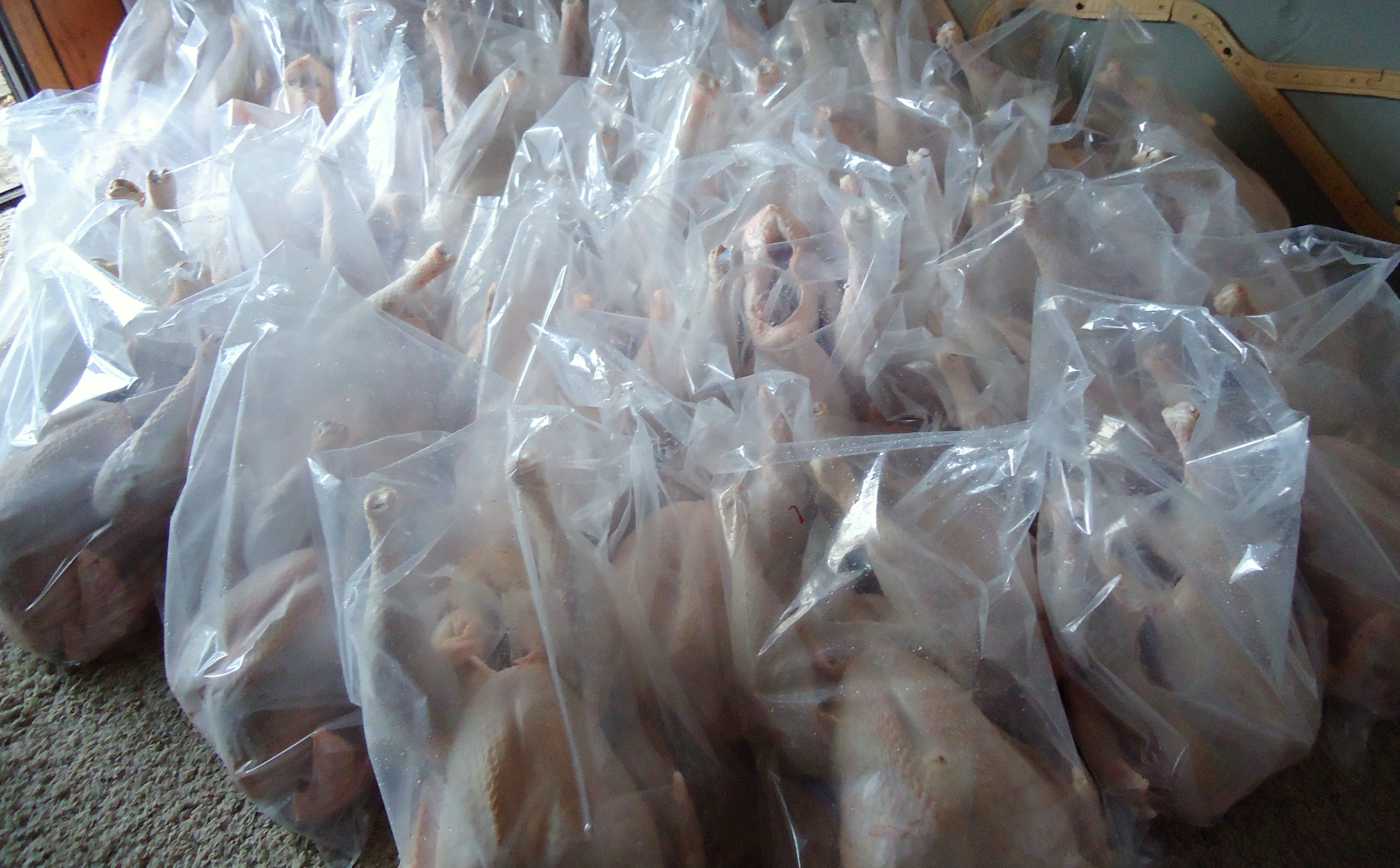
And if you’ve been in a supermarket, they’re nicely packaged, sometimes with a nice little picture of a farm stuck onto the form-fitting plastic.
b
I recently, unexpectedly, experienced turkeys in a way that gave me something else to be thankful for. On a beautiful Friday morning before Thanksgiving I set out to Pampero Longhorn Ranch in Sunol, CA with the intent to interview the farmers there, take some pictures of animals, y’know, what I’m s’posed to do.
b
Well nothing in my life goes as planned (cliché, I know), and all of a sudden I found myself forearm-deep in the cavity of a freshly slaughtered turkey scraping its ribs for lung tissue (not so cliché).
b
I drove up the steep driveway littered with wispy feathers. Above me people were already hard at work, having been at the ranch since 8 AM processing turkeys. From an exchange of e-mails I knew they would be doing this, and just figured, “OK, cool, I’ll snap some photos of the turkeys while they’re still alive and try not to get in anyone’s way.”
b

After taking a few shots of the turkeys I was offered a knife by one of the volunteers.

Ummmmmm…yeah.

Don’t get me wrong– I’m not a complete stranger to slaughter. My dad used to take me to goat farms to pick out a goat to slaughter, cut up, and prepare for party guests. I have only two distinct memories:

  • Being in a barn and peering between the pen’s wooden slats at goats jumping and wriggling out of a wrangler’s grasp
  • Watching a small stream of blood trickle towards my feet before I hopped over it, back and forth, outside of where my dad and other people were skinning and quartering the goats
I’m also not a vegetarian. I try to limit my meat intake to every few days, but I do eat meat. When at dim sum, I’ll order chicken feet. I order tripe in my pho and adore bacon wrapped hot dogs that vendors grill up outside of LA nightclubs. And don’t get my started with Korean BBQ.Disclaimers aside, I guess I wasn’t quite mentally prepared for what I was going to do.
b
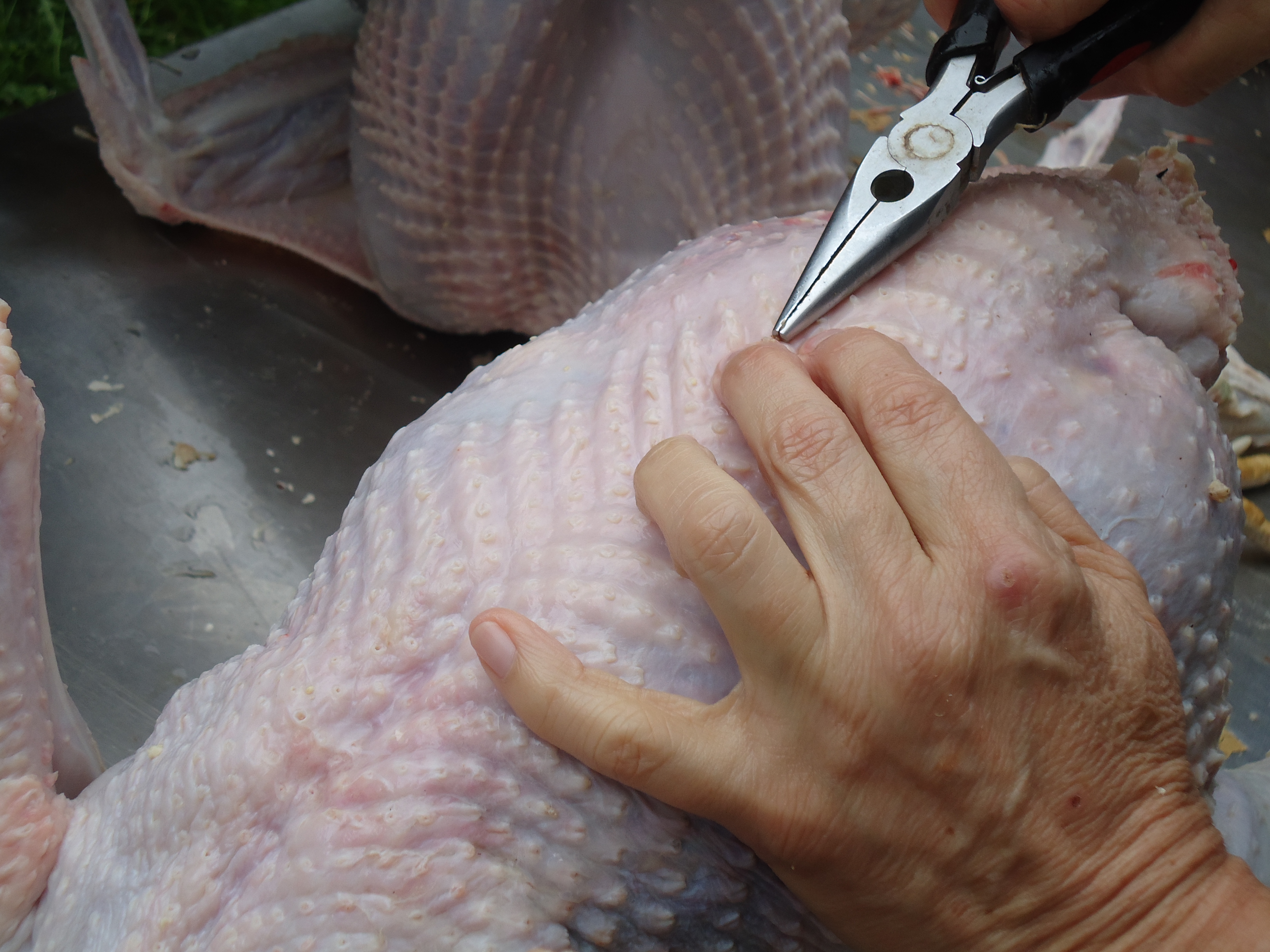
Pampero Ranch owners Jim Frei and his wife, Cynthia, have been hard at work with a dozen volunteers. The volunteers were made up of customers from the Mountain View Farmer’s Market who jumped at the chance to pick up their turkeys fresh from the farm (literally).  While some people pay upwards of a couple hundred dollars to take a poultry processing class, Jim was more than happy to teach at no charge as long as you were willing. The volunteers had divided into stations: killing, (initial) de-feathering, (scrutinized) de-feathering, then gutting. Minutes after I arrived I’m running my hands over the naked, mostly featherless body of a turkey. We’re making sure no feather shafts have been left embedded into their skins after the de-feathering machine. We picked and prodded at the pores like obsessed teenagers, and occasionally took a pair of pliers to the skin.

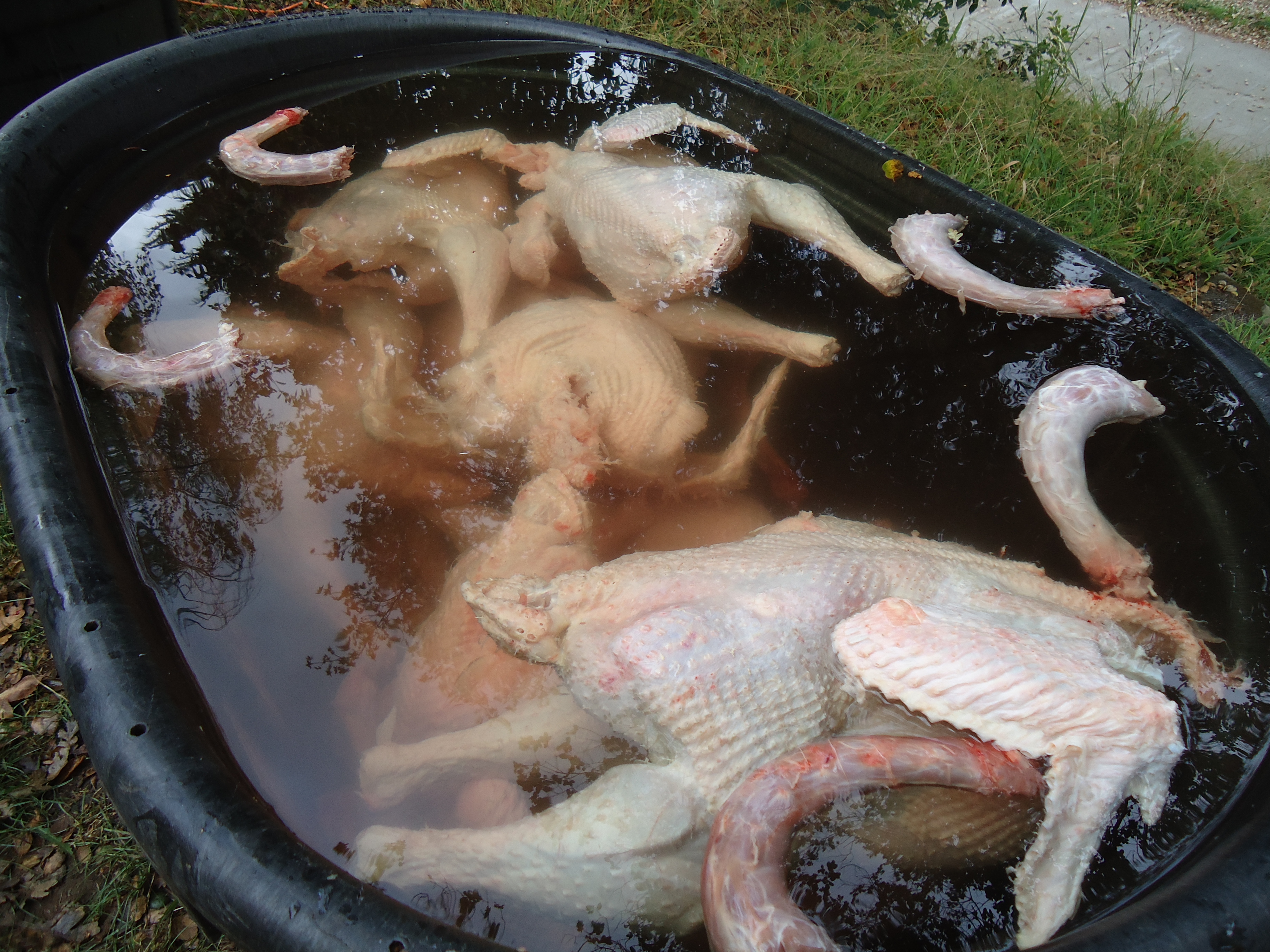
Before the turkeys came over to this station they had been initially de-feathered after slaughter. They were scalded in 150 degree water, and then put into a de-feathering machine, where most of the feathers were easily rubbed off.
b
After the turkeys were clean of feathers, they went over to be disemboweled. At this station we cut off the head, then removed the neck at the shoulders. The feet came off by breaking them at the joint, leaving the two familiar drumsticks that will be later fought over at the Thanksgiving table. It took me until my third turkey to get into a rhythm. The entire time you had to be separating organs from membrane, and the entrails came out pretty easily with a slight slurp. The oil gland, located at the base of the tail, was sliced off and discarded. As were the testicles and lung tissue, easily accessible after everything else was gone. After saving the neck, heart, liver, and giblets, the turkeys were washed, then bagged and weighed.

It took me until the last hour I was there to garner the courage to help at the kill station. The turkeys were grasped by the neck with one’s non-dominant hand, and the other took hold of the turkey’s feet. The turkey would then be hoisted underneath one’s arm in a move ironically dubbed the “turkey hug” before being placed face down into metal cone, which kept them from flapping. One person would then hold its legs down (this was my job) while another stretched its neck out, and cut the main artery right below its jaw. Only after a minute of bleeding out did they react, by kicking their strong legs. The experience was incredibly sobering, holding down the warm feet of such a beautiful animal as it kicked against you and writhed in the cone. Right beneath the bird, staining the dirt and leaves was its blood, mingling with the blood of the birds who had gone before it. I could say that this majestic bird died honorably, and that his expression conveyed to me understanding and acceptance, but that’s a sugarcoated lie. These are animals. This bird’s throat was just slit and his blood was dripping into his own eyes.

Shortly after the last of the turkeys were being processed, it began to rain. The volunteers began trickling home, myself included.
b
I drove through the green and golden hills that flanked nearby Fremont on my way home, absorbing everything I experienced. I thought about small farmers like Jim and Cynthia, who raise their animals with no antibiotics or hormones, who pay extra to feed their animals good food (not a diet heavy in corn and soy). They’re not in the business for profit, they just want to feed people real food. I thought about the work we did that morning and afternoon. What we did could probably have been done in an hour at a large processing plant.
b
The turkey is the crowning centerpiece of any Thanksgiving feast. Why are we so anxious to get the turkey just right, fiddling with different recipes and peeking into the oven every 15 minutes, when the bird cost us less than a dollar per pound to begin with? Grocery stores across the country offered deep discounts and promotional offers on turkeys (I heard of turkeys selling as cheap as $0.47 per pound) in hopes to make up the cost in Thanksgiving sides and ingredients.
b
Why don’t we pay top dollar to farmers like Jim and Cynthia, who guarantee that their pastured turkeys lived their lives under the sun, amongst the grass? They were fed well, and lived well– isn’t that what we try to do ourselves? (In respect to full disclosure, I ate a conventionally grown turkey on Thanksgiving).
b
The question I pose is by no means new, yet we continue to grapple with the ethics and financial cost of what we feed ourselves and our families. Yes, times are difficult. We’ll try and stretch our dollars, especially during the holidays. Its important to remember that we vote with our dollar every day.  While we try and save money, we may be throwing important votes away. These votes could feed not just our families, but the families of farmers.
b
Food politics aside, I unearthed a much deeper respect and gratitude for the farmers and animals that feed us.
b
And not just for the holiday season.
b
As you chop and slice you way into the holidays and beyond, I ask you to think of the hands that grew and fed your meal before it graced your plate. I encourage you to get to know your food, by connecting to those who know it best. Whether you’re stocking up last minute at the grocery store or at your local farmers market (where, I guarantee you there are no lines!), someone handled your meal before you did.
b
To the people dedicated to feeding others, and the animals destined to be our meals, Thank You.
b
Know Farms.
Know Food.
b
Charlotte
Fall 2011 Bay Area Food Warrior
b
This post is from one of the interns in the Real Time Farms Food Warrior Fall Internship Program. These interns are in Asheville, Austin, Nashville, Portland and San Francisco, collecting data, pictures, and video on the growing practices of our nation’s farms, gathering food artisans’ stories, and documenting farmers markets. We all deserve to know where our food comes from!
Posted in Food Warrior Interns, On the Farm | Tagged , , , , , , | 1 Comment