Real Time Farms speaks at TEDx

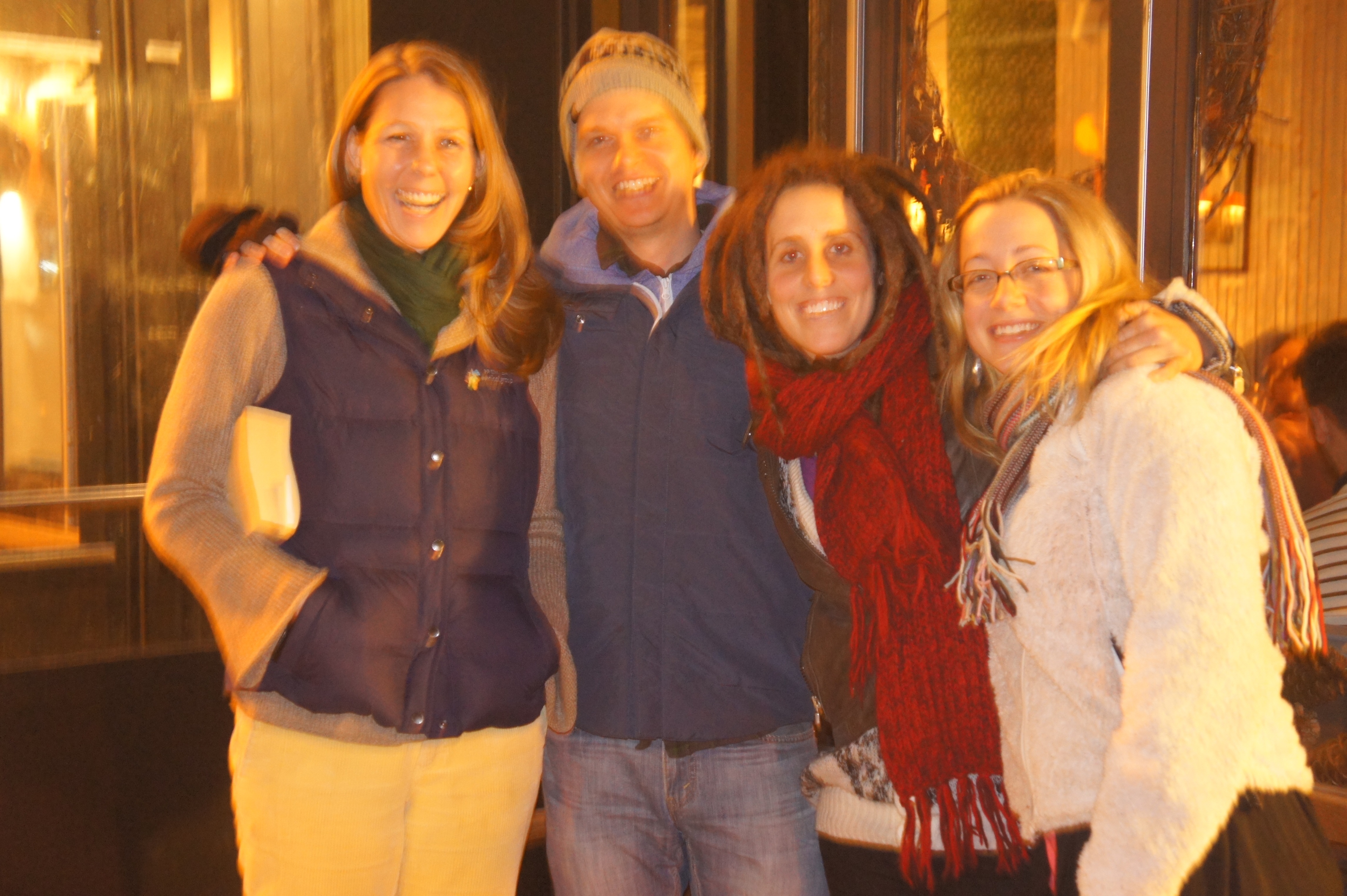
Corinna, Karl, Lindsay P, and Cara full of goodies from Northern Spy!

When Cara was invited to speak at TEDx Manhattan, we decided this was a chance for us all to explore the City together – and explore we did!

Wednesday night: One of our first restaurants to join us in New York City was Northern Spy. A brisk walk through the deepening dusk along Broadway and a lesson on NYC geography brought us to the bustling warmth of deliciousness. Beautifully presented, perfectly cooked – old favorites like the kale salad joisted for space with pear salad, roasted cauliflower, meatballs, and duck sausage. Bravissima!

Corinna and Erin Fairbanks jamming for Heritage Radio.

Thursday: Lindsay P and Corinna were interviewed on Heritage Radio’s the Farm Report by Erin Fairbanks (a former Ann Arborite herself). Check it out to learn what comestibles means and hear Lindsay wax eloquent about the Food Warriors (third group started yesterday!)

Then we all went to meet Amanda Hesser and Alex Lutz of Food52 to learn more about what they are doing and whether we can help each other out! You can use their Hotline to ask questions of cooking experts all over the country (Have a favorite recipe you want to use and your vegan cousin is visiting, they can help you!)

Karl, Cara, Amanda, Alex, Lindsay P., and Gaurav at our meeting with Food52.

Friday: Cara practiced the speech. Interviews were given – three interviews posted to date (more to come)! Read about us in the Vail Daily, With Respect for Food, and Grist. The team reveled in the view of the Hudson at Print (another great RTF restaurant) for the TEDx pre-party. Finally, as rosy fingered dawn began to think about stretching forth, we launched a whole new front page of the website! Bravo Karl and Gaurav!

Saturday: The talks for this years TEDx Manhattan (hopefully which will be posted online in less than a month) ran the full gambit. Dr. David Wallinga from the Institute for Agriculture and Trade Policy (IATP) shared with us that, “80% of the antibiotics in this country go into animal feed as a preventative.” Urvashi Rangan, Director of the Consumer Safety and Sustainability Group for Consumer Reports, beautifully explained the toothlessness and obfuscation endemic in labels and labeling. Wayne Pacelle, President and CEO of The Humane Society of the United States (HSUS), went directly to the contradiction in our society: “We have federal laws against dog fighting…but do we care about farm animals?”

All of the TedX speakers!!

Just when the heart, bludgeoned with pictures of concentrated feeding operations/chickens with combs the color of sandpaper (they should be dark red) and pierced with visions of antibiotic resistant superbugs, felt unable to pump on – stories of food angels bounced forth.

Howard Hinterthuer, Communications Coordinator at the Center for Veterans Issues – Wisconsin’s largest community-based veteran’s service organization and peer-to-peer mentor in CVI’s Organic Therapy Program, shared what they are doing. There was not a dry eye in the house as his talk concluded with a Vietnam Vet sharing, “this program has saved my life.” The Green Bronx Machine’s Stephen Ritz launched the room to a standing ovation with his energy and enthusiasm – his students have grown over 25,000 pounds of vegetables and learned to install indoor edible walls. Gary Oppenheimer, founder/executive director of the AmpleHarvest.org Campaign, has created an online platform for home gardeners to donate their harvest to local food pantries.

Cara graced the stage with poise and beauty at the Times Center

The first person to speak in the innovation category was Cara – and we think (in our own unbiased opinion) she was perfect. The Cyberworld has two favorite quotes. One from our friend Brandon Johns of the Grange, “We spend so much time researching a tv, but we’ll go and buy a chicken anywhere.” The other from our Fall 2011 Food Warrior, Callie Heron, “without transparency, we have no choice.”

Thank you New York for a wonderful few days!

Chopstick Crazed,

Corinna

Posted in At the Table (eateries), Messages From the Founders | Tagged , , , , , , , , , , , , , , , , , , , , | Leave a comment

Aw Snaps!

Bow Hill Blueberries – Bow, WA

Tuthilltown Spirits – Gardiner, NY

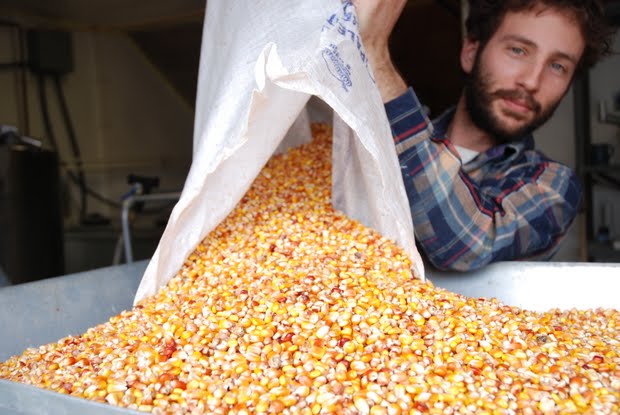
Steinhauser Farms – Ann Arbor, MI

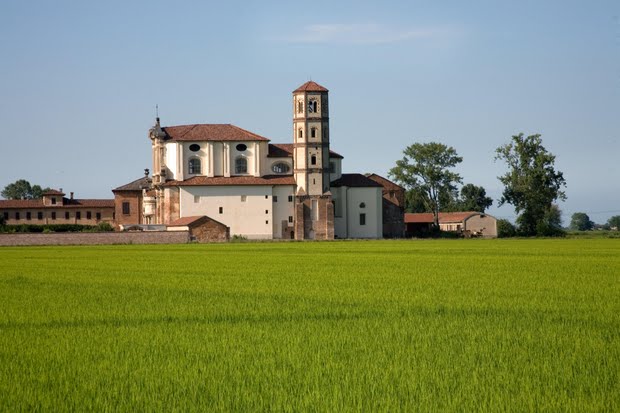
Principato di Lucedio – Milano, Italy

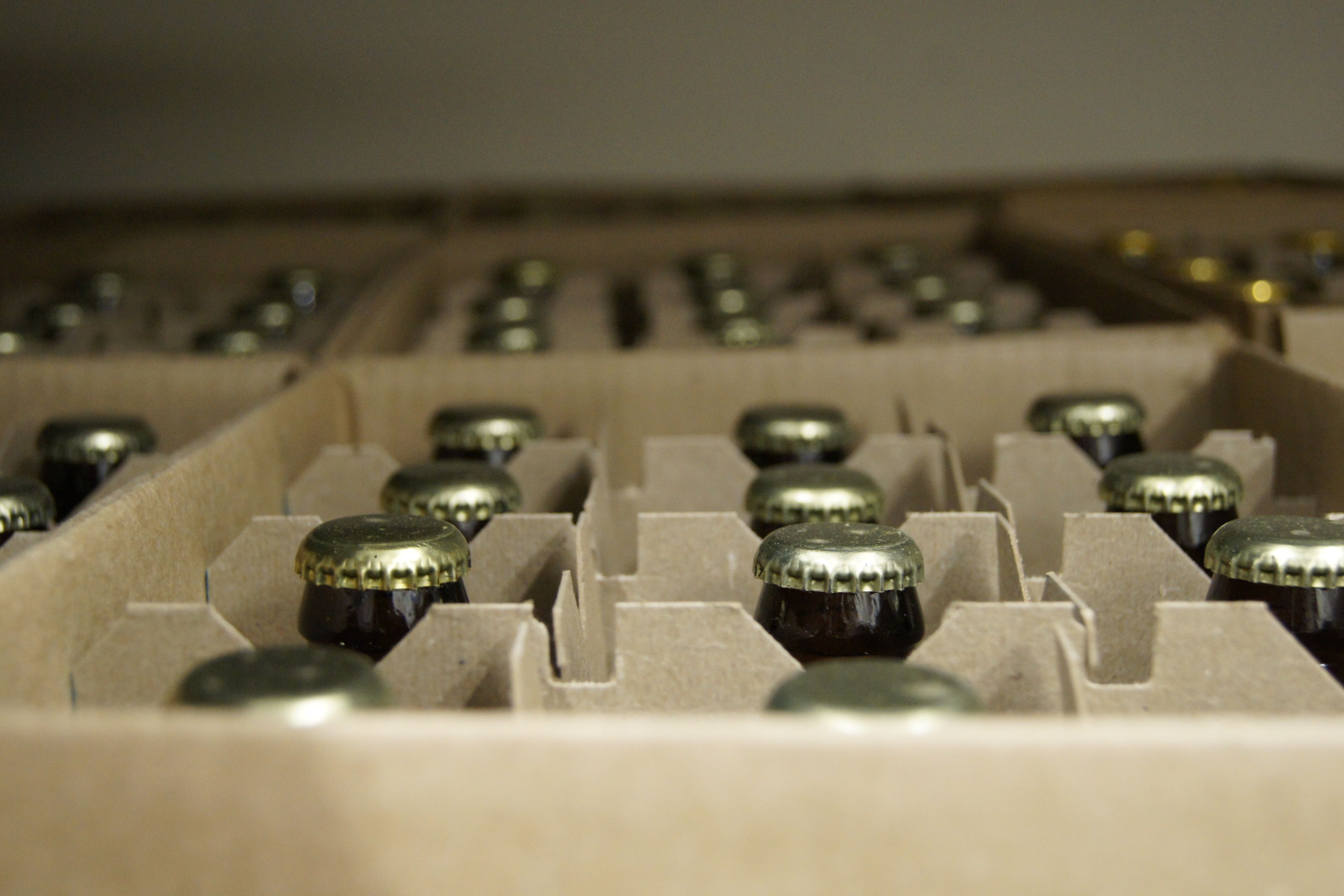
Summit Brewing Company – St. Paul, MN

Posted in Aw Snaps! (our best photos) | Tagged , , , , , , , , , , | Leave a comment

Grab Some Popcorn and Watch!

This Saturday’s TEDxManhattan event will be filled with inspiring talks on how to change the food system for the better, and we’re pretty excited that our Co-Founder Cara Rosaen will be giving one of these inspiring talks!

Don’t miss out on the fun! Find a viewing party near you or watch the live webcast  starting at 10:30am on Saturday, January 21st, 2012.

Posted in Messages From the Founders | Tagged , , , , , , | Leave a comment

Unbound Pickling: Making It Through the Brine

Jesse and Katie Hancock, owners of Unbound Pickling, know that there’s much more to pickling than cucumbers and brine. For them, this age-old method of food preservation presents a prime opportunity to experiment with unique flavors and bring something different to Portland’s crowded artisan market, all while turning their mutual love of food into a reliable career.
b
Jesse and Katie did not plunge into business unprepared. Knowing that they wanted to pursue a business in food, the couple began to wonder what would be both interesting for them and carry the real potential for success. They looked to the centers of American food culture – New York, San Francisco, and Portland – for ideas and found that the East Coast had something the West lacked: gourmet pickling.
b

The Hancocks set to learning how to bring pickling to an untouched market.  Though they knew a great deal about cooking, pickling required a whole different understanding of chemistry and flavor combinations. Even more challenging, they had to learn how to start a company, work as a business partners, and raise two children while doing it.
b
Jesse, with his eye for detail, spent a year researching how to start a business.  Meanwhile, he and Katie experimented with pickling.  Their product, they decided, would not adhere to traditional ideas about pickles. They would use pure juices rather than excessive sugar and salt. They would source local, fresh ingredients. And they would play with flavors, expanding on the classic pickled cucumber. Thus the name, Unbound Pickling – a company unafraid to be creative and unique.
b

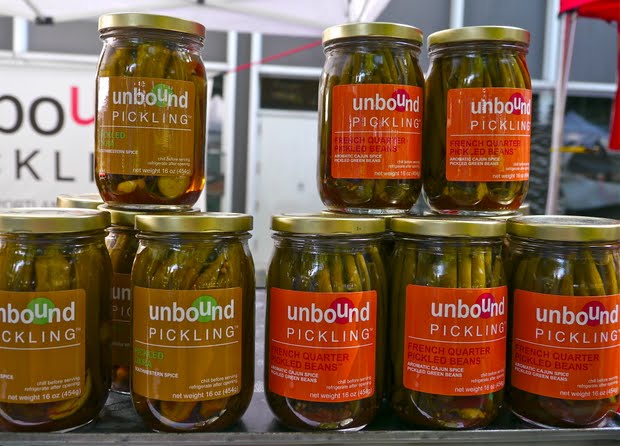
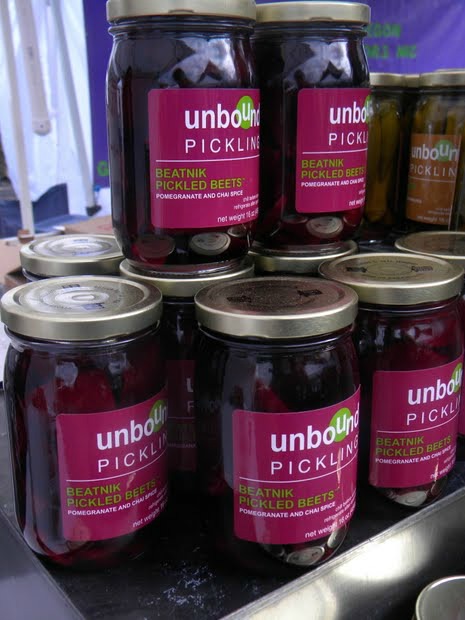
The flavors didn’t work out immediately. They had to try again and again, using a little more of this and a little more of that, with Jesse researching flavor combinations all along.  His focus on perfection paid off, and soon the pair was ready with pomegranate and chai spice beets, Cajun spice green beans, and more.  So they packed up their home in Washington and headed south to Portland, eager to put their dream in action.


Despite all of their planning, Jesse and Katie still ran into a few hiccups in the Rose City.  At first, they found it hard to communicate with farmers about their needs and crop availability, but they knew they didn’t want to buy their supplies from the grocery store. After a few seasons in the farmers markets, they now are familiar with the seasons and with the farmers.  They know they will buy their okra from Groundworks and their cucumbers from Fazzios.  In the markets, they formed relationships and began whittling their niche.
b
But for doors to really open, they needed something bigger.  They began selling at Food Front Co-op, but wanted to bring their pickles to a larger audience. So they took a risk, using all of their budget to attend the Fancy Food Show in San Francisco.  Then the industry knew they were serious.  Whole Foods signed them on to sell in Northwest stores, and Crate and Barrel sold their pickles nationwide for a year.  Then other stores around the country started stocking their goods.  Suddenly, Unbound Pickling had made it.
b
Katie and Jesse say they still want to move slowly, to expand gradually as they improve their product.  After all, they do absolutely everything on their own, from jar design to publicity to the actual pickling.  Jesse works at a separate corporate job and they have their children to take care of.  But, overall, they love food, they love each other, and they love their company.  With this passion, they can only continue to succeed.
b

Katie Woods
Fall 2011 Portland Food Warrior

This post is from one of the interns in the Real Time Farms Food Warrior Fall Internship Program. These interns were in Asheville, Austin, Nashville, Portland and San Francisco, collecting data, pictures, and video on the growing practices of our nation’s farms, gathering food artisans’ stories, and documenting farmers markets. We all deserve to know where our food comes from! (Winter/Spring 2012 Interns will be blogging from Atlanta, Austin, the Bay Area, and throughout Hawaii soon!)

Posted in Food Warrior Interns, In the Pantry (food artisans) | Tagged , , , , , , , | Leave a comment

Aw Snaps!

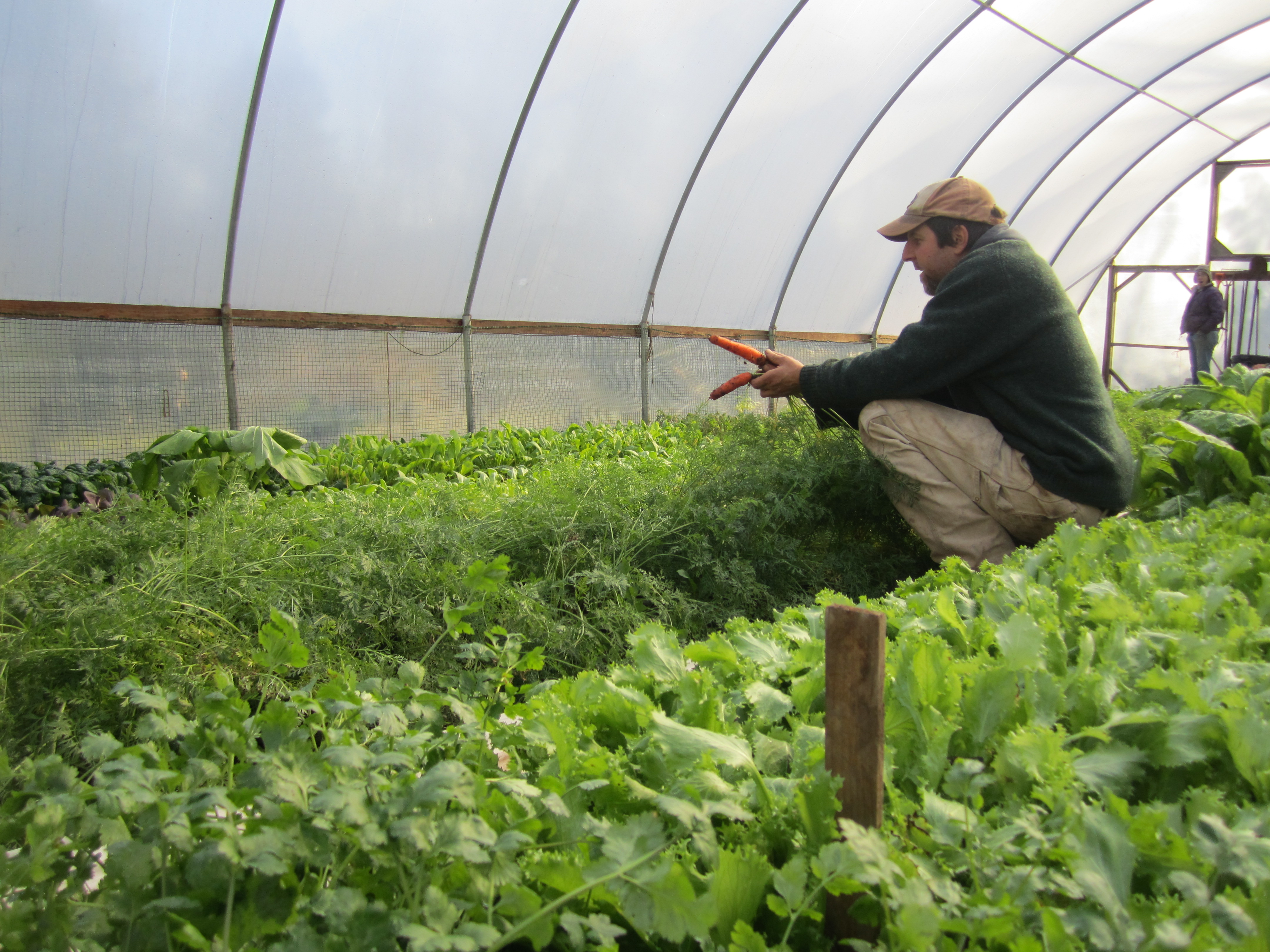
Open Sky Farm – Unadilla, NE

Quillisascut Farm – Rice, WA

Kinnikinnick Farm – Caledonia, IL

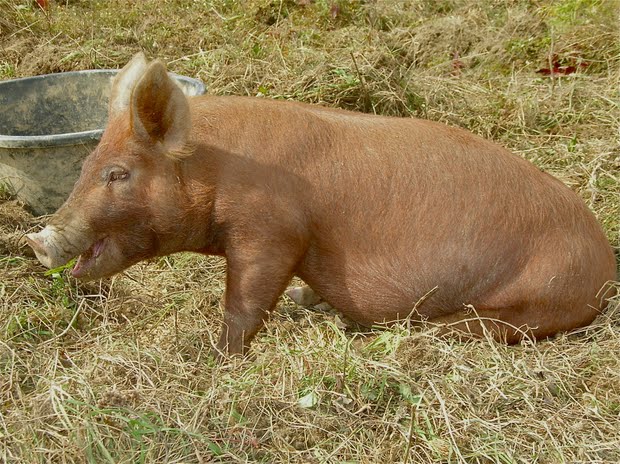
Walpole Valley Farms – Walpole, NH

Blue Moon Acres – Buckingham, PA and Pennington, NJ

Willowood Farm of Ebey’s Prairie – Coupeville, WA

Green Acres Farm – North Judson, IN

Posted in Aw Snaps! (our best photos) | Tagged , , , , , , , , , , | Leave a comment

Go Small or Go Home: Flying Onion Farm Proves That Smaller Can Be Better

“I never mowed a lawn until I was 22, and now, here I am,” says Mark as he stands in the middle of Flying Onion Farm, a small, diversified farm dotted with do-it-yourself projects. Together, owners Mark and Karen strive to be as resourceful as possible. From logging and building their own barn, to sourcing everything from ducks to greenhouses on Craigslist (Karen claims that Mark is a “Craigslist whiz”), the couple cuts costs and minimizes their impact on the land.
b

The two acres that they use to grow food are part of the 65-acre Mahonia Land Trust Conservancy just outside of Oregon City. This land, featuring rolling hills and picturesque views of Mt. Hood, is protected from careless development and aims to promote outdoor education, sustainable agriculture, and community. Of the 65 acres, 55 of them remain wooded.
b
When Mark and Karen spent their first year on Flying Onion Farm building infrastructure, they knew they had to be exceptionally mindful. Mark explains, “We tried to carve out a little niche without disturbing the land.” Their plans included the removal of several trees to make space for a new orchard and the construction of a barn. So, what was their solution? The couple cleared the wooded area for the orchard and used that same timber to build a barn 20 feet away.
b

This mindfulness carries over to their farming methods, as well. With more than 23 years of organic farming experience between the two of them, Mark and Karen are dedicated to farming in a manner that benefits the environment, as well as the eater. They try to work with—instead of fight—natural systems. For example, they let their small flock of ducks roam the land and eat slugs. It’s a simple act that satisfies the ducks and benefits the plants.
b
While their past farming experience taught them a lot about what to do, it also showed them what not to do. Mark laughs as he explains that working on a 65-acre farm taught him to stay small. The size of Flying Onion Farm gives the farmers the opportunity to “baby” their plants. “A lot rides on everything,” Mark says as he explains how you have to be more detail-oriented when you’re working on a farm of this nature. They take good care of the soil and aim to produce a few high-quality crops without a lot of waste.
b

“We like to think of ourselves as large scale gardeners,” Mark announces, but he quickly adds, “Ok, occasionally we use a tractor.” Mark and Karen like to keep things interesting by growing a wide range of vegetables and a few unusual varieties. They are currently growing a trial plot of overwintering cauliflower for a British seed company. Nobody knows how they will fare in this country, but we’re about to find out. Flying Onion Farm also grows more familiar crops like parsnips, Brussels sprouts, spinach, and carrots (I had the privilege of munching on one of these straight from the ground!).
b

As my visit came to a close, Mark and Karen searched their minds for any details they left out. After a bit of reflection, Mark summed up by saying, “We knew how we wanted to do things, what we wanted, and what we needed.” The two of them gave it a little more thought, and Karen suddenly looked at Mark with realization: “We did good!”
b
They certainly did.
b
Gina Lorubbio
Fall 2011 Portland Food Warrior
b
This post is from one of the interns in the Real Time Farms Food Warrior Fall Internship Program. These interns were in Asheville, Austin, Nashville, Portland and San Francisco, collecting data, pictures, and video on the growing practices of our nation’s farms, gathering food artisans’ stories, and documenting farmers markets. We all deserve to know where our food comes from! (Winter/Spring 2012 Interns will be blogging from Atlanta, Austin, the Bay Area, and throughout Hawaii soon!)
Posted in Food Warrior Interns, On the Farm | Tagged , , , , , | 2 Comments

Aw Snaps!

Check out our favorite photos from the past week (okay, the past couple of weeks, we were taking it easy for the holidays and hope you were too!) – and then share your photos of a farm, food artisan or farmers market. You might be one of our favorites next week!

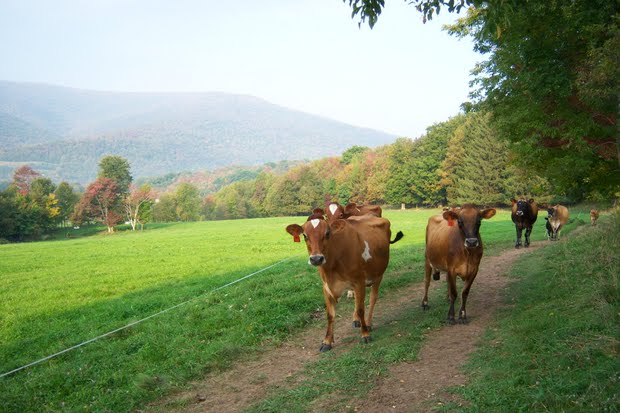
Belden Farm – Hoosick Falls, NY

The Farm and B and B – Ilion, NY

Stout Oak Farm – Brentwood, NH

Lazy Crazy Acres Farmstead Creamery – Arkville, NY

Suzie’s Farm – San Diego, CA

Posted in Aw Snaps! (our best photos) | Tagged , , , , , , , , | Leave a comment

Home Brew: The Pioneers of a City-Wide Effort

As a home brewer in Portland I raise my glass in salute to the many other tenderfoot brewers in the city. In this town you can hardly throw a stone without hitting another basement nano-brewery. The long dark wet winters and independent nature of Portlanders make the city fertile ground for the army of Do-It-Yourself beer makers. This kind of DIY naïveté gives you clout in Portland. If you’re not making something difficult at home yourself, then you don’t have much social currency in Portland.

This power of making can be heady. And the act of making engages you in a larger
city-wide effort. To me, and many other young brewers, this effort seems young, but
we’ve inherited this legacy from an older and much more seasoned generation. The
younger generation, as younger generations do, assumes it is the progenitor. Really
we are just picking up a mantle that has been passed on for generations.

If we care to listen, instead of pounding our own chests, we would hear the fizzle
and hiss of delicious beers being brewed by old hands. I have friends and colleagues
who have brewed their own beer for 20 years. That shouldn’t take any of the joy out
of this generation’s endeavors. In fact this long history of DIY home brewing adds
legitimacy to the movement and eliminates some of the faddishness out of home
brewing.

I recently spoke with two brewers who have brewed for over 30 years between
them. Their names get tossed around a lot in the brewing circle and they hold
coveted titles (they came first in Schwarts and 3rd in Pilsner in a national
competition). Like any good students, their craft has changed, evolved and matured
over the decade plus they’ve been at it. While brewing under the moniker “Bad
Dads,” Steve and Ray have experimented with making their own brown sugar (the
fermentation and carbonation agent) and growing their own hops. As true artisans
they look at every ingredient as a potential way to enhance quality.

“Bad Dads” is a truly local endeavor. Steve and Ray create rich social capital by
inspiring community through bottling events, sharing their beer, and patronizing
local business. Alcohol is a great common denominator and social unifier.
To commemorate their years of brewing, and drinking, Steve and Ray have
accumulated a label for every brand of beer they’ve drunk. It’s become their “wall of
shame.” But it’s also a testament to their passion. As are the accumulating accolades
for their famous IPA and Muddy Waters.

While home brewers proliferate in Portland, Steve and Ray don’t think the area has
reached its saturation point, otherwise they wouldn’t have friends clamoring for their beer. If you want to try your hand at it, you can find myriad recipes for mash (the beginning of beer) online. You can get all your ingredients at a local brewing store (I go to F.H. Steinbert’s on SE 12th). Then look up the process online. You’ll find that brewing is an education in patience. You’ll come to know disappointment closely, but also pride. My first brew was a success. The second one is bound to be a disaster (beginners luck having faded).

I’m planning my next batch to be all grain, and I will make the wort and mash myself
instead of buying a ready-made kit. This moves me from “kit” to craft. I may not hit
the heights the Bad Dads have achieved, but I’m on my way and making new friends
and building community in the process.

Good Grubbing
Ava Mikolavich
Fall 2011 Portland Food Warrior

This post is from one of the interns in the Real Time Farms Food Warrior Fall Internship Program. These interns were in Asheville, Austin, Nashville, Portland and San Francisco, collecting data, pictures, and video on the growing practices of our nation’s farms, gathering food artisans’ stories, and documenting farmers markets. We all deserve to know where our food comes from! (Winter/Spring 2012 Interns will be blogging from Atlanta, Austin, the Bay Area, and throughout Hawaii soon!)

Posted in Food Warrior Interns, In the Pantry (food artisans) | Tagged , , , , , , | 1 Comment

Best of Real Time Farms 2011

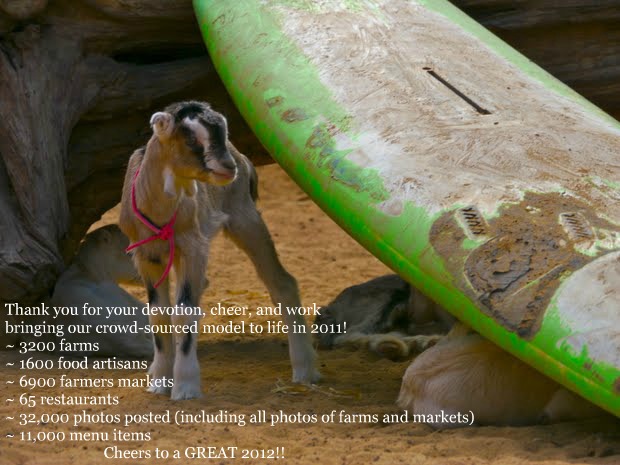
2011 was a big year for Real Time Farms – our first full calendar year in fact!  We grew our team, launched a fresh new design, added a whole new dimension to the food web with eateries, and, led by The Food Warriors, grew our guide enormously.  We now have:

  • 3200 Farms
  • 1600 Food Artisans
  • 65 eateries with farm linked menus
  • over 32,000 photos posted of farms, markets and food artisans
  • over 11,000 farm linked menu items added by eateries

We hope all of this work brings us one step closer to making it easy to know where your food comes from.  Sit back, relax, and peruse through the slides below for a month by month summary of the 2011 happenings at Real Time Farms.


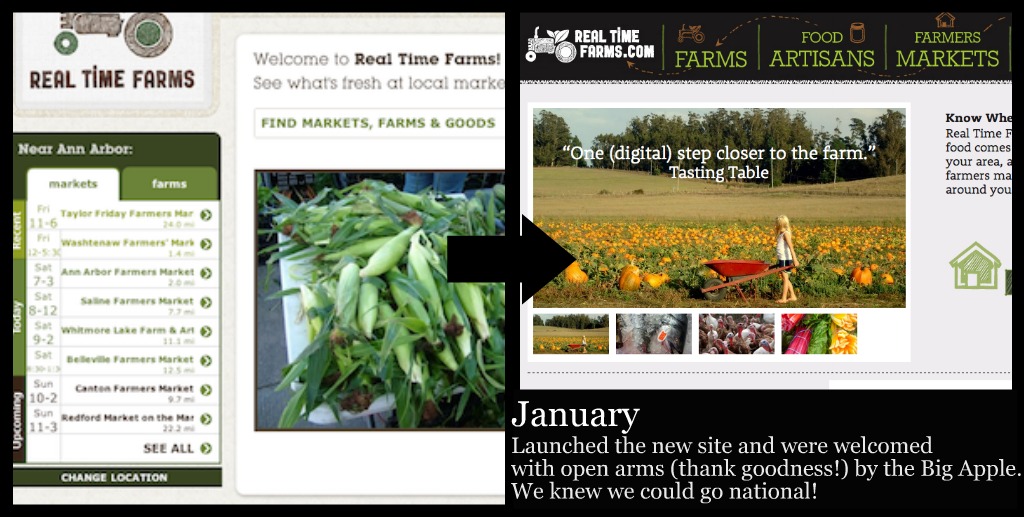
A new year, a new look. January marked the launch of the new makeover for Real Time Farms.

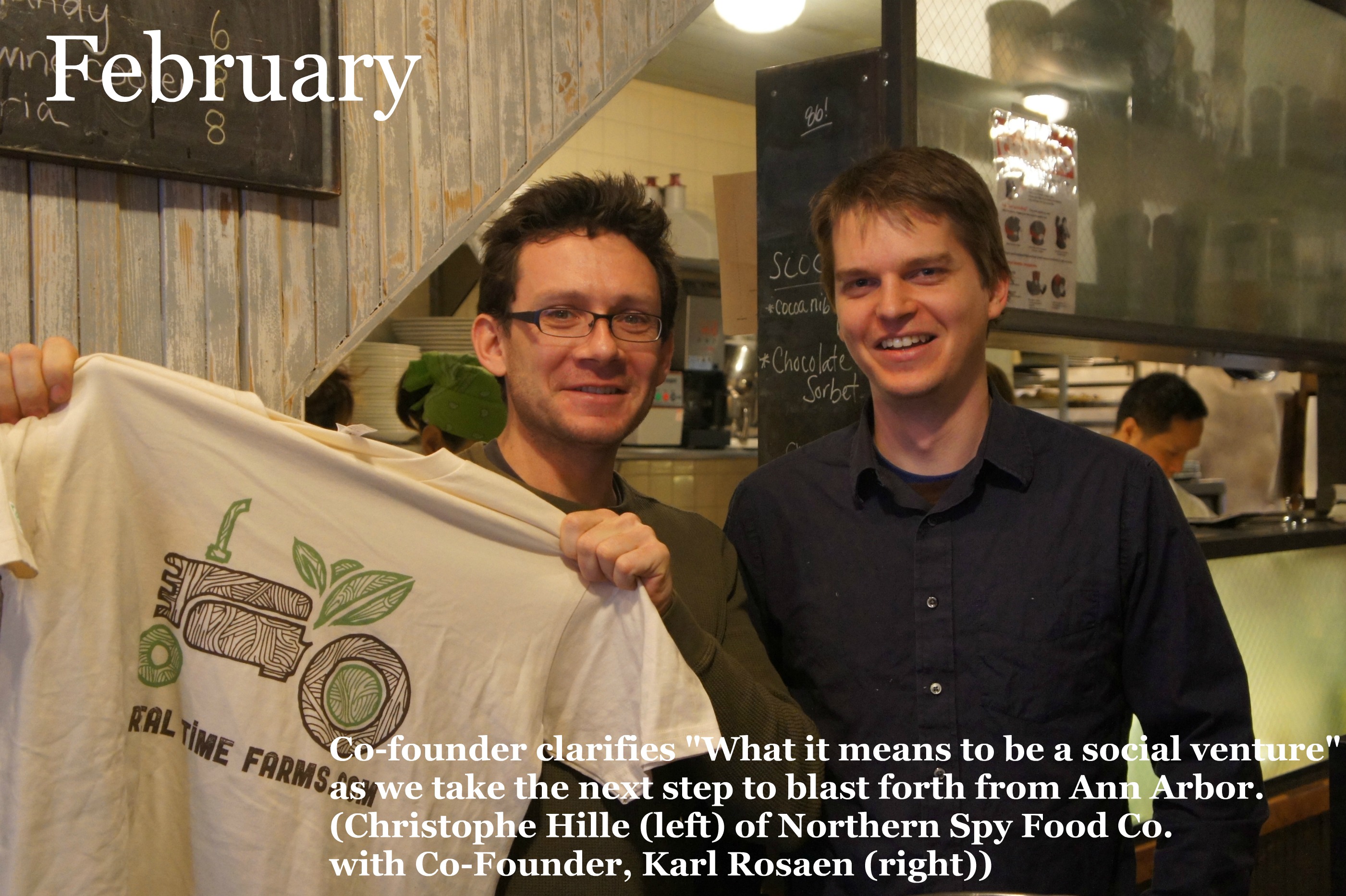
In the midst of a trip to NYC for TEDxManhattan’s Change The Way We Eat, we met with the chefs, owners, and foragers of our first restaurants in NYC: Northern Spy Food Co, PRINT., bobo, and Bark. We also met Chris Elam (former Program Director of Meatless Mondays), and presented for the Food + Tech Connect community, both who would become guardian angels in our growth.

We get ready to launch our web tools for restaurants nationwide to tell the story of where their food comes from with their consumers (all of us!).  Former manager of Zingerman’s BAKE and The Westside Farmers Market (and great writer!), Corinna Borden, joins the team.

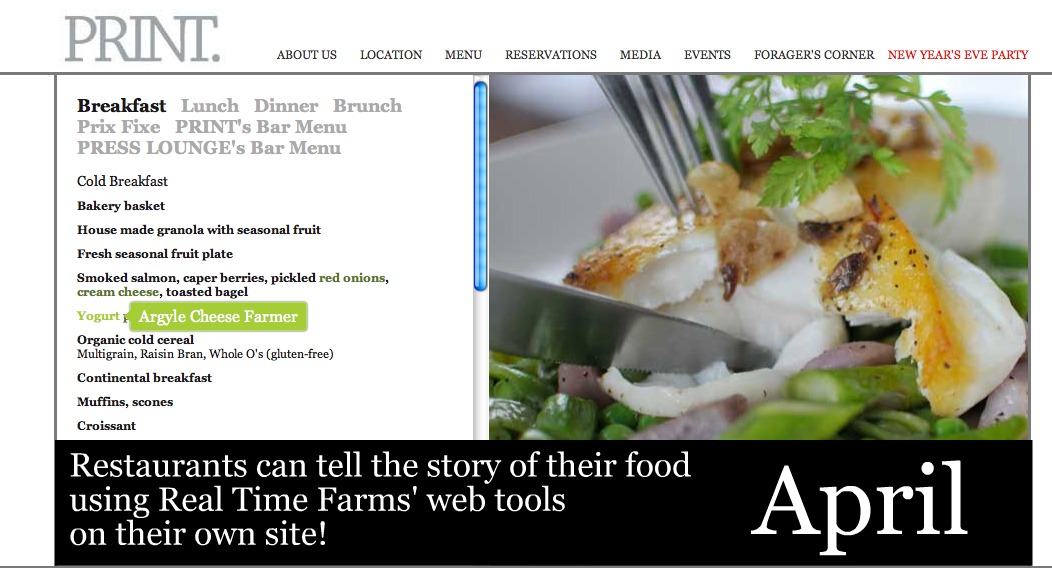
We finish work on the ability for restaurants to put web tools on their own site allowing consumers to trace their food back to the farm it came from. Now whether on Real Time Farms, or on a restaurants own website, diners can know exactly where their food comes from. Click on “beef”, see pics of the cows, learn about how they were raised – food transparency made simple.

To our great excitement, Gaurav Bhatangar, our long time user interface engineer extraordinaire, joins the team full-time.

One of the biggest months of the year for us!

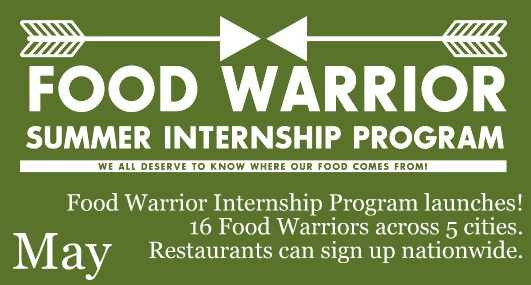
The Food Warrior Internship Program launches with Director Lindsay Partridge at the helm! 16 Food Warriors spend 3 months documenting (in writing, video, and images) the farms, food artisans, and farmers markets of 5 cities nationwide – showing communities how we can all contribute to a transparent food guide.

Restaurants nationwide can now sign themselves up to use our web tools to tell the story of how every ingredient made it on the plate.

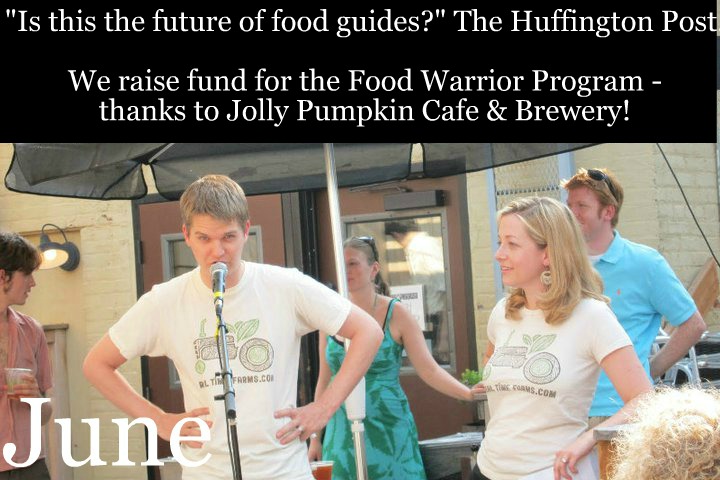
Thanks to Chef Maggie Long of Jolly Pumpkin Cafe & Brewery for an amazing spread, in our fundraiser for our Food Warrior Internship Program!

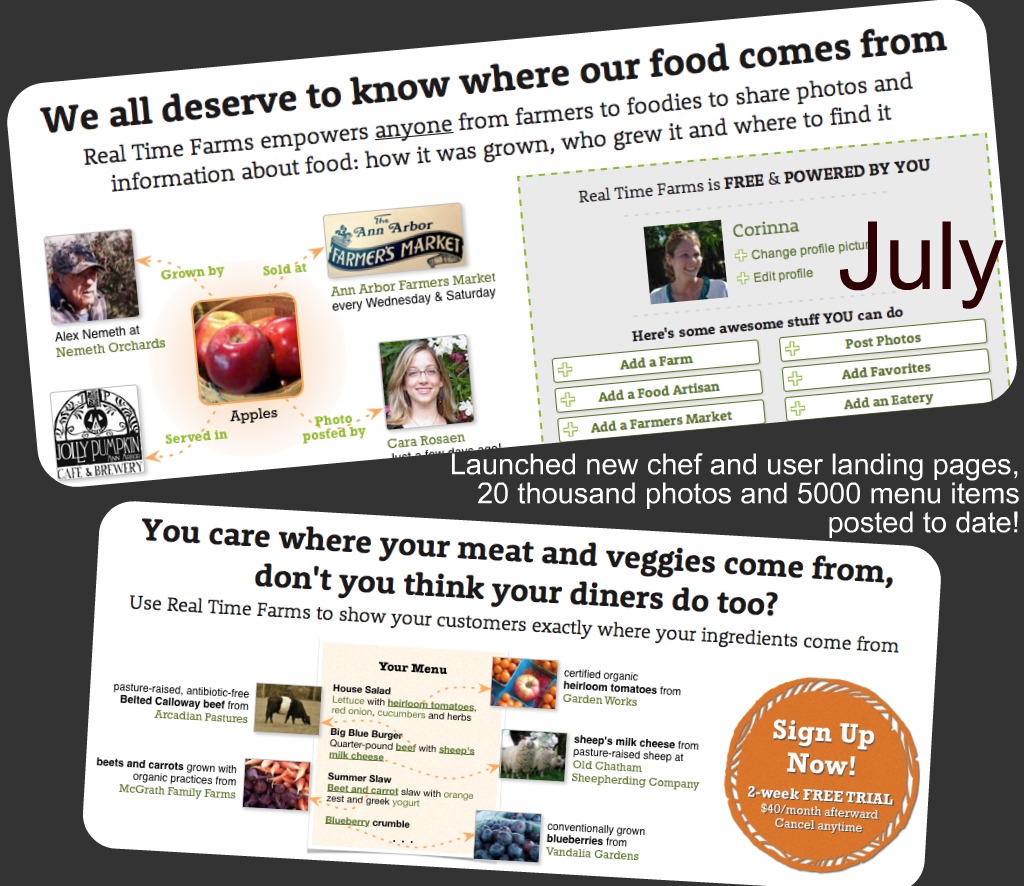
Things start really picking up: 20K+ photos submitted to the site, and over 5K menu items.

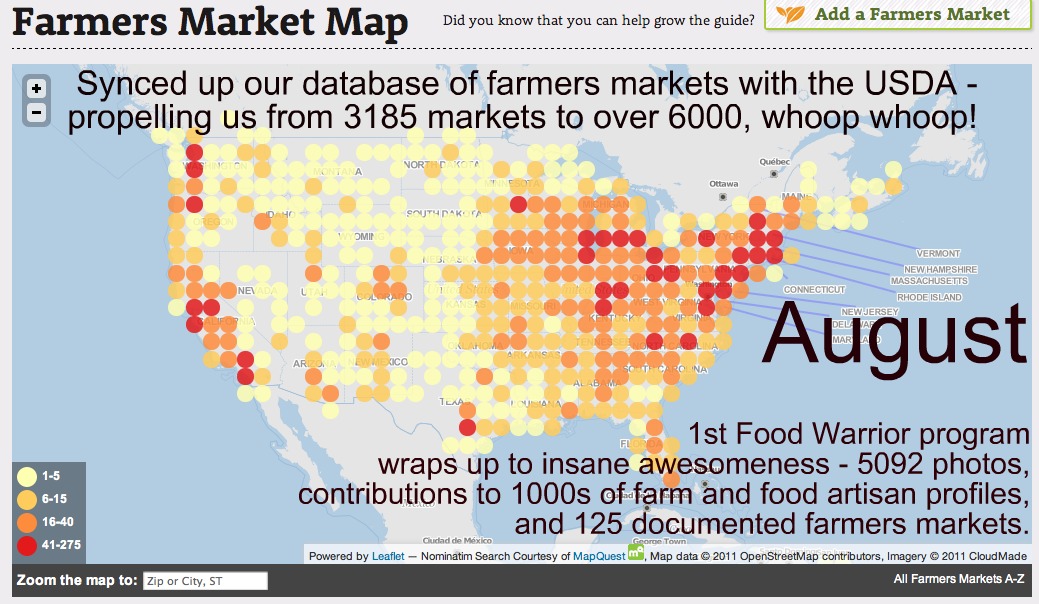
In our constant quest for more data, we integrate the open data from the USDA – clean it, compare it, merge it – voila 6K plus farmers markets on Real Time Farms!

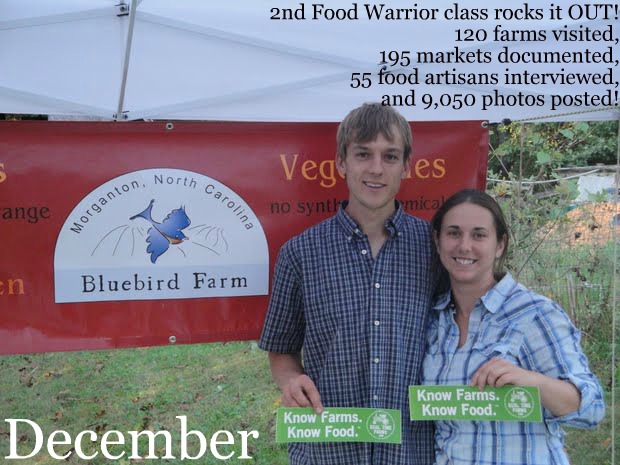
The Food Warrior Internship Program ends with great success! See the highlights!

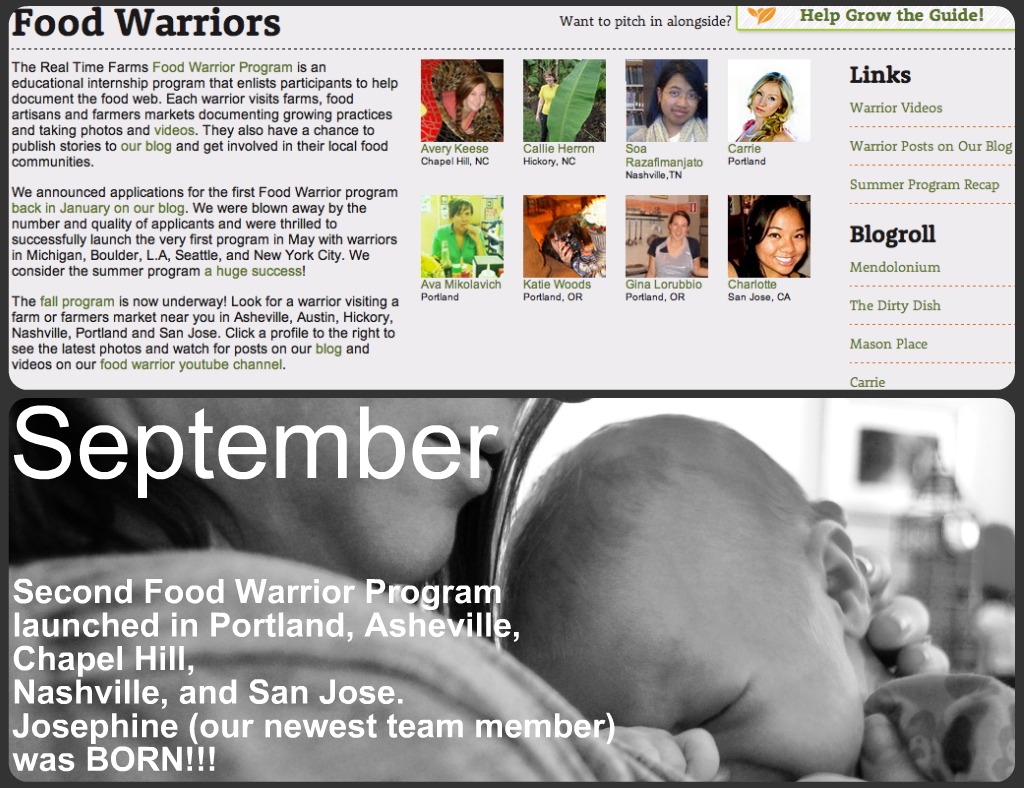
Founding member, Lindsay-Jean Hard, gives birth to Josephine, our newest and youngest RTF team member and we launch the Fall Food Warrior Internship Program.

Things come full circle, and we are invited on stage to present at the 2012 TEDxManhattan’s Change the Way We Eat – us, really?!

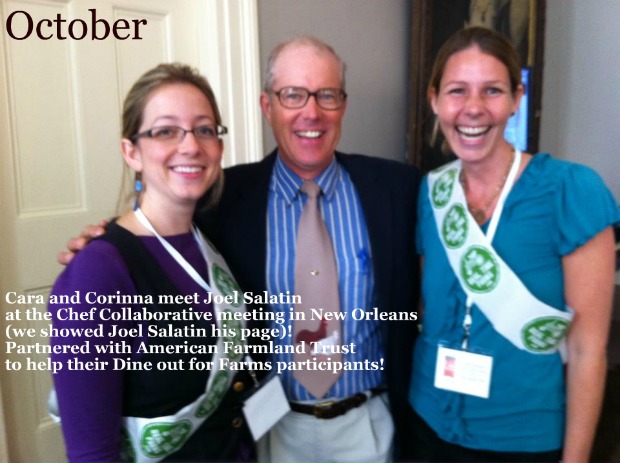
We worked with American Farmland Trust to educate diners and raise money to protect farmland from development in their Dine Out For Farms program. We meet one of our heartthrobs – Joel Salatin of Polyface Farms….

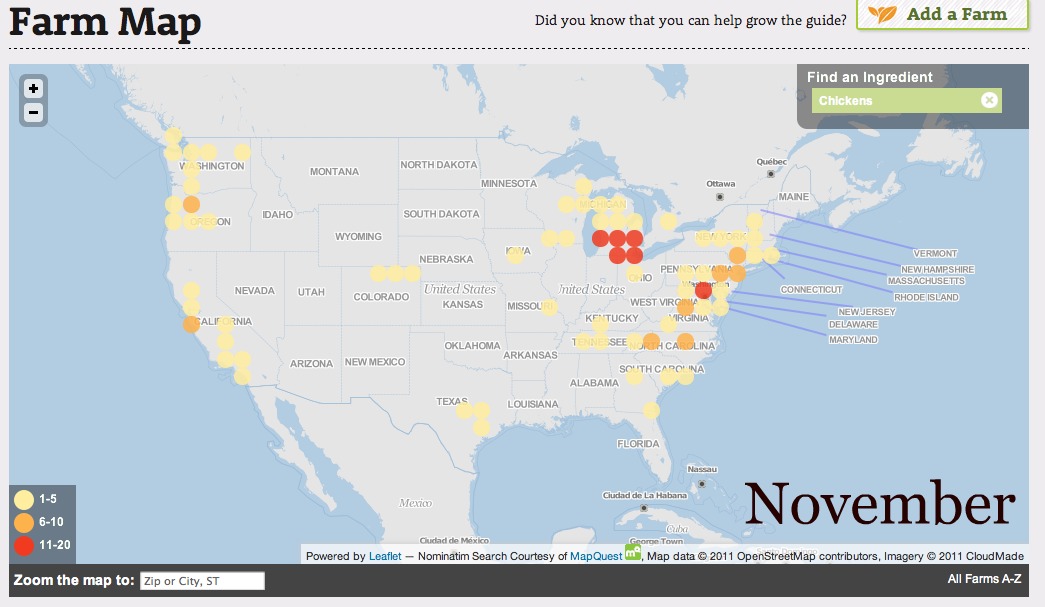
November was full of improvement to the site. You can now search for an ingredient on Real Time Farms, and see a national heat map of where to find it. (Above shows a heat map for “chicken”).

Additionally, you can easily see how that good/animal was grown or raised. Click on a farm profile, and see a list of goods and their growing practices.

Restaurants across the country (including Hawaii) begin to use Real Time Farms web tools to clearly demonstrate their sourcing to consumers.

And it grows…

Blessings to you and yours this holiday season! Cheers!

The Real Time Farms team

Posted in Messages From the Founders | Tagged , , , , , , , , , , | 5 Comments

Tofu Misozuke: The Modern Re-Birth of an Ancient, Forgotten Dish

Oanh Nguyen is a self-proclaimed “nerd” who, with her partner Dang Vu created and run Rau Om as artisans specializing in rare and forgotten delicacies. The two would be revered as “King and Queen” of the food nerds if given the opportunity. I had the pleasure of joining Oanh in her rented kitchen space on a Monday evening, where we pressed blocks of tofu for a special dish. In honor of Oanh and Dang’s passions for food and science, their story is written with the scientific method in mind.
b

Ask A Question
b
Have you ever had a dish so good that the taste, texture, and smell lingers deep in your senses and settles in your  mind? Have you had a dish so complex, so unique, that it teased, then nagged at your memory…for three years?
b
It just so happened that Oanh Nguyen and Dang Vu were on a trip in Tokyo in a nondescript sake bar, where they tasted Tofu Misozuke, an incredibly creamy and pungent tofu, accompanied with nothing else but sips of sake. The couple returned to the United States and attempted to search everywhere for the tofu, but found quickly that the dish was unheard of in the United States, and rare even in its native Japan.
b
Do Background Research
b
Haunted by the tofu’s taste and elusiveness, Oanh and Dang set out to re-create the dish themselves. Armed with years of research skills (Oanh got her undergraduate degree in Public Health at Harvard, Dang with Biology at MIT) they scoured recipe sources. Then, Oanh came across the name a manuscript, 100 Tofu Delicacies. The description of the dish was towards the end, alongside lesser-known tofu dishes, and the page was scarce with details. Not only was there not much to go off of, but the entire book dated back to the 18th century and was written in an ancient Japanese dialect!
b
Luckily, Oanh had a friend translate the recipe into modern Japanese, and then English. They learned that the tofu, originating from the Fukuoka Prefecture, was tofu aged in miso. Oanh and Dang now had a starting point to formulate a recipe.
b

Construct Hypothesis

Christmas come early: Oanh wraps her nem individually in banana leaves and wax paper, and adorns each nem with a carefully placed sliver of garlic and dots of chili pepper.

Relying on memory, Oanh and Dang recounted the tofu’s taste and texture, and consulted scientific papers for the dish’s fermentation process. Luckily, they had experience with creating dishes without the use of conventional cooking methods. They had already perfected an all-natural recipe for a popular Vietnamese charcuterie delicacy, that was quickly being banned due to health concerns. Through the use of various curing methods, Oanh and Dang re-invented the recipe without the use of commonly added chemicals. (In fact, they guest blogged about it for us here!)b

The fermentation process of the tofu would work like this: the enzymes in the miso paste should break down the proteins in the tofu, changing its consistency, while imparting intense flavor.

Test with an Experiment

The “experiment’s materials” consist of just a few: sake, sugar, tofu, and miso paste. Now Oanh and Dang had to figure out how to combine the ingredients to mimic the salty, sweet, and creamy tofu. They found that one variable was key to the recipe: time, and lots of it. The tofu they originally had in Tokyo was aged for six months! For three years, on and off, Oanh and Dang experimented with their ingredient proportions, technique, and maturing time. Time treats Tofu Misozuke well, as it does to cheese and certain types of alcohol, which is perfect considering Tofu Misozuke is akin to cheese in taste and texture, and aged with the sake.

Analyze the Results and Data

Unlike most tofu dishes, Tofu Misozuke is able to stand alone: no garnish, no dipping sauce

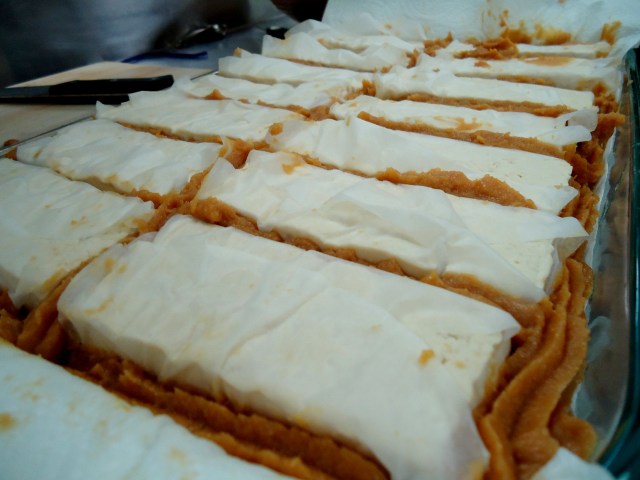
After dozens of thrown out batches, Oanh and Dang found the taste that transported them back to that sake bar in Tokyo (they have never been able to recall the name or location of the bar). In a rented kitchen space in Belmont, CA Oanh shows me the resulting Tofu Misozuke. The fermentation process had completely transformed the once solid block of tofu. It was now the color of pale peanut brittle. The taste and texture are so complex most people have a difficult time describing it.
b
“It’s so interesting that you thought there’s miso in it! That’s all just tofu. Someone even asked me if there was cream in it!” Oanh proclaims, as I enjoy a small amount.
b
The miso that was once slathered all over the tofu was actually discarded, and true to its nature, the tofu absorbed the miso paste’s flavor. The texture was extremely buttery, its  flavor with strong notes of sweet, salty, and a punch of umami that miso is known for.
b
I first met Oanh at the California Avenue Palo Alto Farmer’s Market, on a rainy Sunday afternoon before Thanksgiving. The crowds were thin, and while most were out snatching up the last bunches of sage and thyme, Oanh had already sold out of Tofu Misozuke.
b

Formulate and Report Conclusions

Tofu Misozuke is in fact so completely transformed from its base ingredients that Rau Om sells and serves it like a fine cheese; Tofu Misozuke is  sold in cheese shops next to imported wheels of aged Parmigiano-Reggiano.

Just this past November Oanh began selling Tofu Misozuke alongside their natural Nem Chua at two Bay Area farmer’s markets: California Avenue Palo Alto and Sunnyvale. The company is not even six months old, yet is quickly gaining popularity, recently wowing crowds at The San Francisco Street Food Fest. Vegans are now finding a truly vegan cheese, and the food adventurous are being re/introduced to lost delicacies.

As any good scientists, Oanh and Dang continue to ask questions about their experiments, as no experiment is truly ever complete, even open sourcing their Tofu Misozuke recipe online, and suggest ingredient pairings. They’re experimenting at the moment with Tofu Misozuke wrapped in kombu (seaweed), which I imagine would add even more umami flavor.
Additional Notes
b
One would expect, that after reading Oanh and Dang’s elaborate dinner menus that they can tout a lifetime of kitchen experience. (Her deconstructed Pomelo salad consists of supremed pomelo vacuum-infused with shrimp and pork stock, candied pomelo peel in the shape of DNA, and pomelo pith rehydrated in Vietnamese coriander, hibiscus, and thyme)!  But in fact, Oanh only began cooking after college, away from home-cooked meals and dormitory food. In the kitchen she works with precision, and a couple important tools: a digital scale, as well as a spreadsheet open on her nearby laptop detailed with ingredient measurements. Also to speed up her Monday nights: instrumental Vietnamese music.
b
A mutual interest in traditional Vietnamese music was what originally brought Oanh and Dang together. Later they developed their passion for food and travel together, and it’s these interests that bond the couple. While Oanh works as a consultant in the Bay Area and makes the food for Rau Om, Dang lives in Michigan, pursuing his PhD in Molecular Biology, and also helps manage Rau Om. Oanh and Dang explore their food experiences locally and abroad by analyzing lesser known techniques used with food, resulting in dishes thoughtfully and artfully prepared.
b

Oanh and Dang created Rau Om in order to introduce, and re-introduce recipes with others. With a little creativity and an aptitude for molecular gastronomy, Oanh and Dang will be sure to “preserve” many dishes for generations to come.

Find out what Rau Om is up to on their twitter.
Order Tofu Misozuke and all-natural Nem Chua through their website.

Know farms.
Know food.

Charlotte
Fall 2011 Bay Area Food Warrior

This post is from one of the interns in the Real Time Farms Food Warrior Fall Internship Program. These interns were in Asheville, Austin, Nashville, Portland and San Francisco, collecting data, pictures, and video on the growing practices of our nation’s farms, gathering food artisans’ stories, and documenting farmers markets. We all deserve to know where our food comes from! (Winter/Spring 2012 Interns will be blogging from Atlanta, Austin, the Bay Area, and throughout Hawaii soon!)

Posted in Food Warrior Interns, In the Pantry (food artisans) | Tagged , , , , , , | Leave a comment