Inspiration Plantation: “Opting Out” of the Conventional Food System

Matt Schwab knows his animals. And I’m not referring to the kind of knowledge that allows him to rattle off countless facts about each breed of turkey, duck, pig, chicken, sheep, or cow he raises on his farm (which he surely can do). I’m talking about the kind of intimate understanding that allows Matt to provide the best environment possible for each individual animal.

“I’ve always been a bit of an idealist, and farming this way combines a lot of my interests,” claims Matt as he explains what motivated he and his wife Jen to create Inspiration Plantation. Matt studied horticulture in college and worked as a landscape contractor for 14 years, developing a deep interest in working with the natural environment. He eventually began to question where his food was coming from, and curiosity led him to The Omnivore’s Dilemma.

The book introduced Matt to a revolutionary farmer named Joel Salatin who owns Polyface Farms, a diversified farming operation located in Virginia. Matt proceeded to read all of the farmer’s books, learning about growing practices that require little investment, utilize recycled materials, and actually heal the land. So when the Schwabs inherited property in Ridgefield, Washington seven years ago, they decided to “opt out” of the conventional food system and start growing their own food following Salatin’s model.

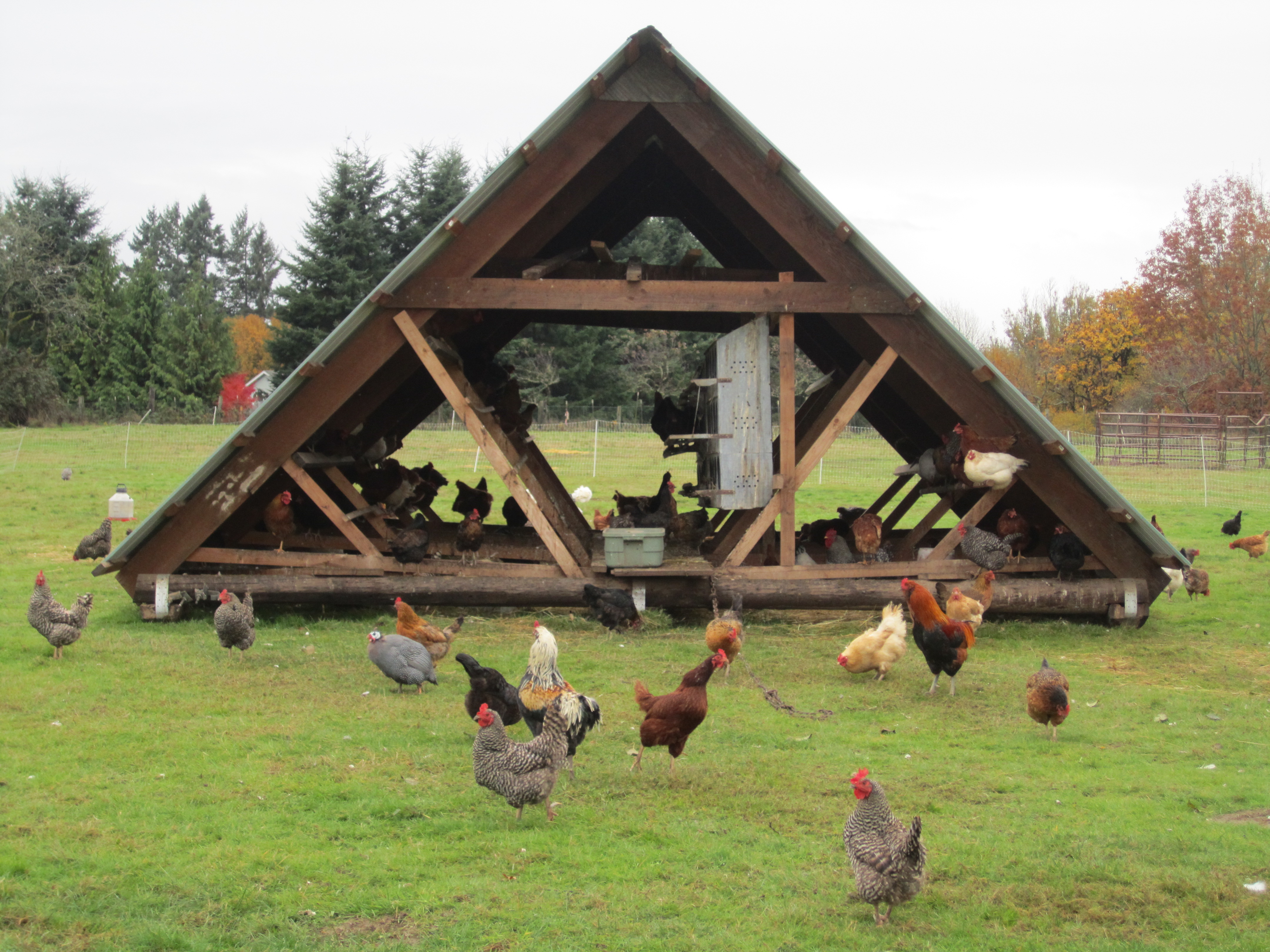
This model allows animals to freely express their natural personalities while healing the land through rotational grazing practices. Matt uses a portable poultry pen to house his meat chickens, and he moves it to a new spot each day. Even the much larger laying shed is mobile. Thanks to a base made from telephone poles, Matt can slowly move this structure with his tractor once a week. This method utilizes the inherent activities of the animals (eating and creating waste) to naturally rejuvenate the land. Rotating the structures on a routine basis allows this maintenance to be spread evenly across the property.


The diet each animal consumes is simple, as well. Cows and lambs spend their days grazing on “green salad” (pasture), while pigs mainly eat barley and are finished on delicious treats from the orchard. Chickens, turkeys, and ducks receive supplemental organic feed from a local mill. When asked if he ever administers antibiotics, Matt responded, “My philosophy is that if an animal gets sick, I’m doing something wrong. After all, I’m the one controlling their environment. It forces me to understand the animal and do my homework.” All poultry is processed on the farm, and larger livestock is pasture-killed by a mobile butcher to ensure a humane, stress-free harvest.

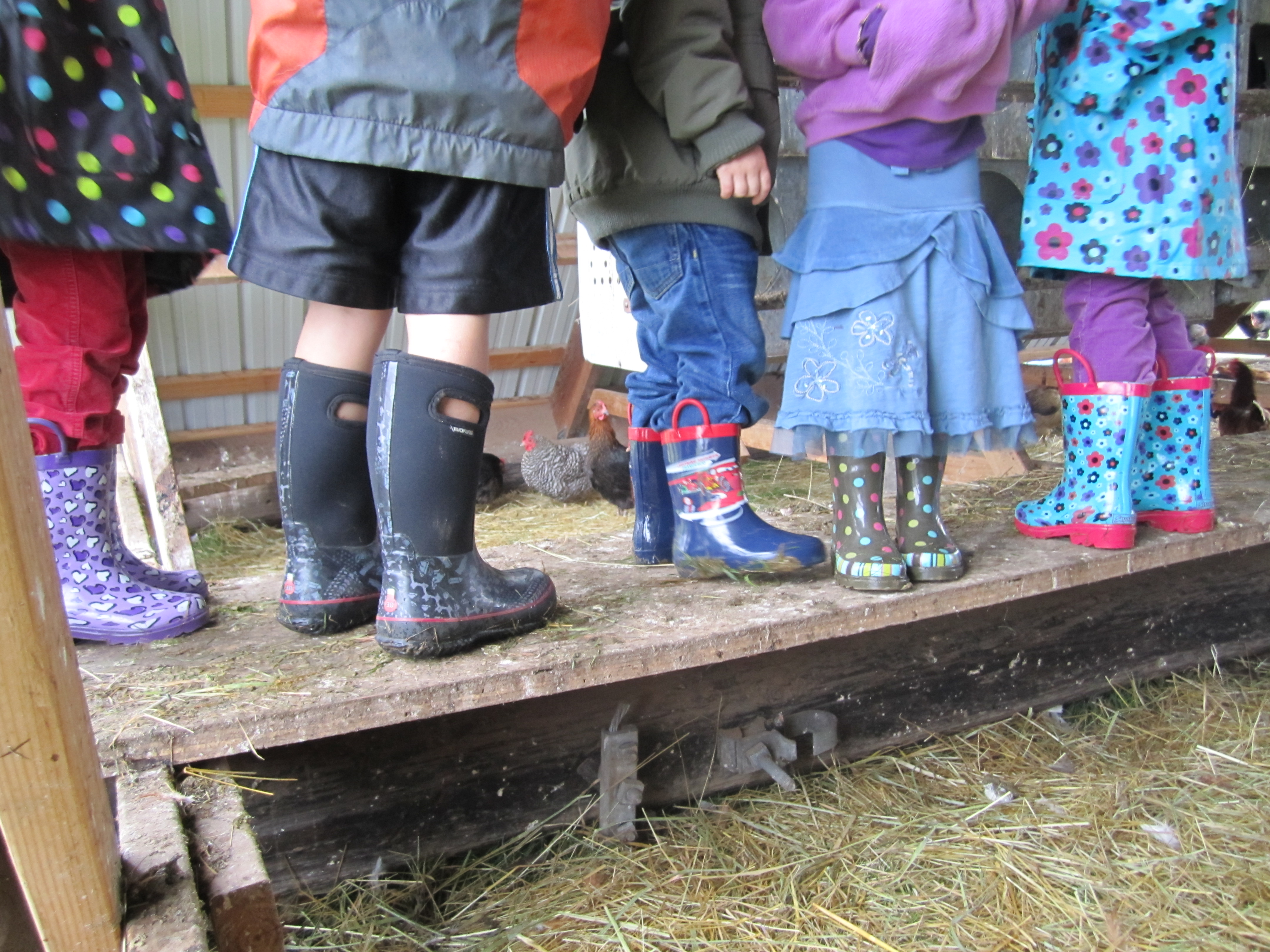
All of these practices point toward organic certification, but the Schwabs are not interested in pursuing it. “We’re not certified organic because we don’t need to be; people can come to the farm and see for themselves how we care for the animals,” Matt explains. It is this transparent policy that led me, as well as a dozen other curious eaters, to Inspiration Plantation on a cold, rainy Saturday afternoon in Washington. Every month, Matt and Jen invite their customers to a farm tour so they can get a clear understanding about where their food is coming from.

On this particular November tour, we got to see several incredibly vocal broad-breasted bronze turkeys. They were to be harvested soon to become the centerpieces at Thanksgiving dinners across the region. Thanks to Matt and Jen’s dedication to humane animal husbandry, diners were able to enjoy their meals with peace of mind. And that’s something to be truly thankful for.

Gina Lorubbio

Fall 2011 Portland Food Warrior

This post is from one of the interns in the Real Time Farms Food Warrior Fall Internship Program. These interns are in Asheville, Austin, Nashville, Portland and San Francisco, collecting data, pictures, and video on the growing practices of our nation’s farms, gathering food artisans’ stories, and documenting farmers markets. We all deserve to know where our food comes from!
Posted in Food Warrior Interns, On the Farm | Tagged , , , , , , , | Leave a comment

The One Bean Revolution: A Talk with Takashi Watanabe

Today we’re fortunate to have guest blogger Joan Lambert Bailey writing for us again! Joan currently lives and writes in Tokyo where she is lucky enough to get her hands dirty at a local organic farm. You can read about her adventures learning about Japanese food from seed to harvest to table at Popcorn Homestead or join her on Twitter.

It is the rare venture that can trace its beginning to Ecuador and a failed pot of miso. But that is exactly where Takashi Watanabe first found himself contemplating the unique qualities of his homeland, especially its food. Wanting to share some of those flavors and traditions, he attempted to make miso for friends met while traveling in South America.

“I told them it’s delicious and doesn’t need refrigeration. Much of Japanese food, such as tsukemono and miso, is about keeping food fresh without refrigeration,” he said.

Now, nearly ten years later, Watanbe is an organic farmer, father of three, and founder of Toziba, an innovative NPO focused on building community via farming and food.  A self-described “former commuter,” he returned to Japan after a year of travel determined to create a place where people could connect with each other via work and learning while rediscovering their traditional food culture. Taking the organization’s name from the Japanese word tojiba – a place, usually a hot spring, where farmers would gather at the end of the day to talk and soak away the day’s labor – Toziba has grown from a single site in 2002 to twenty-five locations (down from a pre-March 11th high of thirty-five) scattered over the length and breadth of the country.

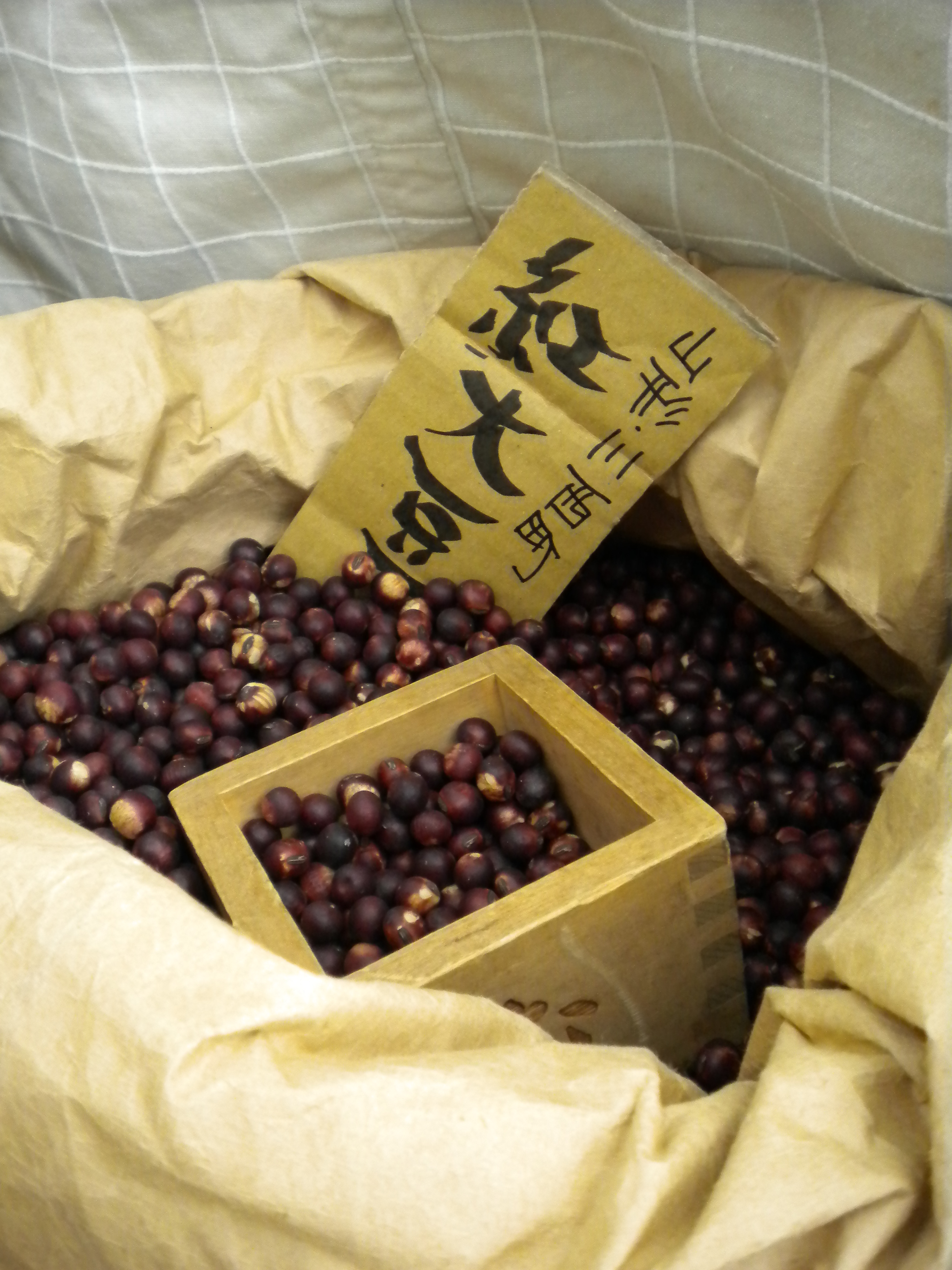
Benidaizu, a red heirloom soybean

Toziba’s main crop is daizu or soybeans. A fundamental ingredient for many of Japan’s most quintessential foods – soy sauce, tofu, and miso to name only a few  – it is, according to Watanabe, remarkably simple to grow. While rice, Japan’s most beloved grain, requires an experienced hand and watchful eye, daizu‘s comparatively easy nature makes it possible to plant wherever there is room.

“Anyone can grow daizu anywhere,” said Watanabe. “Before World War Two no one grew only daizu.  It was part of a natural cycle of things on the farm. Farmers referred to it as azemame (ridge bean) because it grew on the ridge (aze) between rice fields. People grew it in every little space because it was so easy.”

And daizu is so beneficial. As a legume, daizus nitrogen-fixing roots supplied adjacent rice fields a steady source of nutrients while stabilizing the soil. Growers would have feasted on young pods as edamame or mashed the first beans into a seasonal dessert called zunda. Dried beans would be stored for winter use or mixed with yeast and salt for miso. A selection of the strongest and tastiest would be set aside for planting the next year. Daizu and its powerful nutritional punch immediately became indispensable for both the table and the field.

Focusing on heirlooms, too, is one homegrown solution to Japan’s current food security and self-sufficiency issues. Since daizu first arrived in Japan more than one thousand years ago, farmers cultivated varieties suited to their culinary preferences and regions. Pointing to a map of Japan, Watanabe offered an astounding bit of information: “In Japan, there are three hundred named varieties of daizu and two thousand varieties without names.” Currently, Japan raises only 3 to 5 percent of the soybeans it eats while the remainder are imported from the United States and Brazil.

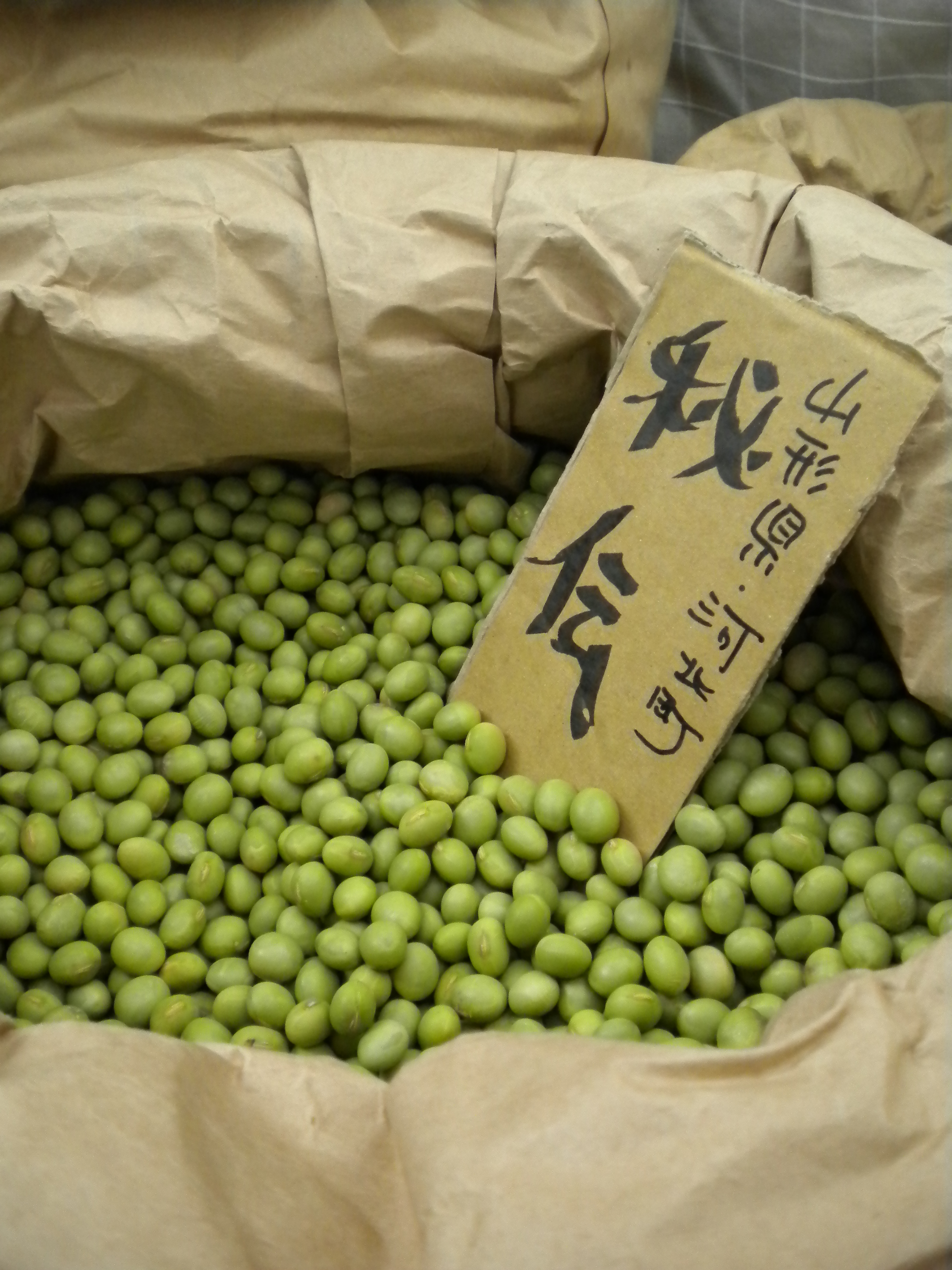
Hidenmame, an all green soybean often served freshly boiled with a bit of soy sauce

Toziba brings the majority of their heirlooms to life again in fallow fields owned by aging farmers. Members pay an annual fee of 5,000 yen for a share in a field and the season’s harvest. Regular events, including a class on handmade miso or temae miso, bring people together for work and play that Watanabe hopes will foster a movement to transform the current food system into something more local and sustainable.

“I want to create people who actually plant daizu. When they see the bean they understand the problems with genetically modified (GM) foods. They understand the issues of import and export. They understand and think about these things when they see their own daizu growing. They realize it for themselves. It’s the best education,” he said.

“The Daizu Revolution can be a trigger to change many things. They see the seed in their hand and they realize what’s happening and why nuclear power is bad. First, the daizu. Then the rest will come,” he said.

Watanabe pointed out that since the March 11th triple disaster the Japanese consumer is more interested than ever in where their food comes from and the farmer growing it. Even now, a little more than eight months later contamination concerns remain paramount. Yet, he wondered, where was this curiosity and concern before the earthquake and nuclear disaster?

“Genetically modified (GM) is an even bigger problem and even more dangerous,” he said. “The lack of crop and seed diversity, the patenting of plants and seeds in order to simply turn a profit is just as deadly as nuclear fallout,” he argued.

Toziba collect seeds for their sites come from a range of sources, including Japan Agriculture (JA), a national farming cooperative; michi no eki – a highway rest area featuring all local, seasonal produce and products); and chokubaijjo’s (individual farm stands) often tended by an obaachan (old woman or grandmother) who knows the land and its crops as well as her own children.

“The absolute best, though, is the obaachan at the chokubaijo. She tells how to plant the seed, what to watch for as it grows, why it’s unique, and why it was grown there,” said Watanabe.

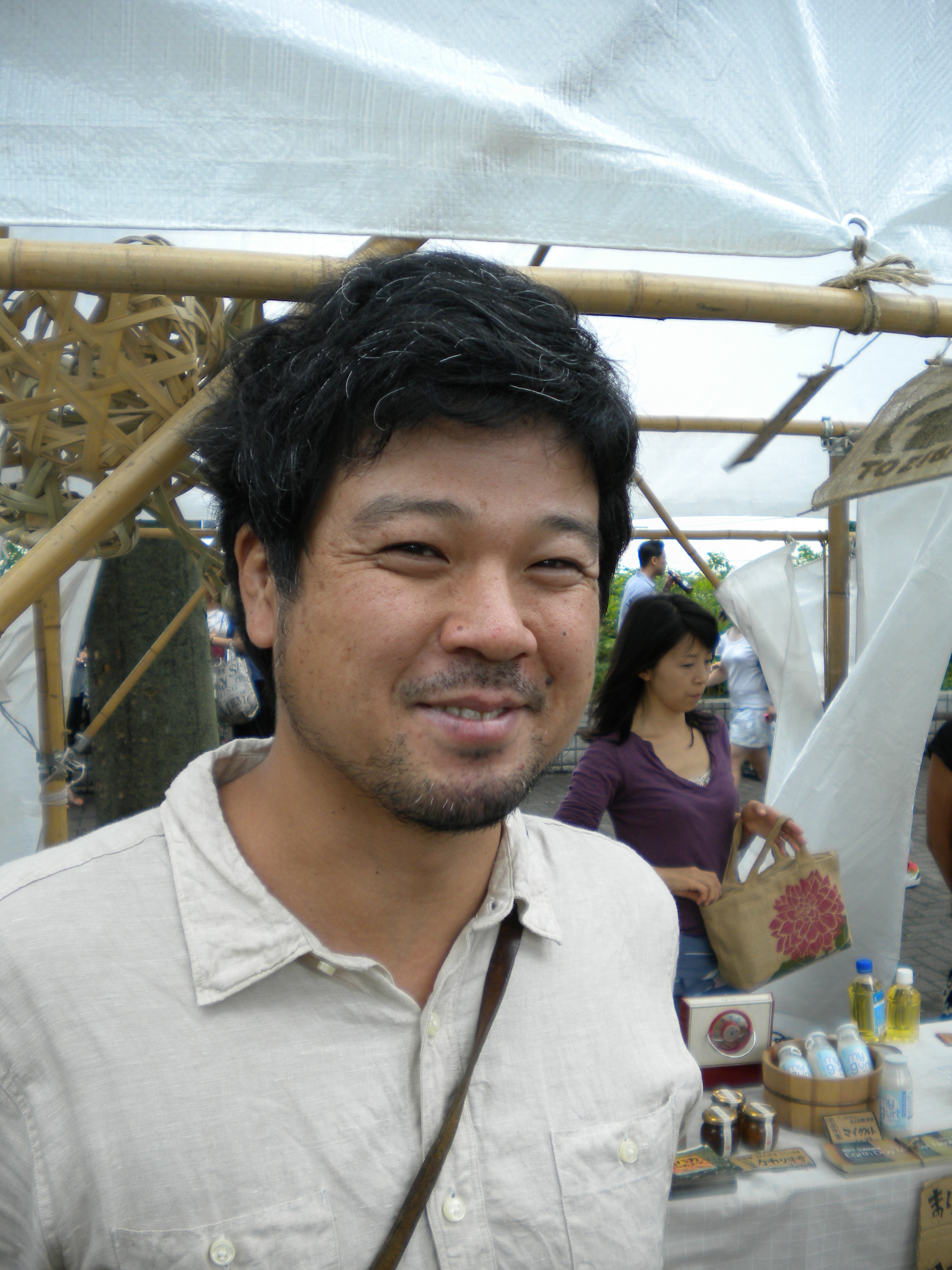
Takashi Watanabe, Toziba's founder

Watanabe’s own first seeds came from an organic farmer in Yamanashi Prefecture specializing in daizu. Once he learned Watanabe’s farm was located in Chiba, an agricultural region just north of Tokyo, he recommended a bean developed there and which is delicious to boot.

Since setting those first seeds in the ground, Watanabe has never looked back. And like any grower, he is excited, worried, patient and impatient all at once. His final harvest, after all, is not just kilograms of beans, but of people transformed and maybe, ultimately, a new society.

“I’m growing a strong base and then growing the people. Each person is so different, so we have to protect them, just like the daizu. To learn about diversity, to apply daizu theory to people is the same. Each is different but good.”

Kurokotsubu, a delicious black heirloom steamed with rice for a bit of color

While Toziba’s official numbers are down at the moment, Watanabe remained upbeat. Before the earthquake and nuclear disaster, people were drawn to the organization and its ideals. Now, that same energy is gradually returning as people seek knowledge about their food and alternative sources for it.  Growers displaced by the disaster are attempting to recover and rebuild in place or have relocated near other members of Toziba’s network to start over.  And he noted that whether the total number of sites is twenty-five or thirty-five doesn’t really matter.  As seeds are shared and planted, harvested and shared again, his dream is coming true.

“It spreads from friend to friend who spread the seeds themselves to family. It’s difficult to say what the real total is. The map is probably more full, but I can’t say for sure. Which is the purpose. We won’t need the name Toziba in the future because we will just be doing it,” he said with a smile of pure pleasure.

Posted in On the Farm | Tagged , , , , , , , , | Leave a comment

King’s Raven Winery: a Family Affair

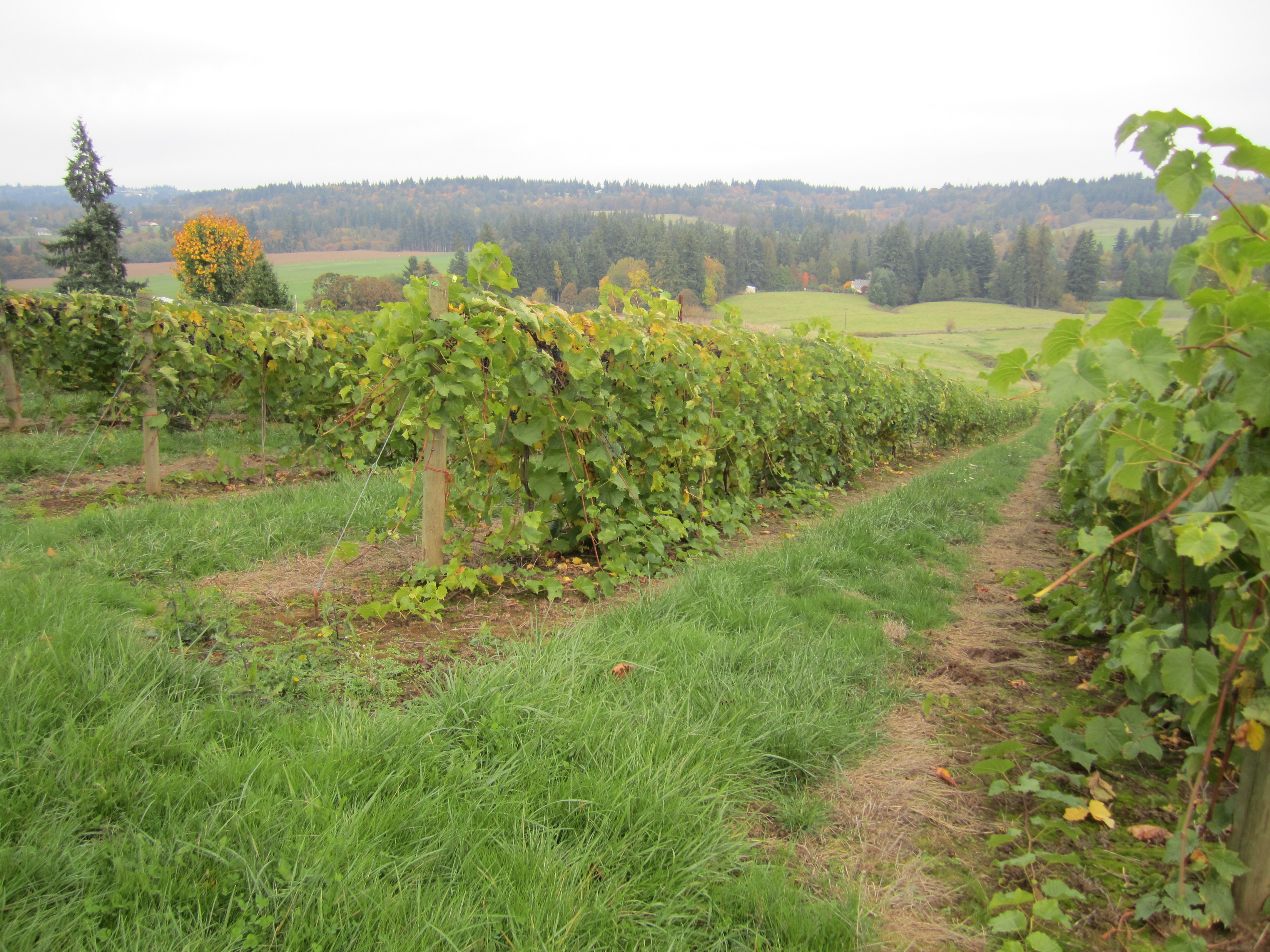
King’s Raven Winery, perched atop one of the many rolling hills in Oregon’s oldest city, is a vineyard with a view. This gorgeous plot of land has been in the Ingram family since Marvin Ingram purchased it in the early 1940s, and it’s easy to see why they have not let it go. Marvin initially raised cows, pigs, chickens, and horses, as well as a son named David. David grew up subsistence farming on the land and came to understand its intricacies.

When David Ingram married Sheri and the couple raised their own family, including a son, Darin, and a daughter, Kim, the farm experienced a transformation. Darin had been working as a “cellar rat”–an endearing phrase that translates to free labor in exchange for wine–in the late 1990s. While this was a good deal, Darin eventually realized he could turn his newly honed craft into a living. He spent two years trying to convince his dad to give him an acre to grow grapes. Darin’s persistence eventually paid off, and after a family meeting, the decision was made to enter the wine business.
b
As a young start-up, the Ingram family knows that slow growth will be the key to their success. David draws a parallel between running the business and making the wine: “You’re trying to match what the grape does in the soil and what the wine does in the bottle.” Thus, the family utilizes patience and care in both the business model and the wine-making process.
b
b
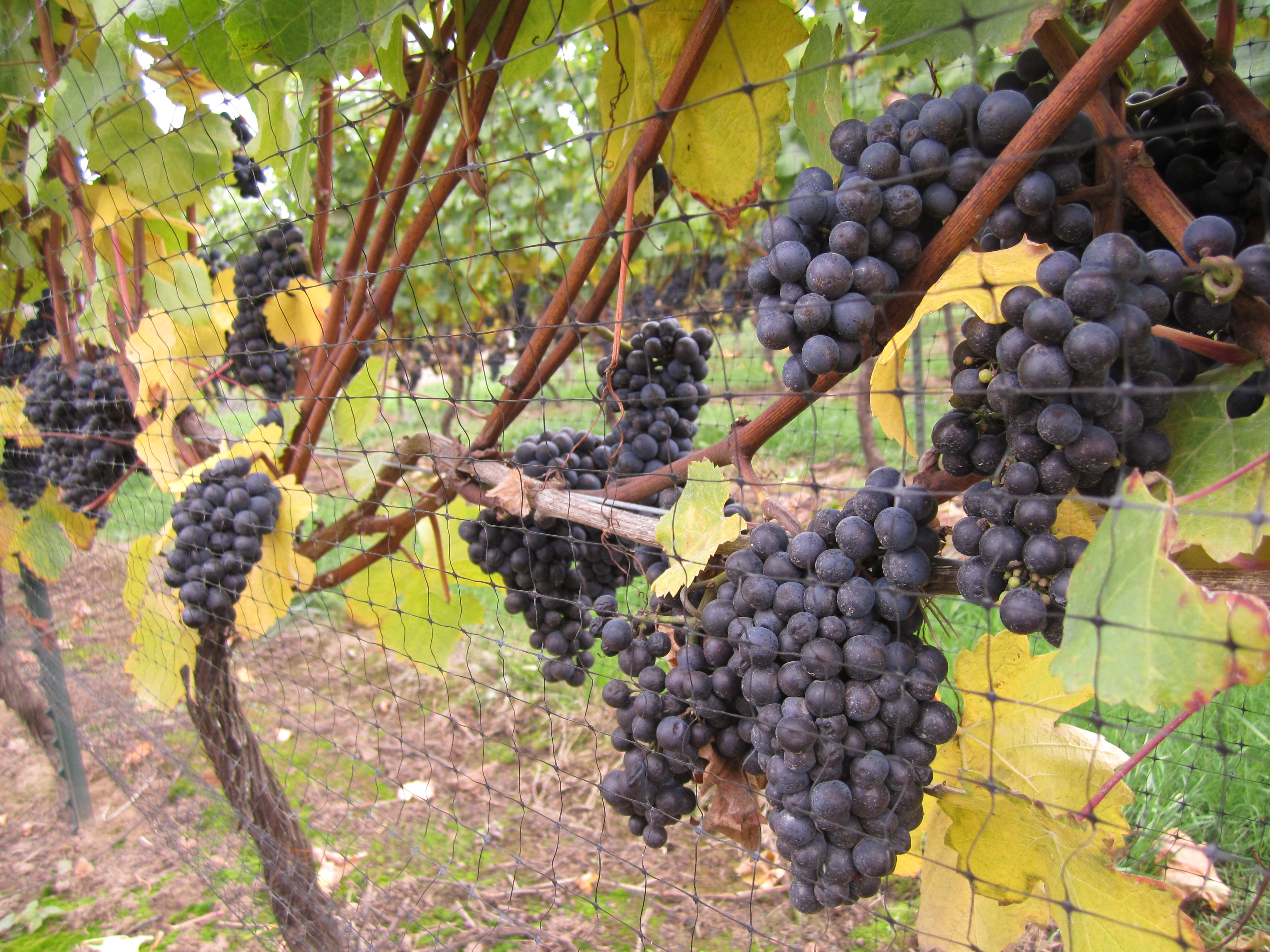
For this reason, the family carefully selects which grapes to cultivate and attentively watches them grow. They test each grape on a small plot of land before adding a large quantity to their vineyard, ensuring that it will produce high quality and flavorful wine. As David tends to the grapes on the land, he takes note of the color of the leaves. He explains, “When the leaves turn yellow, it means the plant is no longer putting anything into the grapes.” They’re ready for harvest.
b
Harvest time is especially busy, so David and Sheri usually enlist the help of their young grandchildren: “If the kids want to earn spending money, they pick grapes,” Sheri says, laughing. After the grapes are removed from the vines, they are transported to an urban winery in Portland where Darin puts his skills to work.
b
First, the grapes are de-stemmed and crushed. The white grapes are pressed and fermented immediately, while the juice remains on the skins of the red grapes for a period of time before being pressed and fermented. The two different types of grapes also receive unique treatments during the fermentation process: reds develop their flavor in wooden barrels, while whites become fruity and crisp in stainless steel containers.
b
b
According to David, the reds have been spectacular while the whites have offered more of a learning curve. Both have been well-received by customers, but the Ingram family continues to strive for perfection. David explains, “The strategy of a boutique winery is that you have to do things differently than large producers. And you have to do what they do better.”
b
Fall 2011 Portland Food Warrior
b
This post is from one of the interns in the Real Time Farms Food Warrior Fall Internship Program. These interns are in Asheville, Austin, Nashville, Portland and San Francisco, collecting data, pictures, and video on the growing practices of our nation’s farms, gathering food artisans’ stories, and documenting farmers markets. We all deserve to know where our food comes from!
Posted in Food Warrior Interns, In the Pantry (food artisans) | Tagged , , , , , | Leave a comment

Suburban Farming, Self-Sustainability, and Reclaiming Domesticity: Yummy Tummy Farms

For many Americans, the front yard is a prime piece of real estate, in fact, many newer neighborhoods in larger cities are doing away with front yards and decreasing the size of backyards in favor of increased indoor living space. The front yard can serve as an extension of one’s personality or status, and even if they serve as neither, chances are a few hundred dollars a year is spent just to keep it green.
b


For Donald Sturman, his front yard, and back yard, is more than just an extension of his personality. While some people trim climbing vines, Donald is tending to 8 foot tall tomato plants (of 20 different varieties!). Where some people have a collection of rose bushes, Donald will have a small fruit orchard. His yard is an extension of his lifestyle, one he hopes becomes a model in his neighborhood. By trade Donald is an auditor, but get him back home and he is Farmer Donald. Tucked in a nondescript San Jose neighborhood is Yummy Tummy Farms, where Farmer Donald has taken control of the local food system by creating his own.

“There’s a bee I’ve never seen before, it’s a good sign when bees come around.” Farmer Donald says excitedly of a large bumblebee that hovers over four garden beds in his front yard. Farmer Donald grows about five types of leafy Asian greens, rainbow chard, carrots, sage, fruit trees (he’s planning for a cherry and cara cara navel tree), and in the summer blueberries and tomatoes–just in the front yard. After ripping out the weeds in the backyard that measures about a quarter of an acre,  Farmer Donald grows a couple of types of basil, a few varieties of kale, lavender, rosemary, three bee hives, and has multi-grafted fruit trees.


Growing up in Monterey County, Farmer Donald was surrounded by farm fresh produce. After moving to San Jose where farmers were pushed further into the hills and fruit orchards gave way to growing businesses, Farmer Donald began to miss the quality of the food he grew up on. Combined with his concern of the rising rates of obesity and related diseases, he turned to the idea of suburban farming. He enrolled as a student at Love Apple Farms in Santa Cruz, CA, where he learned about biodynamic farming. Soon after he grew 120 heirloom tomato plants. Today, after two years of meticulous planning, designing, scheduling, and a little creativity, Yummy Tummy Farms is well on its way on becoming closed, self-nourishing system.
b
Biodynamic farming is the practice of a type of organic farming, that emphasizes the relationships between soil, animals, plants, and farmer, whose goal is to create such relationships so that the farm as a whole becomes a self-sustaining system. Farmer Donald practices this method of farming by using green compost and fertilizer (egg shells), maintaining worm bins, drip irrigation, and seed saving.
b


Not only does Yummy Tummy Farms produce organic, fresh vegetables for Farmer Donald’s family, the farm serves as a classroom. Using Craigslist, Farmer Donald began sharing his knowledge of biodynamic and suburban farming and gardening to apprentices from around the Bay Area. In return for getting their hands dirty, apprentices share the fruits of the farm’s bounty in addition to the tools to begin their own suburban farms.

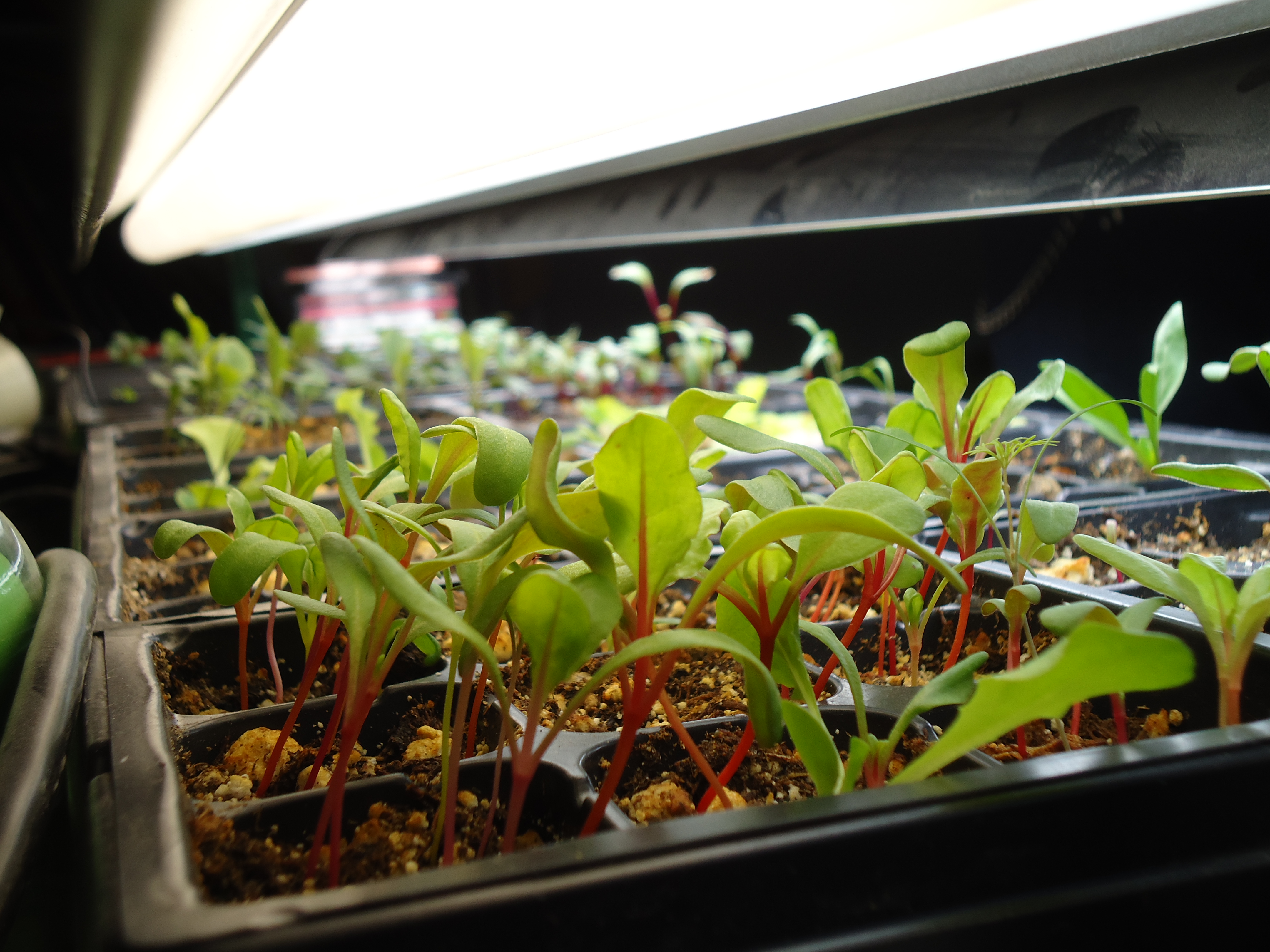
As an accountant, Farmer Donald analyzes financial risk and manages multiple accounts. True to his trade, he practices similar principles, which, when applied biodynamic farming, keeps the farm efficient and running smoothly. While he is growing plants that can handle the winter weather, in a small room accessible through the garage, Farmer Donald has an impressive mini nursery for small seedlings. These seedlings, totaling almost 150, will be re-potted or transplanted to grow into beets, kale, cauliflower, pumpkins, and other produce.


Suburban farming is a great way to give one complete control of what they put in their bodies. Eating locally would mean having to walk a few feet, no carbon footprint there! And what better way to know your farmer, than to explore your own green thumb? Landscaping your yard into a self-sustaining farm is no light task, even if it is a small yard. But your efforts will yield in priceless rewards. It has taken two years for Yummy Tummy Farms to look the way it does, and much of the slow growth was due to budget and time, which Farmer Donald claims as one of suburban farming’s challenges. However, in the two years that has passed, Farmer Donald has already reached many goals he set out to accomplish. Through his small farm Farmer Donald has made some big changes, including:
  • educating future farmers (neighbors have expressed interest and have even began growing their own produce)
  • feeding his family (and local community) nutritious, sustainable food
  • reclaiming domesticity – Farmer John is maintaining his farm an hour or two a day, as well as pickling his own vegetables, making preserves, and drying fresh herbs
b
Farmer Donald isn’t stopping there. He is constantly educating himself and others, and advocates for healthy food and farm policies to protect small and mid-sized farms. In fact, he hopes that his small farm can one day provide as a CSA to his local community. And even sooner, he hopes to share his love of cooking with his neighbors. He already shares honey, preserves, and pickled goods at SJ Made, a vendor fair of local artisans.
b

“I’d love to have a clay oven and be able to make pizza for my neighbors. How awesome would that be? Grab a fresh slice, have a few bees overhead, and enjoy the farm.”

Know Farms. Know Food.
Charlotte
Fall 2011 San Jose Food Warrior

This post is from one of the interns in the Real Time Farms Food Warrior Fall Internship Program. These interns are in Asheville, Austin, Nashville, Portland and San Francisco, collecting data, pictures, and video on the growing practices of our nation’s farms, gathering food artisans’ stories, and documenting farmers markets. We all deserve to know where our food comes from!
Posted in Food Warrior Interns, On the Farm | Tagged , , , , , , , | 1 Comment

Welcome to the Community of Kookoolan Farms

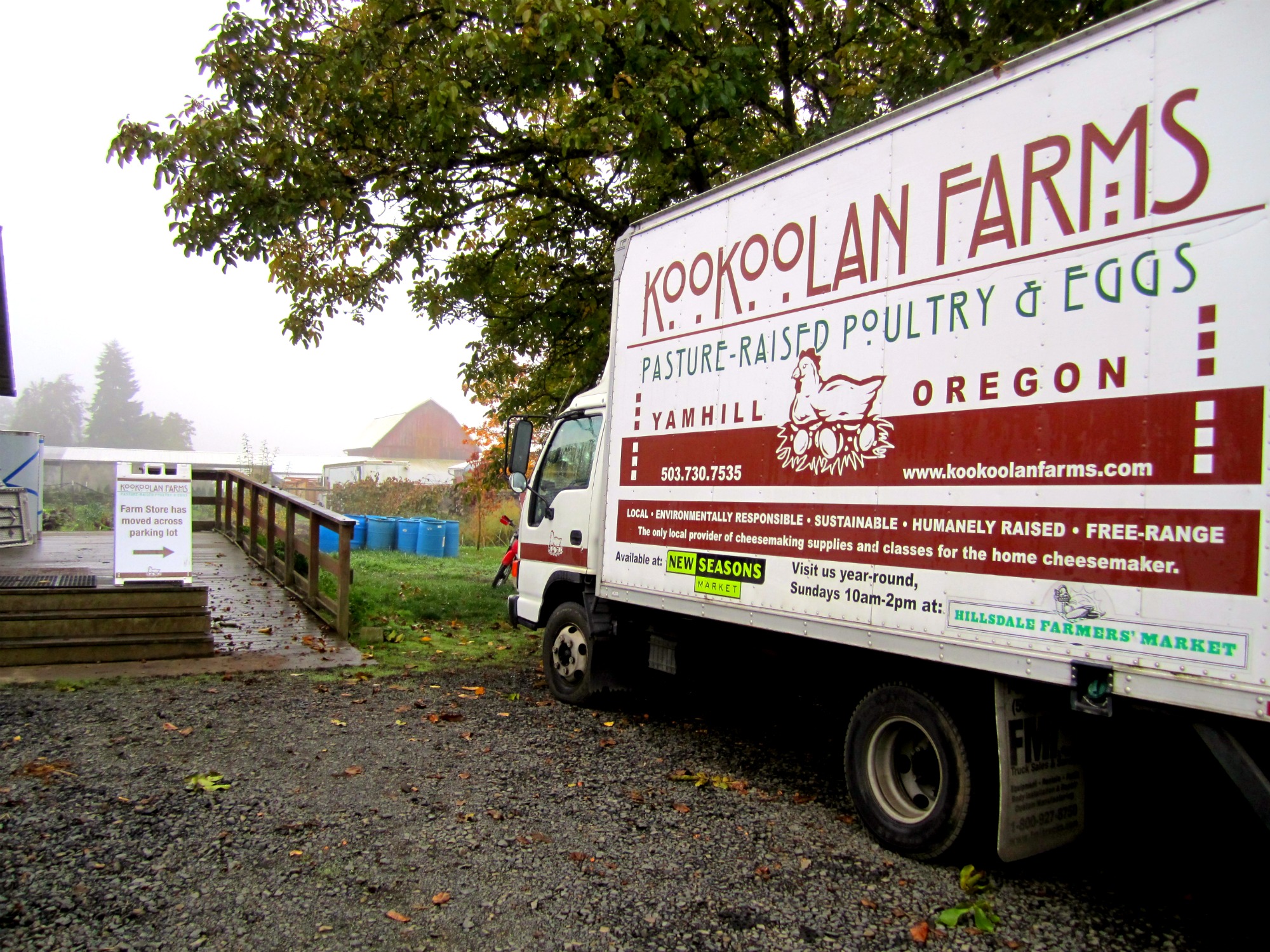
“Really, we’re unqualified to be farmers,” Chrissie Zaerpoor confesses before she delves into the story behind Kookoolan Farms. She and her husband Koorosh have backgrounds in physics and engineering, which many would write off as unhelpful to the field of agriculture. But an intricate weaving of life experiences has led the couple to exactly where they are now.
b
blank
Koorosh had always dreamed of being a farmer, while Chrissie developed a serious interest in food a bit later in life. “These two things came together when we fell in love at Intel,” Chrissie explains. Like many other corporate love stories, this one resulted in the couple’s separation into different departments. The pair wanted to continue working together, so they decided to start a business. Chrissie humorously recalls the rapid sequence of events: “We closed on the property on October 17th, 2005. We got 400 laying hen chicks on November 2nd. We got meat chicks on November 4th. And we haven’t stopped since.”
b
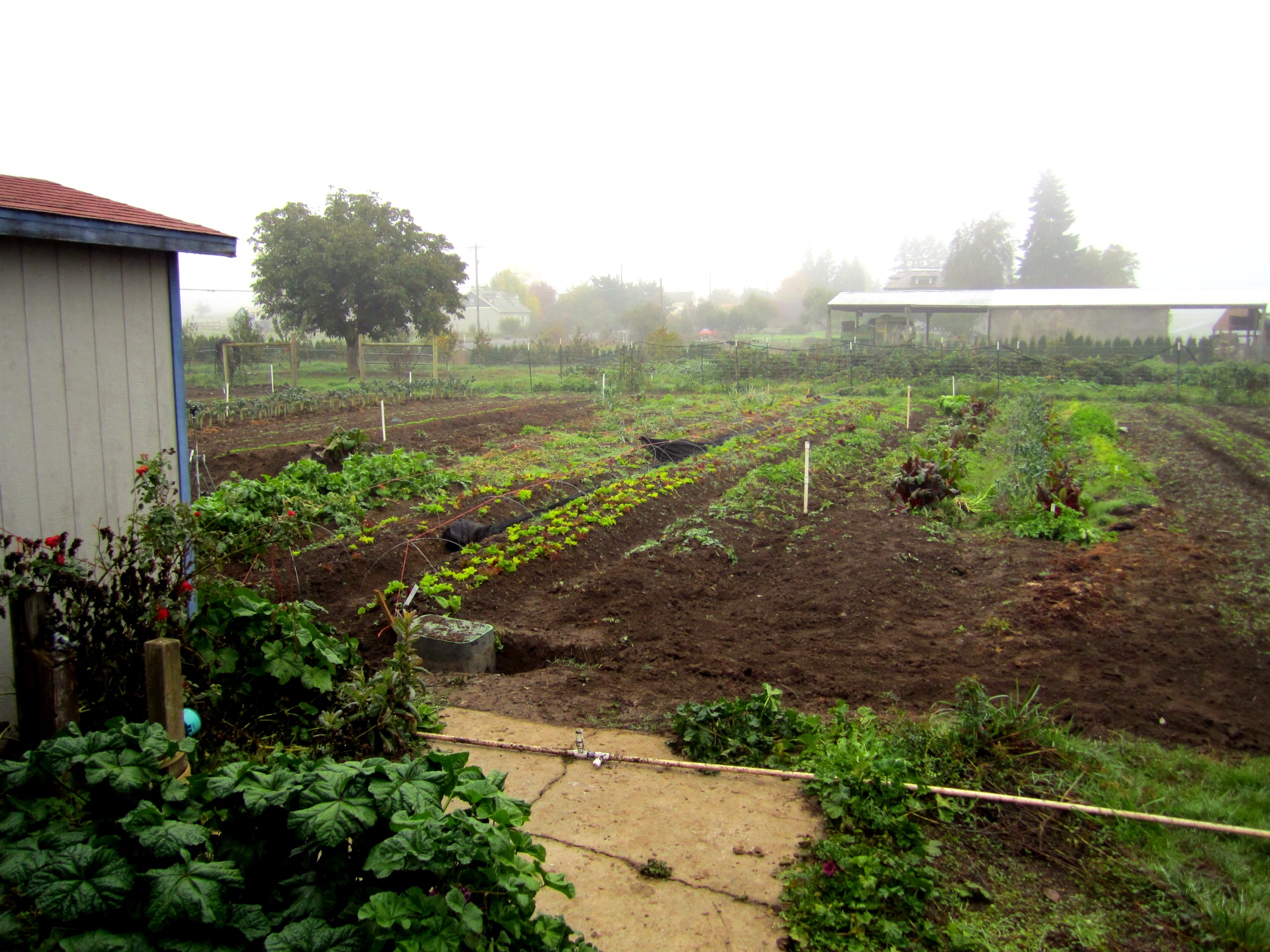
In the beginning, the Zaerpoors attempted to do almost everything on their 5-acre parcel of land. They quickly realized that raising beef steers, pigs, lambs, turkeys, chickens, and dairy cows all on a small piece of land was much like “having a football team and ballet dancers in the same spot”–it just doesn’t work.
b

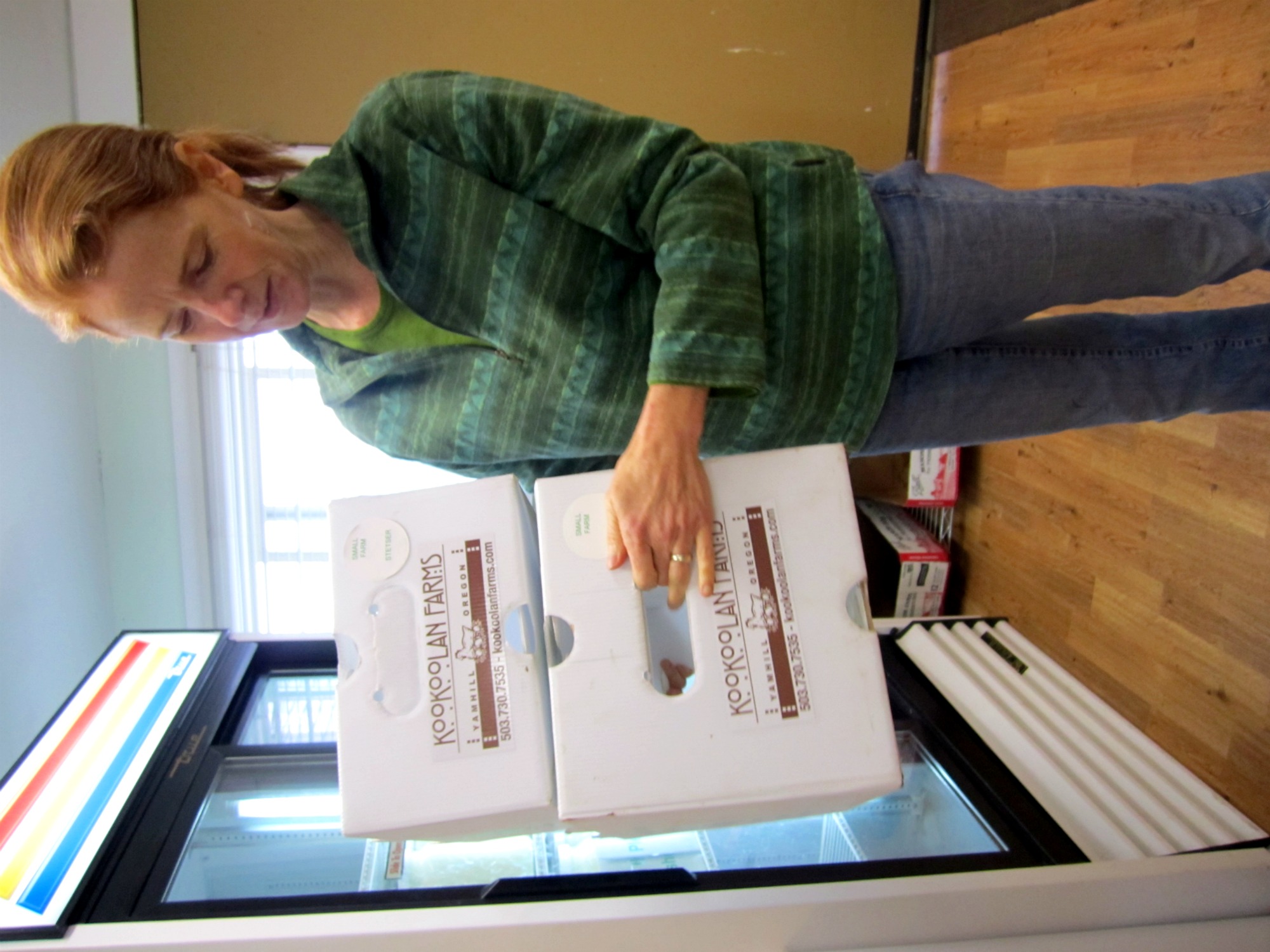
Thus, Kookoolan Farms evolved into a cooperative of small family farms. This model allows each operation to specialize in what they know best, while providing an outlet for successful sales. Chrissie’s experience with management at Intel gave her the necessary tools to oversee all of the farms, and this has turned into a prosperous relationship for all involved (she is more qualified to be a farmer than she thinks!). According to Chrissie, the support of this community is imperative because “If it takes a village to raise a child, it certainly takes a village to raise a farm.”

b
When choosing which farmers would be part of the “village” that is Kookoolan Farms, the Zaerpoors were highly selective. They wanted to be sure to choose those who would do the best job providing care for animals. Humane animal husbandry is extremely important to Chrissie. When she first became interested in food, her research showed her that there was a limit to the quality of products she could buy. Even when purchasing from the meat counter at high-end grocery stores, Chrissie was still dissatisfied with the level of transparency.
b

Determined to provide complete transparency amidst a world of translucent and opaque meat operations, Chrissie has disclosed in full detail all of the humane and sustainable practices on the Kookoolan Farms website. While many farms are catching on to the idea of giving animals quality lives by pasture-raising them, there are still few farms that follow-up these efforts by humanely slaughtering the animals.

b
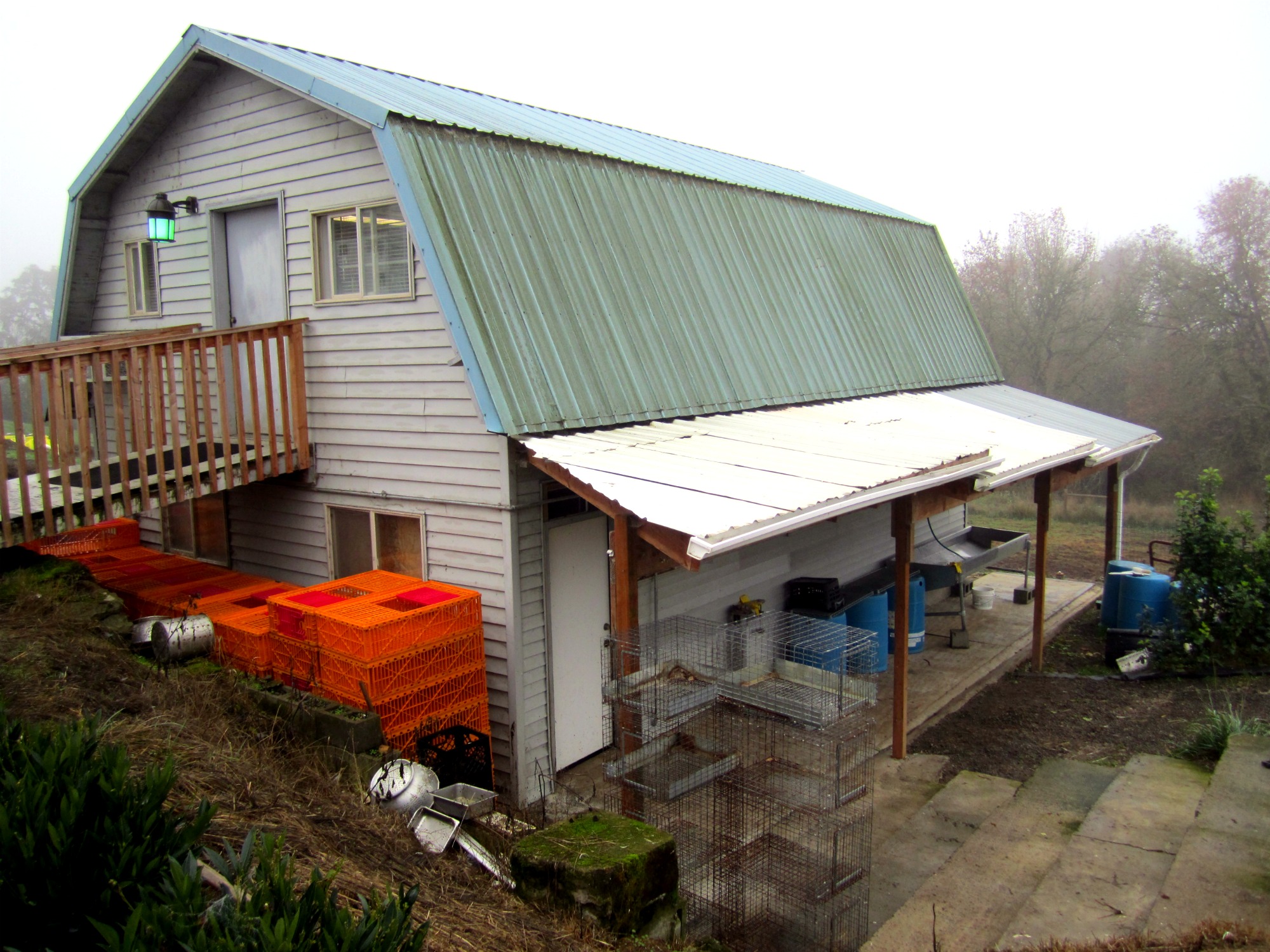
At Kookoolan, the larger animals are pasture-killed. This means that a licensed mobile slaughtering service comes to the farm to harvest beef cattle and lambs so that they are never trucked to an uncomfortable new location. This keeps the stress levels at a minimum, which can actually make the meat taste better due to the lack of adrenaline and stress hormones usually found in conventionally slaughtered livestock. Chrissie personally oversees this process with the well-being of the animals and consumers at the forefront of her mind.
b
b
This attentive care and commitment to high quality food is exactly what makes Kookoolan Farms the success it is today, and they are continuing to grow. Chrissie and Koorosh currently host three dairy Jersey cows, a vegetable garden, chickens, a meadery, and cheesemaking classes on their property. Still convinced that the Zaerpoors are unqualified to be farmers? I don’t think so!
b

Gina Lorubbio

Fall 2011 Portland Food Warrior

This post is from one of the interns in the Real Time Farms Food Warrior Fall Internship Program. These interns are in Asheville, Austin, Nashville, Portland and San Francisco, collecting data, pictures, and video on the growing practices of our nation’s farms, gathering food artisans’ stories, and documenting farmers markets. We all deserve to know where our food comes from!
Posted in Food Warrior Interns, On the Farm | Tagged , , , , , , | Leave a comment

An Ode to Goats: The Unsung Hero of American Farms

If you poke around on the Real Time Farms website and peruse recent adventures of the Real Time Farms Food Warriors, you’re bound to see some recent attention on goats.
blank
This is no accident. As the Food Warriors explore farmers markets, we’re coming across some great goat cheese vendors, and as I’ve learned, goats are not a fad here in the United States. In fact, they may be the answer to food allergies, as well as the solution to disappearing dairy farms across the country.
blank
Dairy cows are embedded deep in United States history, with European immigrants bringing cattle into the country for home and local use for dairy products and meat. Today in the United States cow dairy products trump those of any other milk-producing animal.
blank
Around the world, however, goat milk and goat products have been recorded to have been around the world since ancient times. Goats were depicted as a revered animal in Ancient Egypt, and were one of the first animals man has domesticated; goat herding estimated to have evolved in Iran some 10,000 years ago. Goats continue to be the leading milk producers around the world, though people do also raise and consume milk from sheep, yaks, water buffalo, horses, reindeer, and even camels.
blank
blank
With the growing concern and discovery of food allergies and lactose intolerance, with cow’s milk being amongst the top origins for allergic reactions, people are turning to other kinds of milk.
blank
Goat’s milk for some people may be the solution. Goat milk may be more digestible than cow’s milk in part due to the composition of its fat molecules; those found in goat milk are smaller than those found in cow milk. Fat found in goat milk, in fact, is small enough where goat milk surpasses the need to be homogenized, the process of forcibly breaking fat globules by mechanical means.
blank
The protein found in goat milk, which forms softer clumps in the stomach than that found in cow milk, also makes it easier on the digestion system and less allergenic. The nutrition profile of goat milk is similar to that of cow milk, and is even more similar to human milk.
blank
blank
Although cow milk is the most popular milk of choice in the United States, dairy farms have been on a steady decline in the country. This is due to large dairy corporations manipulating the pricing of milk; small farmers are not even earning the cost back of what they produce in addition to increased labor costs. While mega-dairy industrial factories grow in number and production, smaller farms with a smaller number of cows are dying out.
blank
With a mortgage to pay, a family to raise, and a beloved career at stake, what’s a farmer to do?
blank
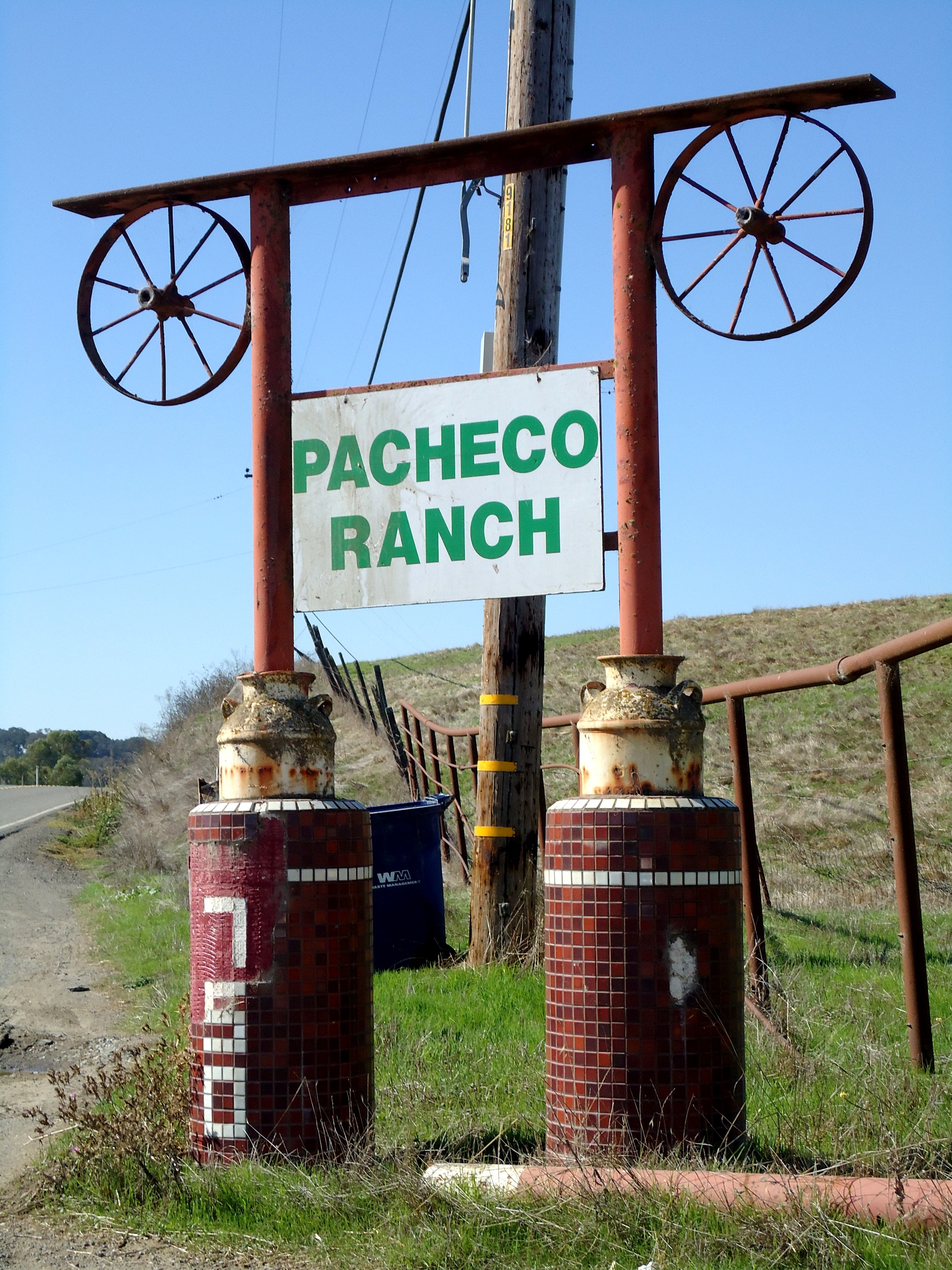
For Jim and Donna Pacheco of Petaluma, California, this meant thinking both realistically and creatively. They needed to sustain 230 acres of lush Sonoma County land—their source of income and family’s home.
blank
“With this ranch we really couldn’t sustain having 600 cows. It’s definitely one of those things, you do what you need to do, and can do, to make the payments,” Donna Pacheco says.
blank
The Pachecos transitioned their dairy cow farm into a goat farm in 1997 and created the Achadinha (pronounced “osh-a-deen-a”) Cheese Company in 2004. Goat cheese is more popular amongst consumers than goat milk; goat cheese companies are often the route of small goat farmers. Today Achadinha cheese is on shelves in Sonoma County stores, in addition to being a presence at 40 farmer’s markets a week, where they see their biggest return on investment.
blank
While the Pachecos have been making cheese for years, it wasn’t until 2010 that they built their own cheese making facilities on their own ranch, just steps from the family home, and was able to milk, process, age, and package their cheese all in one location, thus making it a farmstead cheese.
blank
blank
The Pacheco’s cheese-making process involves Donna, Jim, and all their four children, in addition to a couple of employees.  The cheese is handled with minimal machinery, from milking to squishing the huge balls of curd of whey,the process is largely done by hand. The cheeses are pressed into wheels that weigh in from 15-18 pounds and aged at a controlled temperature between 50 and 50 degrees.
blank
The Pachecos produce 3 types of cheeses: the Portuguese-inspired Broncha, their fresh Feta, which is cured in a sea salt brine, and their award-winning Capricious cheese.
blank
Though the cheese company is relatively young, their Capricious cheese has earned quite the reputation, named “Best in Show” by the American Cheese Society in 2002 and named one of Saveur Magazine’s “50 Favorite Cheeses in the United States” in 2005.
blank
Just outside the cheese-making facility are the Achadinha goats, all 600 of them. The Pachecos have all 6 traditional goat breeds: Toggenburg, Alpine, La Mancha, Oberhasli, Saanen, and the Nubian, which produces milk with the highest butterfat percentage of the breeds.
blank
Dairy goats are seasonal breeders, breeding in the late summer (when it gets cooler) through early winter. They do not mate in the hot summer. The gestation period is five months, and during the winter months, the most dairy goat farms don’t sell goat milk, often depending on cheese sales until spring season. The Pachecos must keep an eye on males and females during breeding seasons. The does must be kept in a separate pen when pregnant to ensure a healthy pregnancy, and the males will breed themselves to death, even forgoing eating, if not given extra attention to.
blank
“We don’t use hormones. So we are based on their seasons”, Donna stresses the schedule of their goats affecting cheese quality as we tour the farm.
blank
“You’re messing with your bodies by doing that.” Donna says, overlooking her (goat) kids. She wasn’t talking about her animals, either. The Pachecos are big supporters of naturally grown food, and wholeheartedly believe that you eat what your meal ate.
blank
The entire farm lives this philosophy, as is evident by what the animals eat. In addition to goats, the Pacheco Dairy also has four Australian Sheperds, a handful of Jersey and Holstein cows, chickens, and pigs. They all enjoy nibbling and sipping on leftover goat milk as well as day old  Acme bread from nearby San Francisco and cheese rinds left over from the cheese-making process.
blank
blank
The Achadinha goats are also treated to brewer’s grain, which Jim gets at three different local breweries.  Not only is a source of protein and vitamins, but the goats absolutely love it! The goats are not fed corn or cottonseed, and are able to pasture feed year-round.
blank
As with everything else with the farm, everything has a place and purpose, even the goat’s waste! The Pacheco’s rent out a spot on their land for a composter who takes the goats’ waste, and with the help of Mother Nature and some heavy machinery, is able to produce an all natural compost, which he uses for landscaping jobs. The Pachecos also sell their milk to other dairy farms and cheese companies, rent out pasture to neighboring farmers (a common practice amongst farmers), as well as space for a small business, and living quarters for tenants.
blank
The name Achadinha is actually a nod to Jim’s Portuguese roots. Achadinha is a small, remote coastal village in Portugal. The land is lush and green, and is extremely fertile with volcanic nutrients, which makes it no surprise that the town’s main industry is agriculture. It’s no accident either, that Jim’s father first established the Pacheco Dairy in Bodega Bay in 1955, then to Petaluma in 1969. Though in comparison Petaluma is 40 minutes inland, both areas are known for its abundant natural resources.
blank
As a third generation farmer, Jim is determined to keep the tradition up. He has held on tightly, and as he teaches the practice to his children, the roots of the Pacheco family plant deeper into those 230 acres. Though times have changed the Pacheco Ranch is able to adapt and thrive, with the unexpected help of the goat.
blank
Here’s to goats!
Charlotte
Fall 2011 San Diego Food Warrior
blank
This post is from one of the interns in the Real Time Farms Food Warrior Fall Internship Program. These interns are in Asheville, Austin, Nashville, Portland and San Francisco, collecting data, pictures, and video on the growing practices of our nation’s farms, gathering food artisans’ stories, and documenting farmers markets. We all deserve to know where our food comes from!
Posted in Food Warrior Interns, On the Farm | Tagged , , , , , , | Leave a comment

Pearl Bakery: Eat Bread. Build Relationships. Be Sustainable.

“People know they are getting our blood, sweat and tears in every baguette. We are hands on all the way,” explains Pearl Bakery production manager Jared Lester.
blank
blank
Pearl Bakery founder Eric Lester bestows importance on family, community and sustainability to stand apart and together as a company. When Eric considers sustainability, he moves from the individual ingredients in his dough to the livelihood of his workers, and local community.
blank
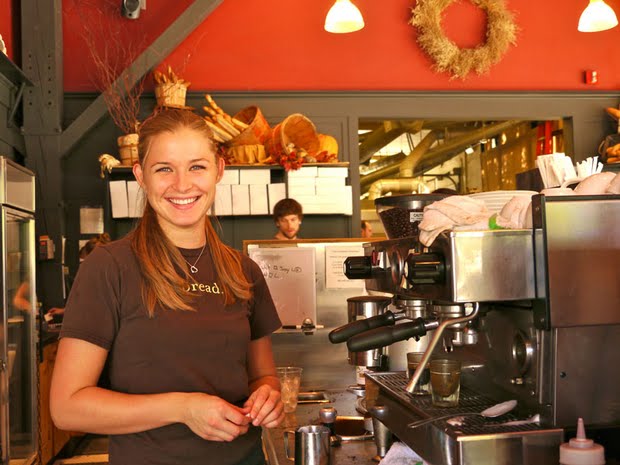
With co-owner and wife Mary at his side, they’ve formed essential relationships with local farms to source quality ingredients from Portland Farmers Markets and Millennium Farms in Washington State. Free-range meats, local (rbst-free) butter, regional flour and organic, fair-trade coffee from Batdorf & Bronson set the bakery apart.
blank
Son Jared Lester was surprised to be baking with a degree in electrical engineering, but has found his training in efficiency useful for evolving sustainable practices for the bakery. Bakery manager John Wooley explained to me that the bakery’s sustainable practices include: bicycle delivery, recycling, composting, wind power and biodegradable cleaning products and packaging.
blank
blank
“You are hard pressed to find someone working here who does not have a family member also working here, especially in production. We are working as hard as we can to make sure we are employing as many people as possible. That is at the core of our mission”, explained their son, Jared.
blank
Fall 2011 Portland Food Warrior
blank
This post is from one of the interns in the Real Time Farms Food Warrior Fall Internship Program. These interns are in Asheville, Austin, Nashville, Portland and San Francisco, collecting data, pictures, and video on the growing practices of our nation’s farms, gathering food artisans’ stories, and documenting farmers markets. We all deserve to know where our food comes from!
Posted in Food Warrior Interns, In the Pantry (food artisans) | Tagged , , , , , , | Leave a comment

Urban Gleaners: A League of Political Foodies

The Portland food industry is a titan; the foodies here run among the elite gourmand. The Portland food industry is also metamorphic; it is at once a science, a moral attitude, a political persuasion, and an art. The cult of gastronomic purists in Portland has taken the art of culinary masterpiece to the extreme (Dr. Sushi and BBQ?). For all of its myriad forms, the kind of eating we do in Portland is almost a singularly bourgeois past-time and yet Oregon also shamefully has the 2nd highest rate of hunger. In a town with an army of epicurists it’s criminal to  have so many who suffer from food insecurity. Many agencies have stepped up to diminish the yawning divide between the hungry and the well-fed.

One such agency, Urban Gleaners, has taken dumpster diving and wielded it as a sharp and effective tool for reducing waste and hunger. For many, when we think of dumpster diving there is a quick shiver of distaste, like you just swallowed a bad piece of sushi. But for many, dumpster diving, also known as gleaning, is a badge of honor and a way of life.

Urban Gleaners is trying to capitalize on the asymmetry between food production and consumption. They are a non-profit agency that creates relationships with local restaurants and farmers markets to gather up the excess food not used or sold.  The gleaners then store their bounty in refrigerators that are strategically placed around Portland and eventually handout the food at certain dispensary sights around the city, usually schools.

Urban Gleaners was started by Tracy Oseran in 2005. Oseran was listening to an NPR broadcast of Here On Earth. The show was highlighting a nonprofit in Cambridge Massachusetts called Food For Free that provided low-income families with “recycled” food. Inspired, Oseran took her two teenage kids and canvassed the local Portland restaurant scene. Oseran was surprised to find that no parallel to Food For Free yet existed in Portland, the progressive pioneer. On her first whirlwind tour of Portland, Oseran visited Blue Hour, one of Portland’s high end restaurants, and received their first food contract. Soon her efforts started to snowball. The early momentum has sustained the organization until today. Urban Gleaners, like Food For Free in Massachusetts, and City Harvest in New York, receives some outside funding (Amex contributes to Portland’s effort), but relies heavily on the capable and free labor of its volunteers and donators.

After 6 years of operation, Urban Gleaners feeds 900 families and delivers food to 5 schools in low-income neighborhoods. In weight, that translates to 45,000 pounds of recycled food a month diverted from the dump. Their effort seems negligible compared to the 200,000 tons of food waste that is destined for landfill in Portland every year. But the human incentive is great and keeps Urban Gleaners rallying against the mountain of waste.

Despite some early hang-ups, friends and allies in the food industry are supportive. My contact at Urban Gleaners, Emily Kanter, believes that last year Trader Joe’s donated almost $700,000 worth of food. Because of growing momentum the stigma around “recycled” food is dissolving. Good food is good food and Kanter often finds herself drooling over the delicacies that pass through the hands of her agency. In addition to Trader Joe’s, Urban Gleaners receives food from Blue Hour, Simpatica, New Seasons, local farms and farmers markets. Eventually the gleaners hope to source directly from the farms.

Emily recognizes that the very service they provide supports and perpetuates, even validates, a system that produces too much waste – a system that isn’t held accountable for its surplus and glut. But Urban Gleaners provides an interim service, much like the economic bailout, it’s meant to float the food industry until it’s independently viable. Emily dreams of a food system in which her organization is obsolete, but admits that a small amount of gleaning will probably always be necessary.

If you’d like to learn more, I’d  first recommend watching the movie that sparked my interest, Gleaners and I. It does a wonderful job of articulating the anguish and the criminality of a system that perverts the true meaning of value. For those in Portland, check out the Portland Fruit Tree Project, an organization that gathers volunteers to harvest produce from people’s yards. Individuals contact The Fruit Tree Project when they have too much produce (lemons on their lemon tree, raspberries, spinach in the garden) to pick themselves. Half of the loot goes to people who pick it and half goes back to the agency for donation.

Good Grubbing,

Ava Mikolavich

Fall 2011 Portland Food Warrior

This post is from one of the interns in the Real Time Farms Food Warrior Fall Internship Program. These interns are in Asheville, Austin, Nashville, Portland and San Francisco, collecting data, pictures, and video on the growing practices of our nation’s farms, gathering food artisans’ stories, and documenting farmers markets. We all deserve to know where our food comes from!

Posted in Food Warrior Interns | Tagged , , , , , , , , , | Leave a comment

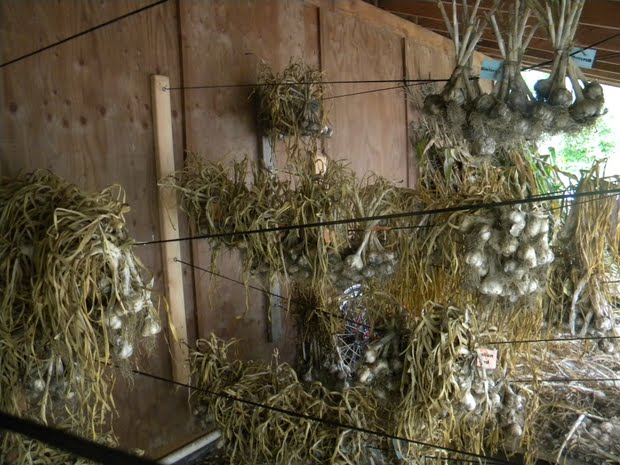
300+ Organic Crops – Simply Because They Want To

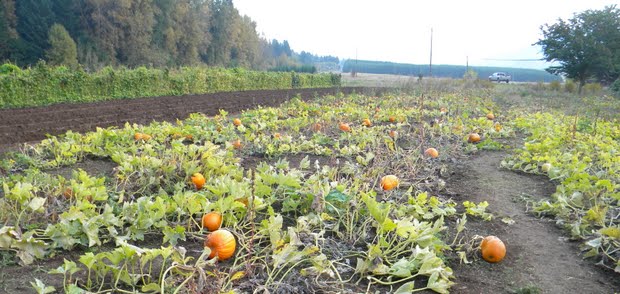
The preschoolers who visit Anne Berblinger’s farm won’t just wander in and pick out an anonymous pumpkin. Instead, they will claim their own particular prize, the future jack-o-lantern that they chose as a seed, nurtured as a sprout, and later transplanted into the soil of Gales Meadow Farm.
blank

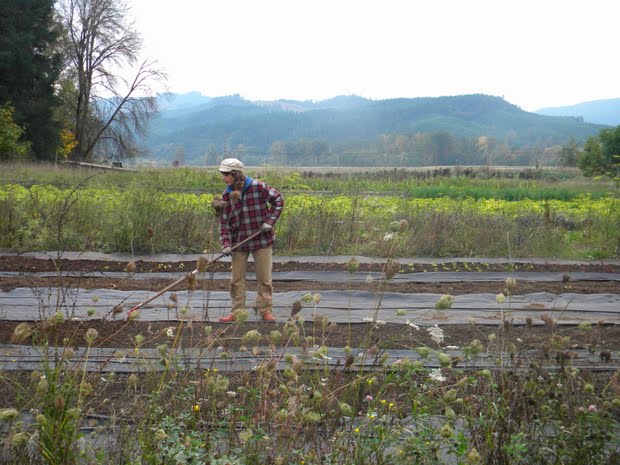
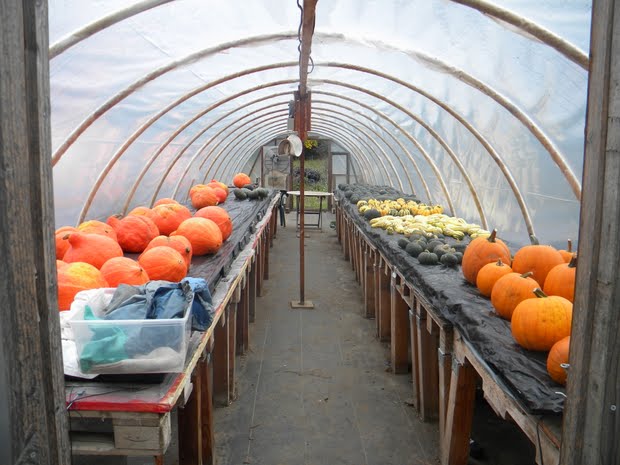
Anne, who owns the farm with her husband René, wanted the children to have a connection with their pumpkins, and more importantly, with the process of growing and harvesting crops. This concern for the integrity of the harvest is consistent with Gales Meadow Farm’s goal to produce wholesome, sustainable goods.  They don’t only grow pumpkins; in fact, on their seven acres of land, they grow over three hundred types of organic crops.
blank
To manage this incredible variety in a small space while maintaining the health of their farm, Anne and René make sure to plant crops with similar growth requirements (water, soil, etc.) together.  They also rotate their vegetables and herbs so as not to deplete the land of nutrients, save the prime seeds of one year for the next planting, and use drip irrigation to preserve Gales Creek, the farm’s namesake and water source.
blank

Gales Meadow Farm has been certified organic since 2001. They use organic fertilizer and no insecticide, save for treating aphid infestations with Dr. Bronner’s soap.  They love ladybugs, which eat aphids, and loathe the pesky cucumber beetle.Four adult ducks and their eleven ducklings roam around the farm, led by Sgt. Queenie the goose, who was rescued from a wildlife center. As Anne says, these feathered friends are “endlessly amusing,” but more importantly, they are a natural predator of the slugs and grubs that would otherwise demolish crops.  They also have three mouse-hunting cats, some chickens (for their own personal eggs) and a big friendly bunny named Stuart.  Stuart, once intended to be someone’s dinner, now sits happily eating chard and other leftover crops.
blank

Although Anne and René know all the secrets to keeping a small, thriving organic farm, they were not born farmers. She spent thirty years working with the federal government to aid economically distressed communities, while he plays and teaches the guitar, banjo, and mandolin.  Now, after agreeing to follow their passion for gardening and vegetables, Anne manages the plants and farm marketing, and René focuses on the soil, machinery, and “big picture stuff.”  They have a few rotating employees, sometimes including their own children, who help tend the fields and prepare the meals they all share together.
blank
The love for food, land, and all kinds of living things that abounds at Gales Meadow Farm makes it seem so much bigger than its seven acres. Anne and René grow so many crops simply because they want to – they want to bring a variety and vibrancy to the taste buds of their lucky customers.  As they did for that class of pumpkin patch preschoolers, they want to bring everyone a deeper understanding of what the earth has to offer.
blank

Gales Meadow Farm supplies to Oregon restaurants like Andina, Nostrana, and Abby’s Table. They can also be found at the Lloyd Center Farmers Market, the Hollywood Farmers Market, and the Cannon Beach Farmers Market. Be sure to try one of their six varieties of garlic!

Katie Woods

Fall 2011 Portland Food Warrior
blank
This post is from one of the interns in the Real Time Farms Food Warrior Fall Internship Program. These interns are in Asheville, Austin, Nashville, Portland and San Francisco, collecting data, pictures, and video on the growing practices of our nation’s farms, gathering food artisans’ stories, and documenting farmers markets. We all deserve to know where our food comes from!
Posted in Food Warrior Interns, On the Farm | Tagged , , , , , , | Leave a comment

Muscovy Duck is unlike any “duck” you have eaten

Muscovy Duck tastes like a veal duck, or a duck veal, or perhaps it tastes like Muscovy Duck.

Borden - Beemer in spa

David Beemer, of OmniUnum Farm, decided he wanted more control over his food supply.  In lieu of purchasing Michigan peat and compost, Beemer decided to raise poultry for their manure, a nutrient-rich and accessible fertilizer.

Beemer choose Muscovy ducks as his poultry of choice after being served it at Paul Bocuse’s restaurant in Lyons, France. “I asked for something that I could not get in this country… He brought me Magret – and I ate it. They asked me what I thought it was and I said, “that was probably the best veal I have ever had.” And they said, “This is Muscovy Duck.””

Beemer has partnered with Antoinette Benjamin, of Food for all Seasons Catering, because “she is the only one I have found who knows how to cook them. I am a good example – I overcooked the last one. I just didn’t have time to follow the directions she gave me.”

Endemic in an animal designed to perch in trees not wade in water, Muscovy ducks have about 18% fat as opposed to Pekin duck with 29% fat. This fat difference and the less significant oil gland in the Muscovy alters the flavor of what our taste buds recognize as “duck” and can complicate cooking Muscovy for those not familiar with the meat.

According to Benjamin, trained by renowned French chef Madeleine Kamman, “cooking Magret is a matter of technique. So if you look up cooking duck breast, it is different with the Muscovy. Just because of the fat.”

Recently, I was able to try Muscovy courtesy of ici Urban Bistro in Washington DC. The consensus at the table was that the meat was “absolutely fabulous” and unlike anything anyone had eaten before – a bold, unique flavor arising from a texture that crumbled like veal, unlike poultry’s striation.

Borden - Muscovy duck breast

I was also able to see firsthand the difficulty of cooking Muscovy. When the breast slices arrived to the table they were medium rare and succulent. By the time we finished eating the meat (20 minutes later?) the slices were cooked through from the residual heat. The flavor was still there but the texture was dry and unappealing.

As Benjamin says, “Magret is the BEST for the Muschovy – I mean it is JUST AMAZING. I mean as I said, I don’t think that people – most people wouldn’t know, like David, what they are eating. They wouldn’t know it was duck breast.”

Chopstick Crazed,

Corinna

(originally published in AnnArbor.com)

Posted in On the Farm | Tagged , , , | Leave a comment