64 Markets in Less Than 90 Days: Coco & Lafe Report on Ohio

It’s been weeks since we’ve written. We were tired.

Here’s a song to listen to while you read, if you’re so inclined: Someone to Ride the River With.

Let’s play catch-up.

Mileage log

9,200 miles in less than 3 months, 64 farmers markets and 96 gigs total.

We’ve driven through forest fires in New Mexico, floods in Iowa, and cows in Kansas. We’ve taken hundreds of pictures of farmers, including over 500 of Ohio’s very cool farmers markets. So we’re going to write sdrawkcab (That’s “backwards” written backwards.) We’ll work our way from Ohio back to New Mexico…

Shaker Square Farmers Market in Historic Shaker Heights

The North Union Farmers Market at Shaker Square is a year round, producer-only market with over 100 vendors and a lot of great energy.

08062011 Shaker Square FM Ohio (36)


This market is set on two parallel streets and a train runs down the middle! There is a park, a band stand, trees and Dewey’s Coffee Shop, one of my favorites in Cleveland.

Tiffany LeeperEmma Anderson is the manager of the Shaker Square Market but was out of the town the day we were there. This is Tiffany Leeper who was covering for Emma. Here she is getting ready to show us her behind-the-head rock star moves. The photo was actually taken at Crocker Market,, which she does manage. She is a get-your-hands-dirty manager, walking the markets from end to end helping vendors set up tents, run electricity, solving problems and I think sneaking bites of samples when the vendors were otherwise occupied. Fearless with the guitar. About Shaker Square she wrote: “… the greatness of that market is due to her [Emma’s] hard work!” It is a GREAT market!

Humble Pie Baking Company

Meet Diane Sikorski of Humble Pie Baking Company, one of the best bakers and jam makers in the northern hemisphere. And I’m not saying that because she let Lilla the beagle stay at her house, and Lilla insisted we stay too: shoppers and chef owned restaurants will swear to her goodness. We got a  look at her ingredient sourcing and commercial kitchen. We’ll be featuring her in a “behind the scenes” blog later. In the meantime, yum.

Shaker Square Market

We run into many of the same vendors at different markets when we play in areas like Cleveland and Denver. We played at 7 different markets in Cleveland and 21 in Colorado: you start to feel like you know everybody!

Like Rittman Orchards:

Rittman Orchards in Ohio

In 1922, a group of doctors planted fruit trees on 125 acres of land and ran a roadside stand. In 2005 Matt Vodraska (pictured above), his brother Chris and their parents bought the land and “…started from scratch.” Here’s the fun part: Chris was in a doctorate program and decided he wanted no part of a basement laboratory. Matt was in art school practicing photography and glass work.

Why? Matt: “There’s something intrinsically good about planting a seed, watching it grow and then harvesting the fruit of your labor.”

08062011 Shaker Square FM Ohio (55)

It’s not a good picture of her, but that’s Frances on the right in the yellow. Frances works the markets for them.

Rittman Orchards grows 20 varieties of squash, zucchini and various veggie crops along with tons of fruit.

They sell to Cleveland Clinic Hospitals, their own farm stand and numerous restaurants, including the Flying Fig where Karen Small creates gourmet dishes with locally sourced food.

Our friends ask us why we love Cleveland. Cleveland GETS fresh.


Oasis Acres

08062011 Shaker Square FM Ohio (47)

Glen and Lois own 150 acres plus grow 10,000 plants in a 30 by 124 foot hydroponic greenhouse. They heat it with a corn burner. The storage tank is a converted milk truck container. I only saw the pictures but can’t wait to visit. They follow organic principles and grow lettuce, basil and arugula plus more. They supply restaurants, 2 colleges and direct to you at the markets. Lois is extremely knowledgeable and passionate about Oasis Acres: “It’s been a learning curve, but we now earn more from the greenhouse than we do from the other 150 acres.” These two aren’t survivors: they’re thrivers. (Don’t tell me there’s no such word as “thrivers”. I made it up. All words were made up. It’s a fresh word.)

There are lots more pictures in the Shaker Square slide show here on Real Time Farms, but here’s a few to leave you with:


Weaver’s Truck Patch

They showed up in a flatbed truck piled with veggies and left with nothing but corn husks. Read all about them in the Crocker Park Farmers Market Blog.
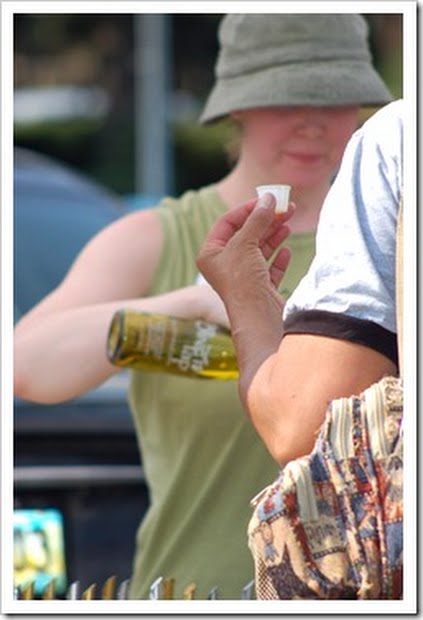
Amy of The Olive Tap08062011 Shaker Square FM Ohio (29)

Oils and vinegars. I’ve been cooking with them for two years now and love them.


Posted in Messages From the Founders | Tagged , , , , , , , , , , , | Leave a comment

What in the World is WWOOFing?

This post is from one of the 16 interns in the Real Time Farms Food Warrior Summer Internship Program (our Fall 2011 Food Warriors have started and will be blogging  soon!). These interns are collecting data, pictures, and video on the growing practices of our nation’s farms, collecting food artisans’ stories, and documenting farmers markets. We all deserve to know where our food comes from!

Occasionally I open my home to strangers. Not in creepy way, but through the website couchsurfing.com, a site where weary travelers can find a place to crash for free, and hopefully meet some new people along the way. The site is mutually beneficial as it allows me to host some interesting people from across the world. While my guests almost always make for good conversation, rarely do they turn me onto new ideas about organic farming, until recently that is.

What my guest, Sheila, turned me onto was WWOOFing, or World Wide Opportunities on Organic Farms. Despite the comical acronym, WWOOFing provides some very unique opportunities that allow people of all ages a chance to get their hands dirty on a farm. WWOOFing works by having participants express their interest on a variety of semi-related websites and hopefully, a willing farmer will allow the participant a chance to come work on their organic farm. The system works both ways as the participant gains an opportunity to work on a farm and receive food and lodging as payment, while the farmer gets a free labor and chance to instill knowledge on their guest.  The system originated in England during the early 1970’s, and has seen continual expansion ever since, so clearly something is working.

WWOOFing also has benefits for the organic farming industry as it allows many farmers a chance to remain economically viable in tough times. Peter from Oxford Gardens, acknowledged that WWOOFing allowed him to supplement some of his paid help while business was down this past year. He said while he was disappointed that he could not compensate his workers with cash, he found great satisfaction in teaching a new generation organic farming, especially in an industry he feels is being overrun by big industry. It seems often WWOOFers find the same appreciation of teaching, or as my house guest put it, “How could I even bother to ask for money, when a farmer is willing to spend so much time with a city person like myself, and open my eyes to a whole new kind of living, it seems hard to place a value on that kind of experience.”

As is usually the case, my generosity has proven to be a positive learning experiencing. During the course of a single evening I went from knowing nothing about WWOOFing, to being excited to try it out for myself. As our society condenses into ever-growing cities, and often times is disconnected from our food sources, WWOOFing seems to fill a certain void felt by many. It provides a distinct adventure for those looking for a different sort of life where they can learn a new skill, eat great food, and do so at a reasonable cost. My only hope now is that an organic farmer will return the favor and open their home to me sometime in the near future.

Alec Davitt

Summer 2011 Boulder Food Warrior

Posted in Food Warrior Interns | Tagged , , , , , | Leave a comment

Have You Tried: Cheesy Popcorn?

Borden - cheese melting on top of popcorn

Cheese melting on top of warm popcorn.

My cousin is a chef. Yes, she can debone a rabbit and braise onions for hours but those skills pale when I think of the gift she gave me one night when no one wanted to cook. She suggested cheesy popcorn.

“Cheesy popcorn? What is cheesy popcorn?” I asked, eyes wide. I love popcorn and I love cheese and the two together struck me as an excess of riches.

“I will show you.” And 15 years ago, show me she did. It is still my favorite dinner when the day has been long and drawn out, the creative cooking juices at their lowest ebb. It takes 10 minutes to prepare, it is super easy, and the quality of the final product rests on one thing – how much good cheese you want to grate.

There are recipes online and products available that make this easy for you. Cabot makes a powdered cheddar cheese that apparently sticks very well to popcorn when you spray the popcorn with a butter spray. That is not the recipe I learned.

The recipe I learned involves popping the popcorn on the stove top in oil and butter, finely grating a good swiss cheese (if you want to splurge, Comte or Appenzeller are divine), and allowing the cheese to melt onto the popcorn so that when you pick up a piece there are strings of warm cheese stuck to the corn. It is mouthwatering and very satisfying.
Here is that recipe:

1. Cover the bottom of your pot with a layer of oil, drop in butter, and sprinkle in salt (that way the salt dissolves and coats all of the corn).

2. Put three kernels into the oil and put the lid on.

3. Grab the cheese from the fridge and start to grate on the smallest setting. (Swiss cheese will want to squish back together when grated; try to avoid this by avoiding too high a pile of cheese. Rather, go wide on the plate.)

4. Once you hear the three kernels pop, pour in enough corn to be coated liberally with the oil. Put the lid back on.

5. Continue to grate. The more cheese you grate the more decadent your popcorn will be. Take a moment to shake the pot, return to grating.

6. After the corn has stopped popping, open the lid – a flash of steam and popcorn smell will envelope you as you sprinkle the delicate cheese onto the warm kernels.

7. Put the lid back on and let sit while the cheese gently melts onto the kernels. Shake the pot gently to encourage the cheese to fall into the nooks and crannies.

8. Turn onto your big bowl and devour the simple meal.

Chopstick Crazed,

Corinna

(reposted from annarbor.com)

Posted in In the Kitchen (recipes & more) | Tagged , , | 1 Comment

Backyard Farming and Garden Sharing Initiatives

This post is from one of the 16 interns in the Real Time Farms Food Warrior Summer Internship Program (our Fall 2011 Food Warriors will be starting soon!). These interns are collecting data, pictures, and video on the growing practices of our nation’s farms, collecting food artisans’ stories, and documenting farmers markets. We all deserve to know where our food comes from!

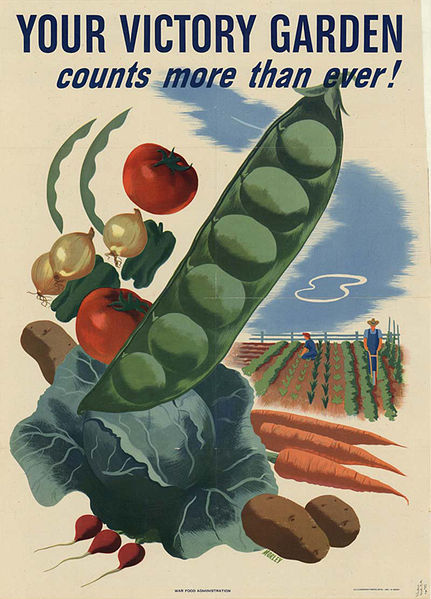
You may (depending on your age) remember America’s war-era encouragement urging citizens to “plant more in ‘44!” Victory Gardens emerged during WWII as part of an effort to reduce dependency on public food supply. Just as urban agriculture schemes today attempt to engage communities and call for self-reliance, this government and business promoted endeavor involved planting gardens in backyards and on city rooftops. The USDA estimates that over 20 million such gardens were planted and that between nine and ten million tons of fruits and vegetables were harvested in these home and community plots. That amount was equal to all commercial production of fresh vegetables; apparently the idea worked.

Today’s equivalent (minus the strong government and corporate encouragement) of these gardens is a subset of urban agriculture: backyard farming and garden sharing. This concept is based on arrangements and collaboration: essentially, a landowner allows an individual, gardener, farmer or business access to their land for the purpose of growing food. Some backyard farming initiatives like Portland based “Your Backyard Farmer” operate a business of running aggregated micro farms; in this situation individual households or private properties are contracted, tended to, and harvested, and then produce is sold back in a subscription model resembling a CSA. Others like “Growfriend” simply offer a system that establishes the connection and logistics of a garden-sharing relationship. Even so, extensions of this idea offer further growth and promise for the future of urban agriculture and a resilient food system.

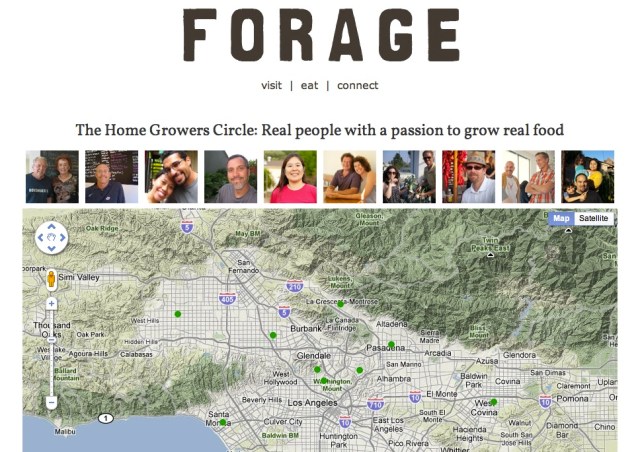
It may not be long before diners arrive at their favorite restaurant bearing vegetables from their own backyard for the professional kitchen staff to prepare and serve back. Already at Los Angeles restaurant Forage, restaurant guests are served menu items crafted from “the best of the backyard” – ingredients collected by one of the restaurant’s certified group of foragers or harvested by one in the “Home Growers Circle.” A quick glance at their menu and mouth-watering photos is reason enough to believe that such a system can yield quite a palatable result.

In short, city-dwellers have incentive to transform their concrete jungle surroundings into a productive and profitable system. Urban residents can then have access to increased amounts of local food and perhaps more importantly, have the exposure necessary to form the connection between root and table. These schemes also contribute to the social dimensions of a community. Engagement in the food system heightens urban consumers’ awareness and knowledge of issues, better equipping people to address them. Furthermore, propagating productive green space in urban areas will have ecological benefits that can hardly be ignored. If we consider the cyclical movement of history, the success of victory gardens suggests that urban agriculture today has the potential to make a significant impact as well.

Chelsea Burns
Summer 2011 Seattle Food Warrior Intern

Want to lean more?

BK Farmyards

Video: Stacey Murphy, founder of BK Farmyards (Brooklyn, NY)

Video: Your Backyard Farmer – Urban Farming at its Best! (Portland, OR)

Posted in Food Warrior Interns, On the Farm | Tagged , , , , , , | Leave a comment

Composting: San Francisco Style

This post is from one of the 16 interns in the Real Time Farms Food Warrior Summer Internship Program (our Fall 2011 Food Warriors will be starting soon!). These interns are collect data, pictures, and video on the growing practices of our nation’s farms, collect food artisans’ stories, and document farmers markets. We all deserve to know where our food comes from!

While visiting a friend in San Francisco recently, I was surprised when while making dinner, I saw her grab our leftover scraps of vegetables and toss them into a small green bin next her sink. Composting is far from an unfamiliar concept to me, but what surprised me was that the bin was provided to her by her city, and that San Francisco requires all properties in the city to compost leftover food and garden debris. Thanks to systems like this, San Francisco is actually the greenest city in North America.

In 2009 the city of San Francisco created the first large-scale urban composting system in the country. They provide each residential property with both a small bin, designed to go in kitchens, and a larger bin, to put all the compost in to be collected weekly, along with recycling and trash. Acceptable green waste includes food scraps (described as anything that used to be alive), food-soiled paper (such as coffee filters, greasy pizza boxes, and used paper cups and plates), and plants (including branches, flowers, leaves, grasses and weeds).

The materials are sent to Recology’s Jepson-Prairie compost facility located in Vacaville, California, and the company collects about 540 tons of food scraps and plants daily. This creates about 95,000 cubic yards of nutrient-rich soil, which is then sold to farms and vineyards in Northern California and is used to produce the organic food and wine that this region is so famous for having.

There are numerous environmental benefits to composting. The organic soil that results from composting reduces the need for fertilizers and pesticides, and it also helps the farmland retain water, so less irrigation is needed. Composting also reduces landfill waste and methane emissions, and recent research has also shown that the increase in composting in San Francisco has decreased carbon emissions in the area drastically. Recology’s compost is frequently used to help grow crops that help farms manage soil quality, and these crops draw carbon in from the air, and the carbon is deposited deep into the soil by the roots of these plants. According to Recology’s public relations manager, using compost on one acre of land can eliminate 12,000 pounds of carbon in one year. This means that San Francisco’s composting offsets their carbon emissions by 354,000 metric tons.

Going by those numbers alone, it seems surprising that more cities in the United States haven’t adopted this composting system. Research has shown that, in 2008, Americans generated about 32 million tons of food waste, but less than 3 percent of that was composted. Cities like Seattle have made steps to adopt successful compost systems as well, but there are still numerous other cities that could pull off a system like San Francisco’s.

Maddy Kiefer

Summer 2011 LA Food Warrior Intern

Posted in Food Warrior Interns | Tagged , , , , , , | Leave a comment

Composting: From Fork to Farm

I wrote a series titled Farm to Fork detailing my visits to Ann Arbor, MI farms and could not resist the pun reversal.

Borden - compost container on counter

Our compost collection pail.

My grandparents on their farm taught me to take the byproducts of cooking and feed them back into the soil. Every two or three days a bowl – of eggshells, mussel shells, onion skins, zucchini ends, apple cores, lettuce ends, etc. – was dumped on a pile of weeds and leaves. Once a summer my sister and I would be instructed to “turn” the pile over onto an adjoining space. After a full winter the two-year-old compost would be spread back onto the garden.

This is the system we use in our garden today.

According to the EPA’s Municipal Solid Waste Generation Report (2008) the average person throws away 4.5 pounds of trash per day. Of that trash, 12.7 percent is food scraps, 13.2 percent is yard trimmings, and 31 percent is paper – which means that 56.9 percent of our trash can be composted. Composting removes that waste from landfills, reduces air pollution from burning the debris, and improves the soil – it is a win-win.

Borden - cold compost pile

The pile of compost gentle deteriorates in the weather.

There are several different ways to deal with food scraps, each one appropriate for whatever space or time constraints you have: cold composting, hot composting and vermiculture. The point of composting is to allow organisms (bacteria, microbes, worms, etc.) to break down organic matter into humus. Humus is the finished stable product of composting and is wonderful fertilizer. Cold composting is for those with a lot of space, time and little desire to futz with the pile. It is what my grandparents did and what I do. It does not look very attractive, but is very easy and is manna from heaven for plants.

If you are inclined to create a hot compost pile in your garden you will need a container that allows airflow and maneuverability, because you will be turning the contents every 5-7 days to allow in oxygen. The ideal ratio of carbon (brown dead material: wood chips, shredded cardboard, sawdust, shredded newspapers, etc.) to nitrogen (green recently live material: weeds, meal waste, grass clippings, etc.) is 25:1, which usually equates to 2 parts brown material to 1 part green material. Hot composting is the method whereby the pile is constructed all at once and monitoring of the moisture content is necessary to make sure that it does not get too wet or too dry. There are many containers available in the market place to make it easier to compost this way. Kevin Dorn recently spoke about this in his community post.

Borden - worms from composting

A handful of yummy worms from our vermiculture bin.

The method I was the most excited to learn about during my Master Gardener Class was vermiculture. Vermiculture is the practice of worm composting, which can be done inside in a rubber container. It is perfect if you live without access to an outside space. I was very curious to learn more and thrilled when I met the ladies in charge of the The Worms Do It at the Plymouth Green fair last year.

Yes, I could have constructed the worm composting system myself. I could have schlepped to a store, purchased a large rubber container, drilled holes in it, ordered some red wiggler worms online or visited a bait store, but I chose not to. I bought one ready-made from their booth at the fair and talked a friend into doing the same thing.

One of the founders advised the best way to approach vermiculture: “Think of the worms as pets, feed them a specific amount daily, keep them moist and their bed comfortable with lots of bedding. When the time comes to clean their beds out and put new in, instead of throwing it out as waste you have the most nutrient rich food for your plants you can get. Wow! And it doesn’t go into the landfill, double Wow!”

Double wow, indeed. From fork to farm.

Chopstick Crazed,

Corinna

Posted in On the Farm | Tagged , , , , | 2 Comments

Portrait of an Artist: Chef Jason Hook

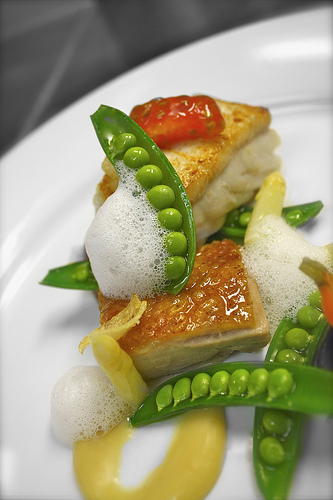
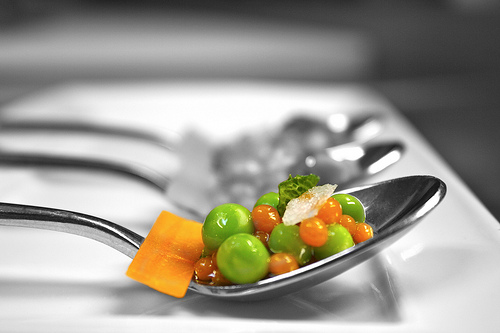
Photo courtesy of Jason Hook | halibut + chicken leg press, english peas, white aspargus, brodo foam.

The heavy lifting side to cooking – sliding a bone saw through a 200-pound quarter of beef, for example – belies the regal decadence of the art in the final product. Perfectly balanced orbs of color, texture, flavor and elegance arrive to your table. Removed from the blood of the animal and the dirt of the soil as diamonds from carbon.

Chef Jason Hook is comfortable with both sides of this kitchen coin. The same arms that wrestle to break down a halved hog also create foam of the lightest air to grace a perfectly composed plate. I recently had the pleasure of sitting down with Hook, recently of the Glasbern Inn, a young chef whose enthusiasm for food as both “sustainable” and as an “theatrical experience” was rivaled only by my awe of his energy, plans, accomplishments (check out his book!), and comfort with all facets of the food experience.

Hook’s experience is dizzying – just thinking about it conjures up whirlwind images of late nights, sharp knives, sousvide bags, and the furrowed brows of cooking luminaries. He started his culinary travels in the kitchen of Le Bec Fin in Philadelphia for his first taste of French Cuisine, where he was shortly recruited to The Four Seasons in New York. After a short stint in The Four Seasons in Paris, he returned to NYC, joined Lespinasse, then worked under Alain Ducasse and Jean Georges, before leaving the city to captivate diners with his skills from Reading PA to Providence RI.

Photo courtesy of Jason Hook.

One of the many reviews I found was from his time as chef at Dan’s Restaurant in The New York Times, “Hook demonstrates exceptional talent for marrying flavors and highlighting natural tastes, from foie gras with roasted white peaches and fresh honeycomb to tilapia with truffles and golden chanterelles.” You can also see him in this Fox Providence video from his time at Café Nuovo making roasted halibut.

This summer Chef Hook has been holding “pop-up” dinners in the Lehigh Valley as he lays the groundwork for starting his own restaurant.

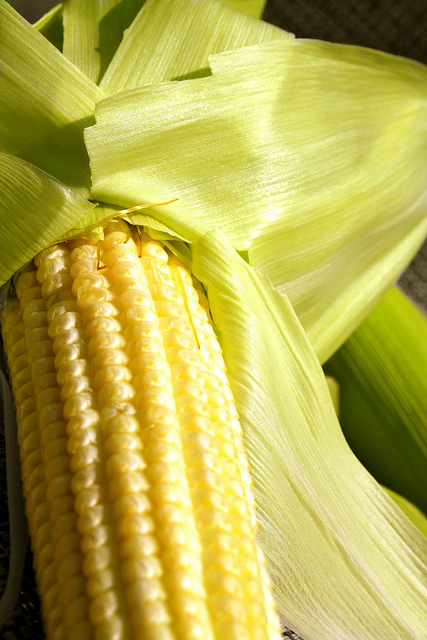
His latest pop-up was held on August 17. Fern Hall hosted Hook for his “celebration of summer corn from Ships-Holmes Farms.” Hook created 13 courses and every course had corn “in different textures. You can’t beat corn in this area right now – and plus it sounds interesting – when you can translate a dessert into corn – like corn cob crème brulee, which is what we did.”

According to Hook, Ships-Holmes Farms started right after WWII and has been in the same spot for over 60 years, “and so I asked him what his secret is and the farmer said to me, “cow shit,” But that is exactly what it is!” Hook grinned, continuing. Pop-up farm dinners “shows off the farm and shows off the craftsmanship of the farmer and I like that.”

Photo courtesy of Jason Hook | "peas + carrots"... carrot caviar, english peas, mint

“You try to use the product that it is at its peak – how can you mess up corn harvested that day – when you are using a pudding with a sea scallop flown in that day with summer truffles and a lobster sauce you just made – I mean, how can you mess that up? That is what is fun. How can you mess that up?

Indeed.

Hook is partnering with other restauranteurs, farmers, and “the right people in the Valley that have a deep appreciation for art,” to open his restaurant in Lehigh Valley (while continuing to do pop-up dinners). I look forward to visiting when it is open!

Chopstick Crazed,

Corinna

Posted in At the Table (eateries) | Tagged , , , , , , | 3 Comments

Fruity Fiction

This post is from one of the 16 interns in the Real Time Farms Food Warrior Summer Internship Program (our Fall 2011 Food Warriors will be starting soon!). These interns are collecting data, pictures, and video on the growing practices of our nation’s farms, collecting food artisans’ stories, and documenting farmers markets. We all deserve to know where our food comes from!

Eating too many strawberries can lead to early cases of cancer.

Sounds ridiculous, doesn’t it? Well, that’s because it is! Nowadays, people instantly believe anything they read or hear without taking into account common sense. With all the latest diet fads, it is hard to uncover an actual shred of proof for these myths. Even some of the most common ‘sayings’ require some thought and are a strained form of the truth. Let’s take a fresh look into five of today’s familiar and recent myths about what we eat to see what they really mean.

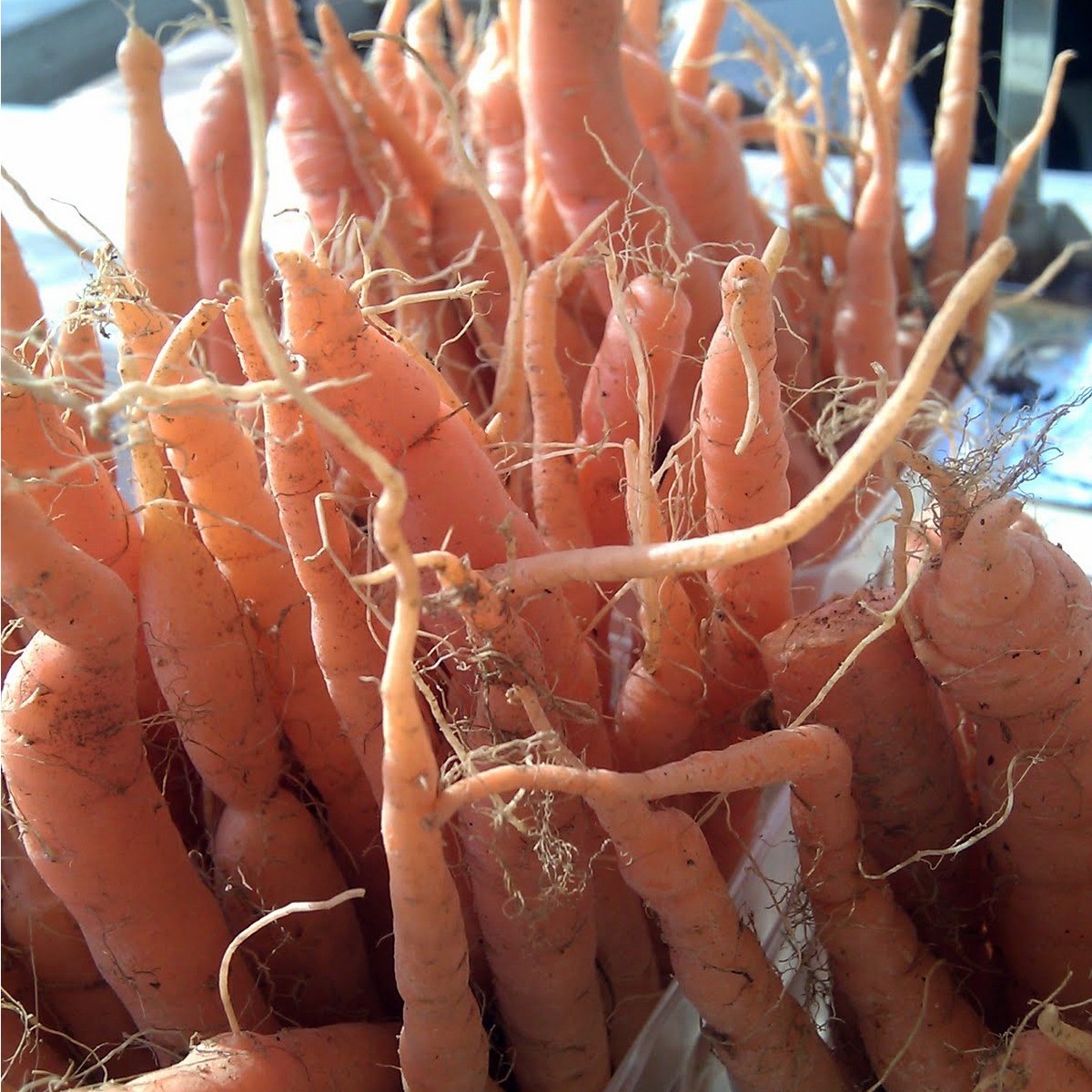
#1 Eating carrots can better your eyesight.

We have all heard this one. Carrots seem to be a common topic when it comes to discussing a vegetable’s effect on the human body. For example, eating too many carrots does cause your skin to turn yellowish-orange. Carrots contain beta-carotene that produces Vitamin A, a fat-soluble vitamin. Buildup of the beta-carotene in your blood is what causes the color change. Coincidentally, it is not carrots but this Vitamin A that improves eyesight. However, eating more carrots will not result in more Vitamin A production, instead it will cause the reversible skin condition mentioned above and possibly a toxic level of Vitamin A.

#2 Eating an apple a day keeps the doctor away.

I believe this saying originated when parents tried convincing picky eaters to eat their fruits and vegetables. There is a hint of truth that goes with this myth, yet real world circumstances keep it from being entirely accurate. Studies have shown that eating apples do lower cholesterol, specifically LDL cholesterol.  The pectin in apples also helps with weight loss. The Vitamin C improves your immune system, while the phytonutrients fight damage from free radicals. In addition, apples contain the mineral boron to help maintain strong bones. Apples even help clean teeth by fighting bacteria. Simply put: apples are an amazing fruit to help with an individual’s health. This does not mean they can prevent all diseases and sicknesses. Sadly, not even the best super-foods can stop the inevitable health issues that come with age.

#3 Eating too many cherries will kill you.

I must admit, I was slightly frightened after reading this because I put dried cherries on everything. Salads, sandwiches, even soups! I was greatly relieved after doing my research that cherries themselves are perfectly safe. However, when eating these mouth-watering fruits make sure to avoid the seeds! Seeds of cherries contain prussic acid, also known as hydrogen cyanide, an extremely poisonous liquid. This applies to plums, apricots, as well as peaches. Just remember when you bite into a cherry that pits are poisonous!

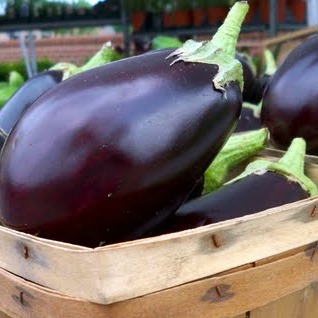
#4 When selecting eggplants, the bigger the better. 

Eggplants are a testament to the statement that bigger is not always better. Oversized, aged eggplants tend to be tough, seedy, and bitter. This fruit (yes, fruit) is very perishable and the presence of wrinkles and brown spots means lesser quality. When picking eggplants, go for the smaller and immature looking ones. You are guaranteed to have softer seeds and less bitter fruit.

blank

#5 Fresh blueberries are more nutritious than frozen blueberries.

As a dietetic major in college, this issue comes up often. I am constantly being asked, or rather, told that what I am eating is not good for me. In this case, however, I usually have the last word. When it comes to frozen fruit and vegetables, both are equally nutritious to a certain point. Quick-freezing actually prevents large nutrient loss. Vitamin C and folic acid are the vitamins mostly affected by freezing, but are easily attained from other sources. The lesson here is simply to eat your blueberries anyway you like.

This does not mean you should give up on the benefits of vegetables or starve yourself from anything with seeds. Instead take this information in consideration when choosing what to eat. Overall, if you take one piece of information with you, let it be this: eat in moderation. Eating too much of anything is not good for you. Also, when attending your local farmers’ markets keep in mind the more colorful the fruit or vegetable means plentiful nutrients and vitamins.

See you in the patch,

Susie Zammit

Summer 2011 Michigan Food Warrior

Posted in Food Warrior Interns | Tagged , , , , , , , | 1 Comment

Comparison Shopping: The costs of making your own organic jam

Here is a link to the spreadsheet I made comparing the costs of these organic berry jam options.

Borden - mashing blueberries

As the shelves in the basement fill with organic blackberry jam and organic blueberry jam – both picked by yours truly and my family in Ann Arbor, MI- I began to wonder if I was saving any money doing this myself. So I trawled the grocery shelves for a comparison equivalent to what I make – just organic fruit and pectin.

I found Food for Thought Organic Mixed Berry sweetened with juice from Homer, Michigan and Bionaturae Organic Fruit Spreads from Italy, via Connecticut. I assumed that each mile was reimbursed $0.50 for land and $1.29 for sea, as illustrated on the IRS website. I paid myself $8/hour for the 3 hours of labor it took me to pick and make 16 jars of jam.

I was hoping to show I am saving my family money by doing it myself. I didn’t.

In fact, adjusting for the assumption the two companies are sending their jars of jam in bulk cases – my own homemade, hand-picked efforts do not compete at all with the economies of scale evident on a per ounce price basis for the other jams. The prices came out virtually the same – $0.79/ounce for my homemade jam vs $0.77/ounce for both Food for Thought and Bionaturae equivalents.

Bionaturae’s spreads travel over 4500 miles to get to Ann Arbor, my berries came from around town – 64 total roundtrip miles. However, assuming that Bionaturae sends 150 cases at a time, with 12 jars in a case – that works out to $0.29/mile/ounce as compared to my mileage of $0.25/mile/ounce (I assumed 16 jars for my traveling). Assuming that Food for Thought sends 50 cases at a time – that works out to only $0.02/mile/ounce.

Curious about the hidden costs, I attached a per ounce carbon footprint to the jams, with the associated costs. According to TerraPass, a website that sells carbon footprint offsets to individuals, 1,000 lbs of carbon costs $5.95 to offset, which turns into a cost of $0.00205/CO2/ounce assuming the transporting of the jam is taking place on a diesel Mack semi-truck (and that trucks can drive on water from Italy).Borden - picture of bionaturae jam spreads

However, once again, given the economies of scale involved in transporting bulk jam, the carbon footprint of eating jam from Italy is negligible. It is only once we assume that Bionaturae and Food for Thought are sending one case at a time do the numbers move in favor of making jam at home. In that scenario, the Italian jam becomes $44.50/ounce or $400.50 jar and the Homer MI jam becomes $1.94/ounce or $18.43/jar – compared to my homemade effort at $6.40/jar for freshly picked organic jam.

My back of the envelope calculations tell me there is no fiduciary advantage to making berry jam a home, even when adding in the carbon footprint of the food miles.

Which leaves the priceless intangible benefits – the joy of picking berries as a date on the weekend, feeling the quiet between the rows as the bees buzz in the summer heat, smelling the cooked fruit on the second floor hours after the canning process is complete, the satisfaction of handcrafting food for one’s family and friends, the pleasure of talking to the family who grew the fruit, and the expectation of opening a jar in the middle of January and remembering what it felt like to be warm in a tank top and see one’s brown toes in the dry grass.

To me, there is no comparison.

Chopstick crazed,

Corinna

(reposted from annarbor.com)

Posted in On the Farm | Tagged , , , | 3 Comments

Movers & Shakers: BinBin Pearce, Exploring the Environmental Impact of Food Networks

Today we’re interviewing BinBin Pearce, a PhD student at the Yale School of Forestry and Environmental Studies. Her dissertation is about understanding the environmental impacts of various scales of agriculture in the California Bay Area. She is also working on a plan to localize food production and waste management in the Jurong Lake District of Singapore. She spends most of her spare time nosing around local markets, talking to farmers, cooking, and, of course, eating! We recently got a chance to talk to her about her current research, read on to learn more about what she’s trying to accomplish.

Real Time Farms: Could you tell us a little bit about your background and your research?

BinBin Pearce: I studied environmental engineering, got involved in doing research in Chinese energy policy, and went back to school to understand how to design sustainable cities, initially. The more I read and thought about cities, the more I started to realize that the division we have created between the urban and the rural is artificial. Cities wouldn’t exist if it wasn’t for the resources provided to them by the countryside. They are interconnected systems, and achieving a way of life that is sustainable in one is not possible without considering the other. Food is the most direct link between the rural and urban, and it also appealed to me on a personal level as a research subject.

Food is something that everyone can deeply connect to at some level. Food is not in the abstract and ties you to a specific place, a specific memory, a specific culture. Food, therefore, makes sense as a starting place for people to think about sustainability and the environment. It is the most basic connection we make to our environment.

I’m in the early stages of studying the differences in environmental impact of food networks of various scales, starting from production, to processing, to distribution, and finally to consumption in the California Bay Area.

RTF: What aspect of farming’s impact on sustainability do you think would be most surprising to consumers?

Pearce: What may be surprising to consumers is just how deeply connected farming is to sustainability. While most of the discussion surrounding the topic, at least in the U.S., is centered around energy production, food production may be an even more fundamental aspect of how well our society will survive for future generations. Large scale farming and policies that enable its existence are at the root of the loss of topsoil, nutrient runoff causing eutrophication of oceans and waterways, loss of biodiversity, not to mention the imbalanced diets to which most Americans have become accustomed.  Our attitude towards farming is at the heart of what we value in life, what we want to spend our time and energy on, and what we hold most dear.

What may also be surprising to consumers is the possibility that the mode of production (ie, biodynamic, organic) is important, but perhaps not as important as the scale of production, and who’s doing the farming. For example, a small, conventional farm may still result in less environmental impact than a large, organic farm. One explanation for this may be that the distribution and retail networks that smaller scale farms tap into are inherently more sustainable due to the more personal connection that the people working with these networks have to their products. If this is true, the question may come down to how can we make a network of small-scale agricultural production for all of our food, rather than accept a system in which farms are super-sized and run by corporations.

RTF: Your research aims to perform a deep life-cycle analysis on many farms over the course of two years. Can you explain how you plan to quantify environmental impact?

Pearce: The environmental impact will be quantified in two stages. The first stage is to quantify the impacts of each farm and the second stage is to quantify the impacts of the entire distribution network that the farm products goes through before making it to the consumer. In this way, we can get an understanding of the effects of scale of production not only from the farm itself, but also the distribution network that is created as result of that scale of production.

For the farm, the environmental impacts will be categorized by the amount of fertilizer, pesticides, energy, and water that is consumed directly, as well as indirect inputs such as energy used to produce pesticides and fertilizer. Environmental impacts will also be categorized by the outputs of farm, such as nitrate and nutrient concentration of run-off, carbon dioxide emissions, and waste.

In addition,  the environmental impacts of the distribution network will be quantified in terms of direct and indirect energy consumption.

The quantities will be analyzed using a tool called Life-Cycle Analysis (LCA) which has databases that help to translate the amounts of inputs and outputs into environmental impact.

RTF: Walk us through a day in the life of your research. Is it a matter of getting ahold of the right people to interview? Or going out in the field and taking measurements? Or something else?

Pearce: The research will be divided into phases. In the first phase, surveys will be sent to hundreds of farms to get information about inputs and outputs of farms. In the second phase, interviews will be conducted in order to verify information on the surveys and to understand the network in which the farm is a part of. There might only be about 30 farms who will be a part of this second phase, depending on the response rates. In the first phase, it will be a matter of calling up farmers to explain to them the purpose of the survey and trying to get them to fill it out. I will also be simultaneously conducting a literature review of already published figures on farm input and outputs, as well as contacting groups who have already conducted experiments on farming who may already have some field data on farm inputs and outputs. In the second phase, I will be visiting the farms who respond to the surveys and will conduct more in-depth interviews about who their distributors are, where they sell their product, and why they’ve made the decisions they’ve made. In this way, I will be able to draw a simple map of where the product goes and ends up.

RTF: What is one feature that you would like to see Real Time Farms add that would make it easier for consumers to understand the environmental impact of farms they might consume food from?

Pearce: The transparency of the food system is vital to enable people to align their choices with their values and intentions. Questions I often ask myself while shopping for food include: How do I really know what I’m buying is making a difference? How big of a difference am I making? Should I buy local or organic? Does it make sense to buy organic if I know it comes from a big farm? Should I choose to buy the local food that’s not necessarily organic? I’m guessing that there are many others like me who have the same questions, and presently, there really is no one to provide the answers.

Real Time Farms could play a unique role in the process of bringing transparency to the food system. In addition to providing information about where and how far away food producers, artisans, and vendors are located, it could also provide a feature that lets consumers see the environmental impact of the food that consumers might buy from a certain location. For example, there would be an environmental factor that shows the relative impact of purchasing organic yogurt bought from the local grocery store versus purchasing yogurt from the conventional small dairy a few miles farther away.

By tying our actions directly to the resulting environmental impact, sustainability will no longer be an abstract idea, but rather a specific outcome that is the sum of decisions we make in everyday life. Bringing awareness to our actions is the key to sustainability. Carefully considering what food to buy and eat could be the starting point for bringing consciousness to the rest of our lives.

If anyone is interested in being a part of the study, helping out with data collection, or just wants to be periodically updated on the research, feel free to contact me directly through the form below.

← Back

Thank you for your response. ✨

Warning
Warning
Warning
Warning

Warning.

Posted in Food Transparency (the issues) | Tagged , , , , , , | 1 Comment