Sharing Our Food Roots with Our Little Sprouts: Part 2

My daughter loves to bring home her art projects from daycare – or school, as she calls it – and hold them up to me, saying, “I made that, I made that!” I love to hear the excitement and pride in her voice, and the anticipation in her face to see our reaction to her latest masterpieces.

That spirit of pride in making something – and enjoying the benefits of your work – is something that we can easily translate into the food realm with our kids in one simple way: the home garden!

A home garden is a fantastic way to share our food roots with children. It doesn’t have to be big or fancy; just a few veggies and/or fruits, suited to what you (or, better yet, your kids) like to eat, is a perfect start.

I realized this first-hand last summer, when we decided to grow our first set of vegetables in our backyard. Since this was our first attempt at gardening and I have a notoriously brown thumb, we didn’t want to get too elaborate in case we really messed it up (although we quickly realized there’s very little to “mess up” – just make sure you water regularly, and you’re usually good to go!).

We planted a couple of mature tomato plants, green peppers, jalapenos and cilantro, figuring if nothing else, we should be able to create some pretty tasty salsa – which my husband tends to consume in mass quantities, so I realized we might even be saving ourselves some money, too!

Each day during the summer, we would head into the backyard to water our little garden. Our daughter would follow us, watching as we filled up the watering can and occasionally “helping” us by digging in the soil a bit with a stick. Eventually, we bought her a child-sized watering can of her own, and she would gleefully watch the clear, cool water shower over the plants as she poured.

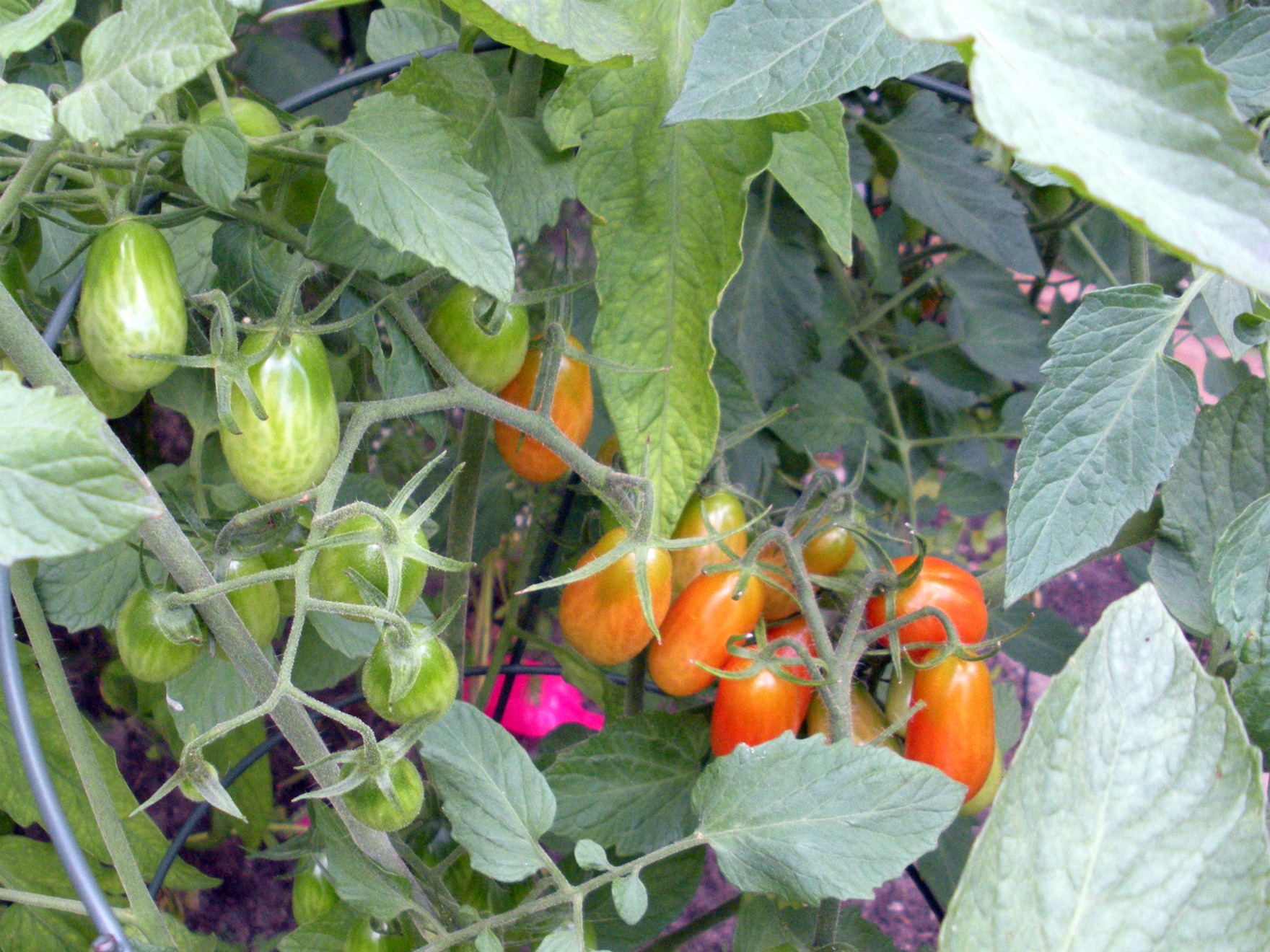
But the real fun came once the plants starting bearing fruit. Our daughter has always loved tomatoes – I craved anything tomato-based when I was pregnant with her – so when she realized that there were tiny grape tomatoes sprouting from those tall green plants, it was all we could do to keep her from eating her weight in the bright-red gems!

With our permission, she would pluck the tomatoes off of the vines and drop them into a bowl we’d brought out with us – occasionally popping a few into her mouth to enjoy. While this made us so happy to see, it also terrified this first-time mama: “Take SMALL BITES of that tomato – I don’t want you to choke!!”

As much as she enjoyed this process, I knew the lesson had really stuck with her when we went out to play one snowy weekend afternoon this past winter. After running around in the snowdrifts for a while, she ended up over by the space where her tomato plants had been. She stopped short, stared at the empty space covered in white and asked, “Where’s our garden?!”

This year, now that she’s a year older and starting to really understand how things grow, I’m looking forward to sharing our gardening experience even more with her – perhaps letting her pick out a plant or two so that it’s truly “her” garden.

But most of all, I can’t wait to see her eyes light up once those tomatoes spring up once again, to taste them and hear her say, “I made that!”

What are your tips for involving children in the home gardening experience? Any good plants to recommend for our garden this year? I’m all ears!

By Kate Storey, Michigan Mama

Posted in On the Playground (kids) | Tagged , , , , , , , | Leave a comment

Who knew? I am a domestic terrorist for taking pictures of farms.

Borden-harnoisturkeys

Broad Breasted Whites from Harnois Farm

“Have you heard about the Slow Food campaign? They are urging supporters to send in pictures of farms to protest against the Florida, Iowa, and Minnesota bills that would make it illegal to take a picture or a video of a farm. They are calling it the farmarazzi campaign.” Two weeks ago, I am sharing the news with a fellow breakfast diner at a noisy table at SELMA Breakfast  Salon.

“I don’t like to hear the word Nazi, that word upsets me.”

Nazi, how did we get to Nazi? I am talking about a photo campaign to protest bills, not gassing trainloads of children and systemic fear mongering by the state.

“Oh no, you misheard, I don’t like that word either,” I slow down and raise my voice, “fffaaarrrmarazzi. Like paparazzi, but farm-a-razzi.”

Two weeks later, Slow Food USA has collected more than 33,000 signatures for their campaign, 450 pictures of farms, the legislation has been “indefinitely postponed” in Florida, and Slow Food continues to collect pictures and signatures – urging supporters to contact legislatures.

I recently asked Jerusha Klemperer from Slow Food USA what prompted them to start the farmarazzi campaign in the first place. Klemperer shared, “We first noticed this legislation after it was covered on NPR, and then saw the coverage and concern grow… A well-managed farm should have nothing to hide. Slow Food has always been about connecting producers and consumers so that each can understand each other and build a relationship.”

Borden-markbaerwolfharvestingcarrot

Mark Baerwolf, Carrots at Cornman Farms

Prompted by Slow Food’s campaign, and Klemperer’s sentiments, I set about trying to understand more. I became curious as to where this legislation came from. I couldn’t stop wondering why three states would all propose the same type of legislation, at the same time, with very similar words.

In the last decade, there seems to be a growing trend to represent animal activists as terrorists. The Ag-Gag bills, as described by Mark Bittman, are the latest addition to this trend. Let us explore the trend and the history that got us here.

In 2003, the FBI received their audit from the Justice Department’s Office of the Inspector General that stated:

Consider transferring responsibility for investigating crimes committed by environmental, animal rights, and other domestic radical groups or individuals from the Counterterrorism Division to the Criminal Investigative Division, except where a domestic group or individual uses or seeks to use explosives or weapons of mass destruction to cause mass casualties.


Thank you, Will Potter of Green is the New Red, for bringing this to my attention. (You can read the full audit here.)

The recommendation states that in 2003 animal right “radical groups” are being investigated under the “Counterterrorism Division.” In a March 2008 Fox News article entitled FBI: Eco-Terrorism Remains No. 1 Domestic Terror Threat, it is argued that “for years, officials have battled against members of shadowy groups such as the Earth Liberation Front and its brother-in-arms, the Animal Liberation Front. Law enforcement has made strides prosecuting cells…”

Borden-AlexNemethorchards

Alex Nemeth in Nemeth Orchards

Where is the line between domestic activism and terrorism? To the FBI it is a narrow (perhaps invisible) line. A May 2011 Wall Street Journal’s opinion piece speaks to the seeming disparity of having an animal activist rub elbows with mass murderers in the FBI’s “Ten Most Wanted Terrorists” list. But the FBI is just following the legislative lead from Congress.

In 2006, the Animal Enterprise Terrorism Act (AETA) was passed to “provide the Department of Justice the necessary authority to apprehend, prosecute, and convict individuals committing animal enterprise terror…for the purpose of damaging or interfering with the operations of an animal enterprise.” The law specifically states that it shall not be construed “to prohibit any expressive conduct (including peaceful picketing or other peaceful demonstration) protected from prohibition by the First Amendment of the Constitution.”

Words have power. The word “terror” is terrifying and our government seems happy to use it often.

Yet for someone working in an animal testing facility I can understand that it would be horrible to have your office bombed (read America’s Most Wanted story of Daniel Andreas). It would be mind-numbingly awful to have insulting slogans painted on your car or home, a total invasion of your sense of security (read here about activities and arrest of 7 activists targeting one of the largest animal testing laboratories in the UK courtesy of The Guardian).

Is terrorism just “mass destruction”? What constitutes mass? More than 100 people in an office? 30 animal testing labs? 5 factory farms with 40,000 birds? This is a quagmire. Our latest addition to the “animal activist = terrorist” trend are the Ag-Gag Bills proposed in Florida, Iowa, and Minnesota.

According to my lawyer friends, the argument in support of the Ag-Gag bills is this. I apply to work in a chicken farm. I take pictures or a video of animals being cruelly mistreated. I post the video on my website. Consumers are so disgusted by what they see that they stop purchasing eggs from that farm and someone breaks in to the facility to free the chickens.

Borden-capellafarm

Capella Farm, Early Morning Pre-Hoop Build

Sharing the information I found gives others a reason to act. I am facilitating criminal activities even though it is not my intent. I have then committed “animal facility interference” (as defined by the Minnesota Ag-Gag Bill, House File No. 1369) and the loss of revenue and potential threat of theft is certainly “interfering with the operations of an animal enterprise” according to AETA. The Iowa Ag-Gag Bill, Senate Fill No. 431 states this conspiracy relationship clearly:

A person who participates in a conspiracy to commit the offense of animal facility tampering, and who acts in furtherance of that commission, is guilty of the same offense as the person convicted of committing the offense on or in the animal facility.

In April 2010, the Humane Society posted a video they had created by going undercover at two chicken farms using the same methods I outlined above. It is a very disturbing video (here is the link if you want to see it) and it would be illegal under these proposed bills.

John Maday, managing editor the nation’s oldest monthly livestock magazine Drovers, argued in February 2011 in response to the proposed Ag-Gag legislation that:

We need more transparency in agricultural production. In reality, the vast majority of livestock operations are well-managed, with owners and workers adhering to high standards of animal care. Consumers do want to know more about their food and where it comes from, and when they have a chance to see and experience modern livestock production first-hand, they typically come away with positive impressions.

For farmers and ranchers, the focus should not be on legislation or other means of concealing their production practices. Instead, they should engage the public with a policy of transparency.


Thank you Slow Food USA for bringing this to my attention and for your campaign. Thank you John Maday for your belief in “a policy of transparency” for our farms. Thank goodness I am not the only observer of this trend not sure we are heading in the right direction.

Lettuce Lady,
Corinna

Posted in Food Transparency (the issues) | Tagged , , , , , , , , , | Leave a comment

Have You Tried: Working with a Sourdough Starter?

For the past couple of months, I’ve been busy taking care of a baby. No, not that kind of baby (not yet anyway) – a sourdough baby! A friend of mine was kind enough to share some of her sourdough starter with me, so I’ve been feeding it weekly to keep it alive and happy. Bakers keep their starters alive for years and years, we even have one food artisan on Real Time Farms using a starter that’s over 400 years old!

I’ve mostly been making sourdough bread, muffins, and pizza dough, but this week I was ready to try something a little different. I’ve never made cinnamon rolls from scratch before, and decided that they would be a perfect vehicle to use up some of my starter.

blank

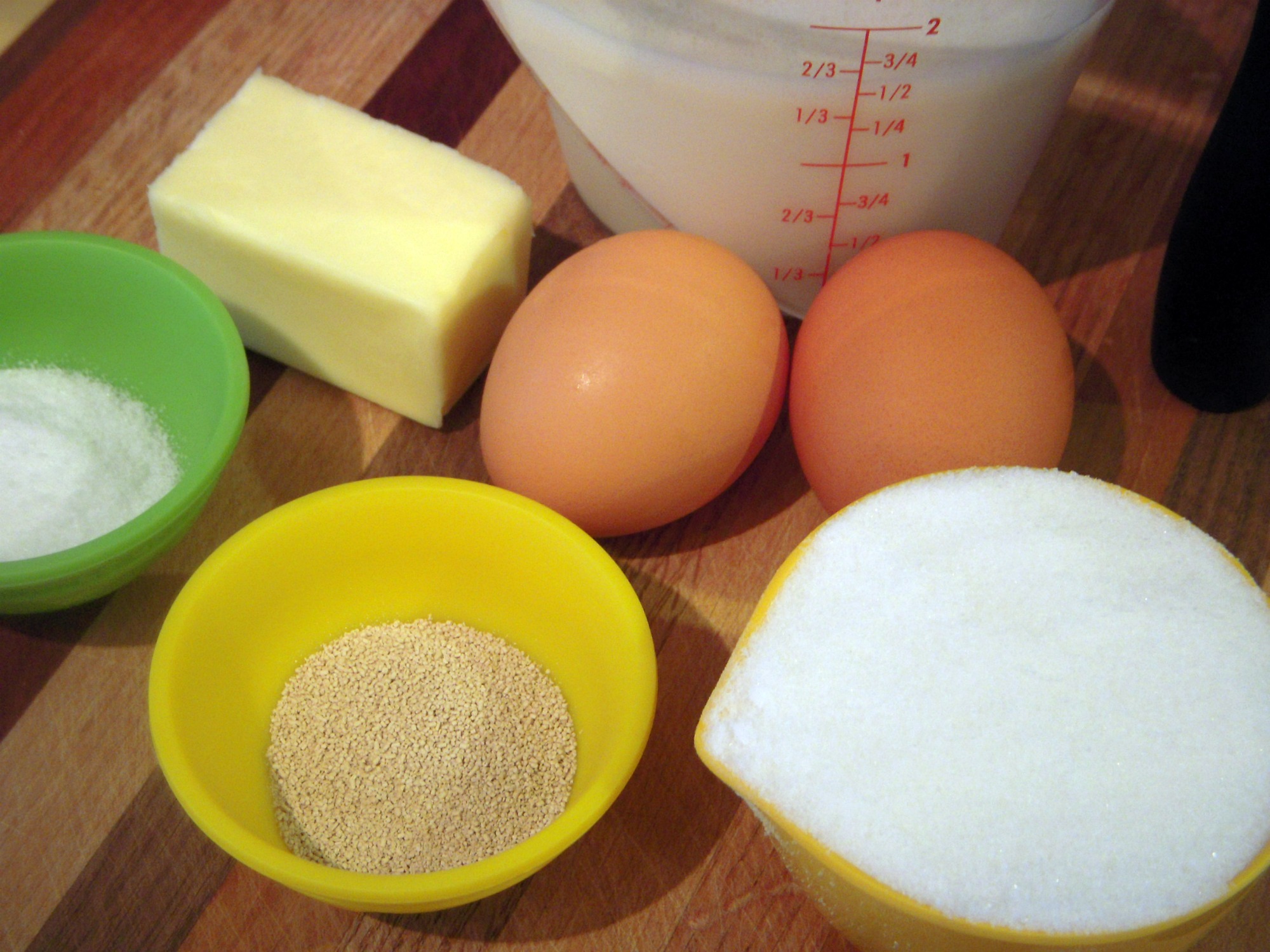
I found a recipe, gathered up my ingredients, and dumped them in my KitchenAid mixer. Yes, you can use the dough setting on a bread machine, or mix and knead the dough by hand. I’m completely infatuated with the shiny red toy that my husband bought me though, so I’m in favor of letting my mixer do the work for me whenever possible!

The dough should come together into a nice smooth elastic ball. I found I needed to add a couple more tablespoons of flour than the recipe called for – it just depends on how wet your starter is. After the dough rested, I rolled it out into two large rectangles (I doubled the recipe in a moment of cinnamon induced euphoria).

The dough gets covered with melted butter and a cinnamon sugar mixture, gently rolled up, and sliced into sections. Place them in a pan with space between them and let them rise for an hour or so – their edges will probably just be touching after rising. After baking and frosting, all that’s left to do is enjoy these, and I’m betting you will. It’s hard to beat a warm cinnamon roll right out of the oven!

I really loved these, and will use the recipe again, although the cinnamon rolls don’t end up with a sourdough tang. What other recipes would you recommend I use my sourdough baby in?

Locally yours,

Lindsay-Jean

Posted in In the Kitchen (recipes & more) | Tagged , , , , | 2 Comments

Backyard Chickens: They dig for worms and mite prevention

(This is the fourth in a series of ten weekly posts about Backyard Chickens to give an overview of my experiences these past two years.)

Borden - backyard chicken with fresh dirt

Aside from when it rains, and they refuse to leave the coop, our chickens are outside during the daylight hours. If it takes 30 minutes to lay an egg, that is nearly 11 ½ hours to wander around the garden digging holes. I had no idea the extent of a chicken’s digging habits until I watched them happily shovel craters all over our garden as the snow melted.
Our mulched garden began to resemble a mogul field, to my dismay and ankle-twisting trepidation. Last weekend we sequestered the girls to the back half of the garden.

Our chickens appear to scratch and dig for two reasons: to peck for food and to bathe in the soil.

Chickens don’t have teeth. In order to digest food, there is an organ along the digestive track called a gizzard. The gizzard becomes filled with small bits of gravel. The muscular organ contracts and constricts, grinding the grains between the gravel, chewing them. In factory farms, the chickens are fed small stones. We stopped feeding gravel to the girls when they became big enough to dig in the earth and find stones and grit au naturel.

In addition to digging for gravel, our chickens dig to eat worms and bugs (and anything green coming up).

I like worms. I like what they do to the earth. I like that earthworms are a sign of happy soil. Yet, I look on with pride when my girls scratch in the warming earth and fight over a big juicy earthworm. Aside from the nutrition, I feel that it is a signpost of all things natural in the world. The early birds have been getting the worms for a long time, and I hope and trust that they will continue to do so.

After a chicken has dug a very good hole, she will often lie in the earth and give herself a bath. Dust baths are very important because the soil is prevention against mites and lice. In factory farming they use dusting powder to achieve the same results against chicken parasites. The girls are getting exercise, feeling the sun warm their wattles and doing what they are instinctively drawn to do to keep themselves healthy.

I find the dust baths hilarious, except I don’t want them happening where our new fragile plants are coming up. So the girls have been cordoned off for the duration of the warmth. I imagine sometime around October we will give them free reign again.

Lettuce Lady,

Corinna

(originally posted in annarbor.com)

Posted in On the Farm | Tagged , , , , | 2 Comments

Backyard Chickens: Make our eating life easier

(This is the third in a series of ten Friday posts about Backyard Chickens to give an overview of my experiences these past two years.)
Borden - poached egg on toast
At first glance this statement might seem counterintuitive. How in the world can taking care of chickens make my eating life easier? They have to be fed and watered, the coop needs to be opened and closed so they can exercise, and we have to corral volunteers to collect eggs when we are away.

Our chickens spend their entire day scratching, eating, bathing, and looking for ways to escape (which has happened – thank goodness for patient neighbors). And yet, keeping chickens makes my eating choices easier the same way planting my own lettuce makes my eating world easier.

When I say eating world, I mean my decision to eat consciously. I have always been a vegetarian leaning, salad-munching hippie, and then I started reading. I found Animal, Vegetable, Miracle easier than reading Fast Food Nation. Fast Food Nation makes me want to hit walls and scream. (Interesting how both titles create tripping triad of treble words on my tongue.) Animal, Vegetable, Miracle was a clarion call. A trumpeting herald shouting to me that I can choose foods that are grown locally and in a manner harmonious with my values.

But boy, that decision has certainly been interesting the more one learns. And I am by no means 100 percent strict about this. I prefer Wilde’s edict – “Everything in moderation, including moderation.” But still, I try.

Part of that effort was a seven-month campaign to research keeping chickens before we actually committed to purchasing them. Though when they actually arrived, I felt like I was once again a first-year teacher. Nothing I read could have prepared me. Like so many of the good things in life (marriage, friendships, having children – I hear – and keeping pets) after taking the plunge, the fun becomes the experience.Borden - chickens in the laying box

The chickens evolved from fluff balls pecking my freckles with pencil taps to ladies equipped with sharp arrows for beaks that gouge my legs. When we walk out to their area, they come waddling out to greet us. I found our dog likes to eat chicken feces, and the only way to get it out of his fur is to cut it out. The dog still likes to visit the chickens in their cordoned area (he has feces to find). The cat avoids the whole scene.

And yes, the eating part. There is nothing easier than grabbing a warm egg from the laying box, cracking it open, and taking two minutes to cook it. Eggs can go on top of toast, oatmeal, salad, hamburgers, polenta, pasta, rice, etc. – they are key ingredients in lots of baking recipes. After the initial investment, eggs are an accessible cheap protein. They are always there in the back garden waiting to be collected and eaten.

Michael Pollan mentioned at his Ann Arbor fundraiser that we no longer think of foods as foods and instead think of them as a collection of nutrients. So I will address cholesterol. According to Mayo Clinic, if you are healthy they recommend you eat less than 300 mgs of cholesterol a day. A large chicken egg yolk has about 219 mgs of cholesterol.

Before you stop eating egg yolks, here is another piece of information for you. 90 gms of most meats (lamb, goose, duck, chicken, steak, turkey) have about 80-90 mgs of cholesterol. A “normal” portion of meat is 90 gms, about 3 ounces, about the size of a deck of cards. Therefore when you have a steak at a restaurant, you are probably eating three times that much meat and thus, 270 mgs of cholesterol.

So I eschew most other forms of meat protein and I eat our eggs. I know exactly how the animals are treated and what they are eating. I know they are living their chicken lives in the fullness of what that means in the pullet-world. Though the word locavore strikes me as sounding a bit like a helmet design, these eggs define the term and, bonus, they are delicious.

Lettuce Lady,

Corinna

(originally posted in annarbor.com)

Posted in On the Farm | Tagged , , , , | Leave a comment

Young Foodies: Jill Sweetman and Nate Lada of Green Things Farm

Recent graduates of the University of Michigan’s Program in the Environment (PitE), Nate Lada (08’) and Jill Sweetman (‘10) have recently made two major commitments– first, to each other (engaged in December!), and second, to the development of a new business and farm, which promises to provide fresh produce year-round to the Ann Arbor community.

Nate and Jill started Green Things Farm this year through a partnership with the Tilian Farm Development Center, which aims to increase the amount of food produced and consumed in Washtenaw county.

blank

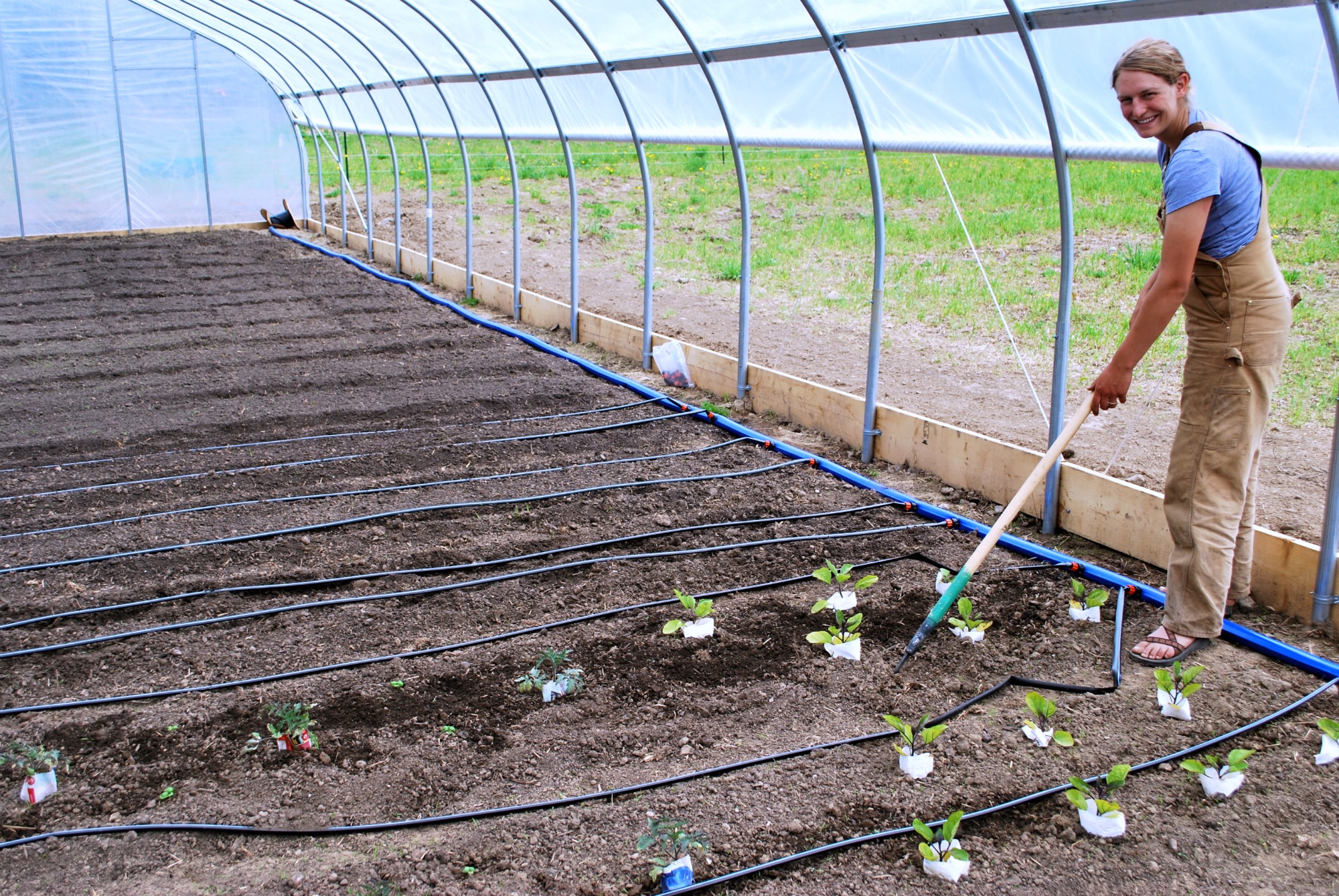
Jeff McCabe of Selma Cafe, well aware of both the extraordinary need for farmers in the area and the difficulty for new farmers in getting started, wrote a grant request to the USDA to fund the Tilian Farm Development Center’s efforts at increasing local sustainable food production in Washtenaw County. Tilian’s Four Season Farmer Development Program provides new farmers with the necessary funds, land, and guidance in starting their farming businesses for the duration of two years, at which point they will be better equipped to move on to their own land and continue their farming businesses. The project currently includes three farms: Green Things Farm, Seeley Farms, and Bending Sickle Community Farm.

Nate, who specialized in ethno-ecology in PitE, got his first real experience in agribusiness when he started a business selling the produce from his grandparents land in 2007. Last year, he started the community garden at the University of Michigan’s Biological Station (which produced enough food for a 200 person salad bar twice a week), composted waste from the dining hall, and provided space for an ethnobotany class to do perennial cultivation and for an ecology class to run experiments.

Jill grew up in Grand Rapids riding horses and working on farms, and in her adult life has WWOOFed on several farms. She studied restoration ecology and works on the restoration of natural areas for the city as a side job, but is otherwise new to agricultural business. “We’re self starters,” says Jill. “We don’t have much formal training. Every day is a learning experience.” Nate and Jill are following the CSA model this year and are very thankful for the small board of supportive, experienced mentors provided by Tilian who are able to guide them through any issues that might arise along the way.

Together they spend about thirteen hours a day working on the land and in the hoop house. “It’s a lifestyle more than a job,” Jill humbly asserts. They seem to love everything about the farming lifestyle, including working outside, their twenty-eight chickens, the fresh food, and the strong sense of community they feel by being part of the local food movement. Most of all, they love working together all day, every day. “It never gets old,” says Nate.

Nate and Jill are still selling shares for their CSA, which will get rolling on May 26th after the first harvest of the season with arugula, spinach, mint, scallions, radishes, lettuce and perhaps some eggs. Get in touch with them for more information, and quickly– there are only ten shares left for purchase!

Stay Fresh,
Lindsay Partridge

Posted in On the Farm | Tagged , , , , , , , | 1 Comment

Eat Out With Confidence: Nationwide Launch of Tools That Tell The Story of Every Ingredient

There’s Michelin and there’s Zagat. Neither of them tell you where your food is coming from. Real Time Farms does.

Now any eatery (from the hipster food truck to the dorm food menus of your alma mater) can tell the story of the farms and food artisans that supply their menu. Curious how the beef in your favorite dive bar hamburger was raised. Click on “hamburger” and see pictures of the cow in the pasture and read about how the cow was raised. Feeling good about what you are eating just got a whole lot simpler.

Our New York area launch marks the nationwide release of these tools.  Tell the story of every ingredient by linking each to a farm and food artisan profile on Real Time Farms. As an ever growing user-generated database, Real Time Farms provides restaurants with a wealth of rich information to educate their staff and consumers. Once live on Real Time Farms, restaurants place their farm-linked menus onto their own site, saving thousands in money and time. (Click to Sign Up!)

When we drove into the bright city lights of NYC after a long drive from the Midwest, we were hopeful, but cautious.

Ann Arbor had been good to us – Chef Maggie Long of the Jolly Pumpkin Cafe & Brewery would send us emails of encouragement, unwaveringly confident in the success of Real Time Farms. Chef Dan Vernia of The Royal Park Hotel met with us when our idea was in its infancy, encouraging us, introducing us to people in the food community. Chef Alex Young of Zingerman’s Roadhouse, eat, prepared food CSA Harvest Kitchen, Chef Brandon Johns of Grange Kitchen & Bar, Selma Cafe, and Chef Thad Gilles of Logan, all played a pivotal role in the design of a menu storytelling tool launching nationwide today.

Chef and Owner Christophe Hille, Northern Spy Food Co.

Our first meeting following our whirlwind foodie extravaganza at the TEDxManhattan “Change the Way We Eat” Conference was with Northern Spy Food Co.‘s Christophe Hille.  We were hooked the moment we sat down and took a sip of the blood orange spritzer and took a heaping forkful of their signature kale salad. Next on our list to hit up was bobo. A bohemian heaven with an edge with James Beard Award winning Chef Patrick Connelly and co-owner Carlos Suarez  – they were in! We walked away with big smiles on our faces! Then it was Brandon Gillis at Bark Hot Dogs. Good ole’ “happy” dogs with all the trimmings – seriously, could we get any better? PRINT. Restaurant was our last stop on our Big Apple trip. Swanky and sophisticated, without being stuffy, a feather in our cap when Forager Johanna Kolodny and Executive Pastry Chef Heather Carlucci-Rodriquez enthusiastically joined the NY area launch. Think Westport Aquaculture’s Blue Point oysters in a half shell with champagne mignonette on their rooftop lounge.

Rooftop Press Deck at PRINT.

When we got home, we couldn’t wait to share the news with the team – this thing was going to spread! Being transparent about the sources of your food could become the norm, rather than the exception.

With word of “the people who are really walking the walk” signing on, Kate Galassi, Forager for Compose, spearheaded Compose’s involvement and is featuring the farm and artisan-sources of their intimate and surprise 10-course tasting menu. Careful not to spill the details of how the ingredients would be combined, Compose opted to list their ingredients and staples used to create their one of a kind menus.

We realized any NY launch wouldn’t be complete without restaurants outside of the Big Apple – after all, though some may doubt it, there is life outside of the city. Denise Warren of Fable at Stone & Thistle Farm signed on – a down-to-earth, from the farm, weekly Saturday harvest four-course prix-fixe meal served following a farm tour in their 1860’s renovated farmhouse. Don’t worry if the meal fills your soul, and leaves you feeling completely satisfied. You can cuddle up and stay the night at their bed & breakfast, and enjoy a tour and farm brunch the following morning.

Food Network’s two-time Chopped Champion, Ric Orlando was next. A master in the kitchen of New World Home Cooking Co. and New World Bistro Bar, Ric has been using local, seasonal ingredients since 1989, before it was officially cool. Ric, cheers, we’re honored!

The Bees Knees Cafe

Finally, The Bees Knees Cafe, Carol Clement’s creation located on Heather Ridge Farm in Preston Hollow, NY serves meals Friday, Saturday, and Sunday on the farm and features farm-fresh seasonal ingredients to make pure deliciousness such as their infamous Oink and Moo Chili made with pasture raised beef and heritage chorizo pork straight from Heather Ridge Farm.

To round off the group, we were lucky enough to get PA’s Glasbern Inn at the Lehigh Valley Historic Inn. Like Fable at Stone & Thistle, and The Bees Knees Cafe, you’re dining “at the farm’s table”. Taste sustainable farming in action while trying courses on their tasting menu that include pastured chicken and grass fed beef. It’s a sweet life.

Have a restaurant in mind you want to see on Real Time Farms? Are you a restaurant that wants to tell the story of your menu and demonstrate your commitment to transparency? Our doors are open! Sign up now!

Posted in Messages From the Founders | Tagged , , , , , , , | 2 Comments

Backyard Chickens: Why we have chickens

(This is the second in a series of ten Friday posts about Backyard Chickens to give an overview of my experiences these past two years.)

At a recent a schmancy schmooze party filled with very intelligent and bejeweled individuals, probably tired from small talk about the weather, I mentioned that we have backyard chickens at our home in Ann Arbor.

“Chickens!” This very well dressed woman shrieks. “WHY do you have chickens!?”

I am not used to such a response, most of my friends find my obsession endearing (at least they pretend), so I rallied to genuinely respond. “I have chickens because I eat eggs.” Nonplussed, the woman quickly escaped.

I did not talk about the fact that when the chickens were small. I could hold their warm bodies in my hand and their skin was so thin, I could see blood and bones. I did not talk about the chirps of small chicks melting my heart and their soft, soft down, velvet to touch. I did not talk about holding one against my heart and feeling it thrum, like a cat’s purr. Or how soft they are, or how beautiful their feathers are, or how I prefer watching them to watching television.

I did not mention they sleep in a heap on the feed shelf in their coop, abjuring our painstakingly constructed roosts. I did not talk about watching them strut around the garden fluffing their wings. Or fighting over a worm, or digging holes for dust baths, or fleeing from the dog, or pecking our cat.

I did not mention food security or taking responsibility for where our food comes from. I did not mention poultry farms – chickens crammed their entire lives in a cage under artificial lights and the litter from those farms going to feed cattle. I did not mention any of that to the well-dressed woman – I just mentioned eggs.

A fresh egg from a happy chicken is BRIGHT orange, round, tight, and delicious. To throw in a bit of Plato – it is the egg, not the shadow of the egg.

Lettuce Lady,

Corinna

(reposted from annarbor.com)

Posted in On the Farm | Tagged , , , , , | 1 Comment

Advertising Has Gone Back to the Farm

I was watching television recently and this Canada Dry commercial really got my attention.

I had no idea that Canada Dry soda came right from Jack’s Ginger Farm! Canada Dry’s website tells me that they use “real ginger” and suggests five easy ways to go organic, so real ingredients must be important to them. I decided to read on and check out the FAQ page.

“Q:Why isn’t real ginger listed on the ingredient panel?
A:Real ginger is part of the natural flavors in the ingredient list. Flavors are grouped together in the ingredient line under the umbrella of “Natural Flavors” to protect Canada Dry’s proprietary formula.
Q:How much real ginger is in Canada Dry Ginger Ale?
A:That information is part of our proprietary formula and is not divulged.”

Let me see if I have this straight. Canada Dry soda has real ginger in it, along with other “natural flavors,” but we can’t know how much ginger or what other “natural flavors” are in it. Interesting.

Later that evening, a commercial for Stouffer’s Farmers’ Harvest frozen meals came on. Yes, I was watching a lot of television. Don’t judge. (And apologies for the terrible video quality, I couldn’t find a better version. Start watching at 1:01)

This was even better! Farmers working together to make my frozen dinner! Only Stouffer’s had even less information on their website about this new line of products. No information on the farms sourcing the ingredients, or even what the ingredients are in the meals. The only thing I could glean from the website is that these are my “favorite Stouffer’s meals, now featuring ingredients like olive oil, sea salt or whole grains, and no preservatives.” What happened to the dairy farmer and the pepper farmer from the commercial? Where are those ingredients coming from?

Do you remember seeing McDonald’s From Here campaign last year? The From Here website showcases ingredients (potatoes, fish, apples, and milk) that are used in McDonald’s menu items, and provides a downloadable fact sheet (PDF) for additional information. I learned that “almost one of every three McDonald’s french fries is made from Washington potatoes. What’s more, within Washington state itself that number is closer to 95 of every 100 fries.” But what are they really telling me? I still don’t know where or how the potatoes are grown. I also learned from a press release (PDF) for the campaign that “…virtually all milk served at McDonald’s comes from Darigold®, a Northwest cooperative owned by over 500 dairy farmers from Lynden to Chehalis to Spokane.” So now I have a name for a source, but I still don’t know anything about the cooperative, how the cows are raised or what their practices are. The press release boasts, “McDonald’s is taking the bold step to provide more transparency on how its 191 Western Washington restaurants are able to both source and serve the great-tasting, quality food their customers expect.” Is that really what food transparency is all about?

Domino’s Pizza wants us to know where their ingredients are coming from according to this commercial:

They’ve even set up a special website, Behind the Pizza, to help customers “learn the truth.” Oddly enough though, I couldn’t find a way to get to the Behind the Pizza site from the main Domino’s Pizza website, so you have to already know about the site to have any shot of finding out where your food is coming from. Behind the Pizza is set up as a game, rather than solely an informational site. This makes it more challenging to navigate and time-consuming to find out information about the food. As you navigate through the game, at time Domino’s provides a video and a name of one of their farm suppliers for certain ingredients, like for tomatoes, mushrooms, and spinach. At other times though hardly any information is provided at all – this screenshot provides information on the source of their pepperoni.

Great. So that tells me….nothing. Can any major company tell me more about where my food is coming from?

Lay’s Potato Chips is also working to tell you where your food is coming from. Their website has a Chip Tracker that helps you figure out where your bag of potato chips was produced. You can also zoom into individual states and get the names of farms where the potatoes are grown. There still isn’t any information on the farms or their growing practices (other than the commercials, like the one below), but at least all of the farms are named, so it is possible to try to research them further.

Although these examples are disappointing and far from perfect, I think they’re also examples of the direction that the food movement is headed. People want to know more about their food. Superficial coverage of food sourcing in advertising might make some people feel better about what they are eating, but it won’t satisfy everyone. As cliché as it sounds, we’re all going to have to keep working together to improve food transparency. Take the time to challenge companies to do more, support movement’s like Jamie Oliver’s Food Revolution, and educate yourself by talking to a farmer about their growing practices during your next trip to the farmers market.

Locally yours,

Lindsay-Jean

Posted in Food Transparency (the issues) | Tagged , , , , , , , | 8 Comments

Homegrowing Hops

Did you know that hops grow best between the latitudes of 34-50 degrees? That’s one reason, among many, that Belgium has had a long history of making beer, and why some breweries in the northern half of the United States are trying their hand at growing their own hops (and other ingredients) to bring you beers that you can trace more ingredients back to their source. For example, The Chatoe Rogue series from Rogue Brewery in Newport, Oregon and Estate from Sierra Nevada in Chico, California.

Rogue brewery even went so far as to build their own malting house so that they could make a beer entirely (or nearly entirely) on site. If you’re not familiar with all the processes that go into brewing beer, this might not seem like a big deal. However, considering that most barley for most beer is malted at one of four Maltsters in the world (one in the US and three in Europe), it’s a pretty significant feat for a craft brewery, such as Rogue.

Last week, my homebrewing husband and I embarked on our own beer related adventure that we’ve been dreaming about for quite some time. We planted our very own hop plants, which we procured from a local homebrewer that was selling some of his rhizome cuttings on Craigslist. Having worked for a CSA farm a few years back, I thought perhaps the horticultural knowledge and experience I gained there would have prepared me in some way. Not all that surprisingly, I was wrong. 25 foot vines that can weigh more than 20 pounds are way beyond anything I’ve grown before. How exciting!

There is a lot we will need to learn to take care of our new little hop rhizomes that are just now beginning to push their bines (hop vines) up out of the soil. Fortunately there’s lots of resources on the internet, and we’ve also got a copy of the book The Homebrewer’s Garden by Joe Fisher and Dennis Fisher. Hopefully at this time next year we’ll even be drinking some of the fruits of our labor.

Your Happy Hop Grower,

Meg

Posted in In the Kitchen (recipes & more), On the Farm | Tagged , , , , , , , , , | Leave a comment