Backyard Chickens: Practicalities

(This is the first in a series of ten Friday posts about Backyard Chickens to give an overview of my experiences these past two years.)

Here are some practical elements of backyard chicken care for those of you wavering towards thinking it might be a good idea.

Borden - Cat looking at baby chicks

There are plenty of chicken books to choose from. My favorite one was a book I “borrowed” from my grandparents, now defaulted to a permanent loan, called Encyclopedia of Organic Gardening: A complete guide to gardening without DDT or other poisons or chemicals edited by J.I. Rodale, a pioneer in the organic movement. I wanted to write out the full title just to show how far we have come since the book was published in 1959. DDT was banned in 1973. The book was republished in the 90s with a different title.

What first piqued my interest in chickens was the assumption in that book that every gardener would have chickens to help with fertilization, aeration, and insect control.

Whatever book you choose, the first part is checking with your city or municipal ordinance to find out what the rule are. Depending on your neighborhood, you might have to be a certain distance from a fence, get signed permission from your neighbors, or start a petition to get the law changed.

Borden - chicken coop in the sun

With borrowed saws and air guns we were able to cobble together a very serviceable structure. Most people tell you to have about 3 square feet per chicken, and I will be good and not mention that is a lot more space than what chickens have in factory farms (I am being so good, not mentioning that.) I had visions of raccoons creeping into the structure at night and dismembering our girls, so we have hooks that latch, a door with a key that locks it (those raccoons can be crafty), and a double layer of chicken wire at the top protecting our ventilation gaps.

Once the girls got big enough to dig in the earth, we built a small run for them to be outside. By this time, I had heard horror stories of a raccoon eating a chicken through chicken wire, so I completely enclosed (top, sides, bottom) a small area with a double layer of chicken wire and plastic garden netting. After the girls became large enough to scare away our cat (and I had stopped worrying so much about raccoons during the day) we opened their door and let them roam in the garden that we had cordoned off with deer fencing. Now every morning, I open their door, they run outside squacking and flying directly to a row of conifers. Once it is clear there are no hawks about, they start aerating and fertilizing our fallow garden, just like J.I. Rondale said they would.

Depending on your time, finances, and building expertise you can purchase a coop instead of building one. There are pictures of coops available online, but most want you to purchase a book for detailed plans. One can find options of ready coops on Craig’s List. A New Yorker article introduced me to the Eglu and I recently found Nogg (there seem to be a lot of chic homes for your girls coming out of the UK.)

The cost of the Eglu aside, I do think their model works well in that they will send you four chickens to go with your purchase of a home. Poultry hatcheries require you purchase 25 chicks at a time, which doesn’t work if you have a limit to the number of girls you can have. I was able to work around this by piggybacking my order with a friend who lives outside of town. That being said, there are classified ads of people selling their girls for one reason or another, Craig’s List is a good place to start. Also, since you are discussing this with six of your friends, perhaps you can share an order.

With the deep litter method, large containers of water and feed that only need to be filled every 4-5 days, and a well built coop, the chickens are a lot easier than our dog and cat. We can leave them alone for a few days and they seem just fine. The only noticeable difference is the duration of the first flight as they emerge squawking and trumpeting from the coop to welcome us home.

Lettuce Lady,

Corinna

(originally published in AnnArbor.com)
Posted in On the Farm | Tagged , , | 1 Comment

Sharing Our Food Roots with Our Little Sprouts

When my daughter was just over a year old, she had a favorite library book that she asked me to read to her over and over again every night – “Apples, Apples.” As many children do, she loved the repetitive rhythm of the book, which told of a bear family that visited an apple orchard.

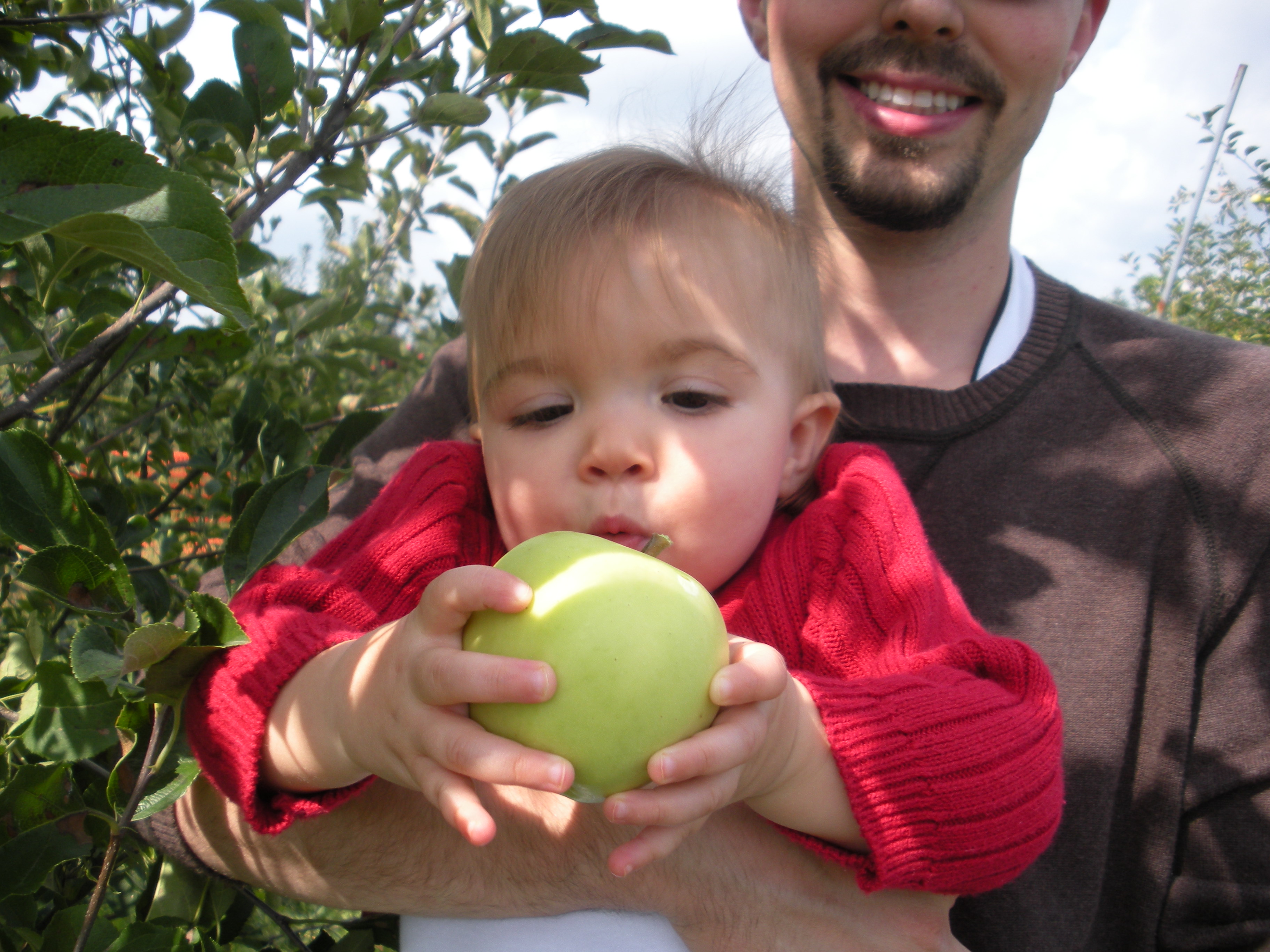
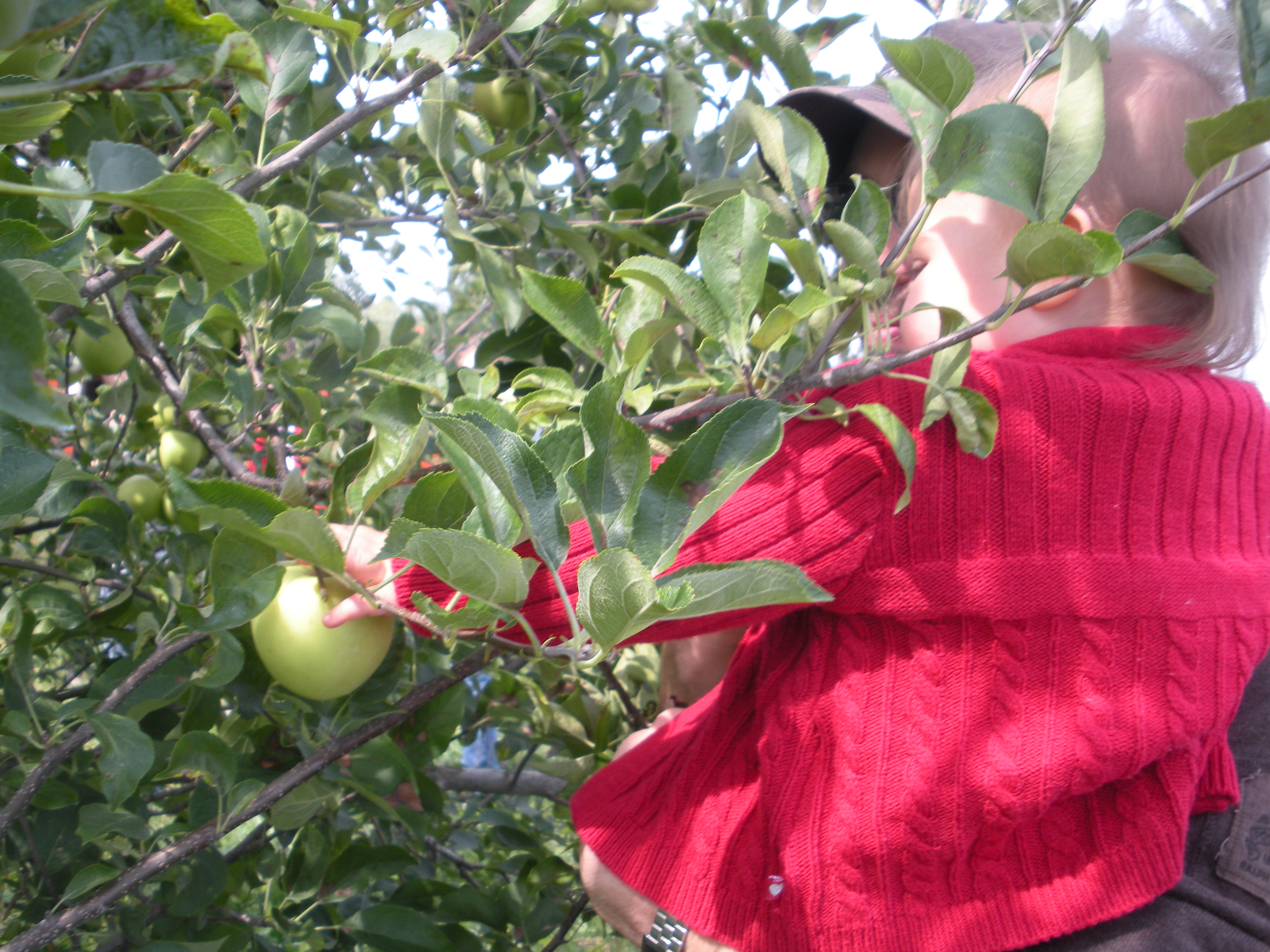
After about the ten thousandth reading of the book (I can still quote it from memory!), something clicked in my brain: Why not take her to a real apple orchard and live out the “Apples, Apples” book? So we packed her up one sunny fall day and headed out to a nearby apple orchard.

She loved being held up by my husband to pluck a ripe apple right from the branch and then immediately sample its crisp red skin – but what really stood out for me on that day was the realization that I had shown her exactly where apples come from, and how they’re grown.

blank

Even at this young age, she could understand the origins of her food and know that apples didn’t really come from bags at the supermarket – they came from lush green trees, growing just a car ride away.

On a regular basis, I try to make an effort to point out whole, fresh foods whenever we might see them: at the grocery store, on a TV show (cooking shows are great for this!), and right in our own kitchen. I usually keep root vegetables like potatoes, onions and garlic on a cart in our kitchen, and they’re right at eye level for my daughter – so it’s common for her to wander into the kitchen, pick something up and ask, “What’s this?” If she doesn’t ask, I’ll occasionally ask her to hand me a sweet potato or something else from the cart – and if she’s having a hard time identifying which is which, it provides a great quick opportunity for me to share the names of the vegetables and how I prepare them for us to eat.

So what’s our next food field trip? I’m planning to take her to Calder’s Dairy Farm soon to see the cows that produce their delicious milk (I have been absolutely HOOKED on their chocolate milk during this pregnancy!), and this summer, I’m hoping to visit at least a few u-pick farms so that she can choose – and taste – the freshest strawberries, raspberries and blueberries she can find, right from the vines and bushes. Of course, Mommy might have to sneak a few from her basket as well!

What other ways do you show your children where their food comes from?

By Kate Storey, Michigan Mama

Posted in On the Playground (kids) | Tagged , , , , | 2 Comments

Earthly Eating

Happy Earth Day Everyone!
If you really stop and think about it, all the ways that we interact with our food (growing, raising, packaging, distributing, cooking, consuming, composting, digesting, landfilling, and more) have a huge collective impact on our planet. Over the decades since the first Earth Day in 1970, the human race has conjured up numerous ways to lessen the detrimental effects our food system has on the earth–organics, permaculture, eat local, to name a few. Here’s a new one that you might not have thought of before–Invasivores.

An Invasivore is someone who seeks to eat (not exclusively, but in part) those pesky invasive species.* While I have in fact eaten an invasive species before, I’d never thought of myself as an Invasivore. (Yay! Always fun to have a new way to define myself.) But I guess the idea itself isn’t really all that new and has even been written about in the New York Times.

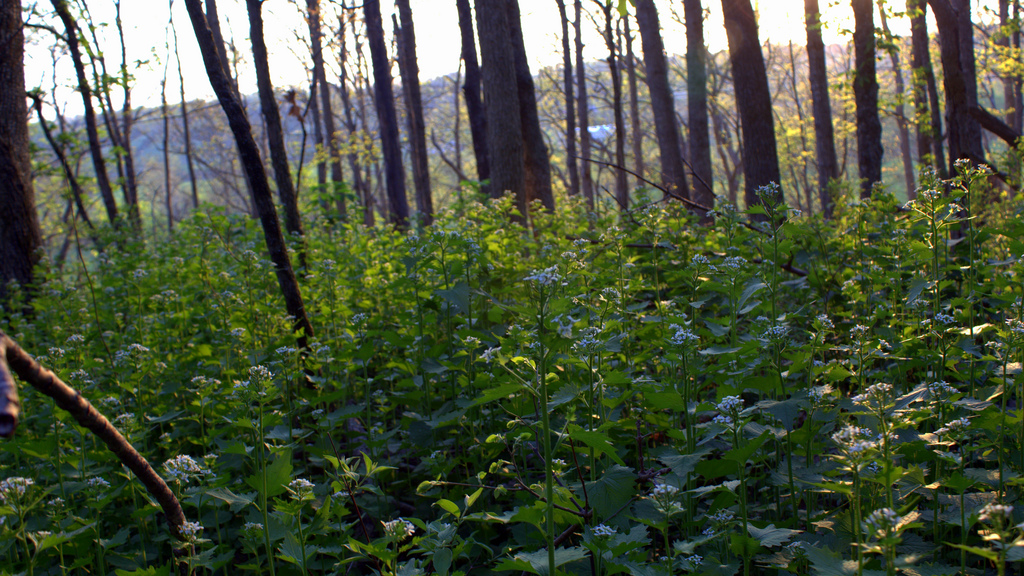
Garlic Mustard - Photo by Phil Sellens

So, if you’re west of Chicago, consider dining on Asian Carp – a monstrous, jumping fish that has all but taken over the Illinois river. If you live in, or travel to, Europe, you might want to try some Eastern grey squirrel, which is outcompeting the native red squirrel. And, in the Midwest and Northeastern US, give this recipe for Garlic Mustard Pesto a try. These examples are just a few! There are whole pages of recipes online thanks to Invasive Plants Atlas of New England, and Mid-Atlantic Exotic Pest Plant Council. So, eat away at these invasive species that threaten to ecosystem biodiversity.

Carpet of Garlic Mustard - Photo by Bryan Siders

Thinking about tackling an invasive plant species in your yard? Remember that each one should be removed by a specific method. Check out this resource from the National Park Service for info on exactly how to remove each one. While you might think that simply pulling it up or chopping it down will solve the problem, you’re most likely wrong. Some species have seedbanks in the soil that last for five years, others will simply re-root or re-grow if the plant is not completely removed from the environment. So read up, eat up and enjoy!

Your Impassioned Invasivore,

Meg

*Invasive species commonly defined as non-native species that adversely affect the environments they invade. Essentially what happens is that a species is brought from somewhere else and introduced to an area where it has never lived before. The new location lacks predators and similar species that fill the same niche have little time to adapt, so the introduced species reproduce quickly and outcompete the natives.

Posted in Food Transparency (the issues), In the Kitchen (recipes & more) | Tagged , , , , , , , | 2 Comments

Have You Tried: Making Bagels?

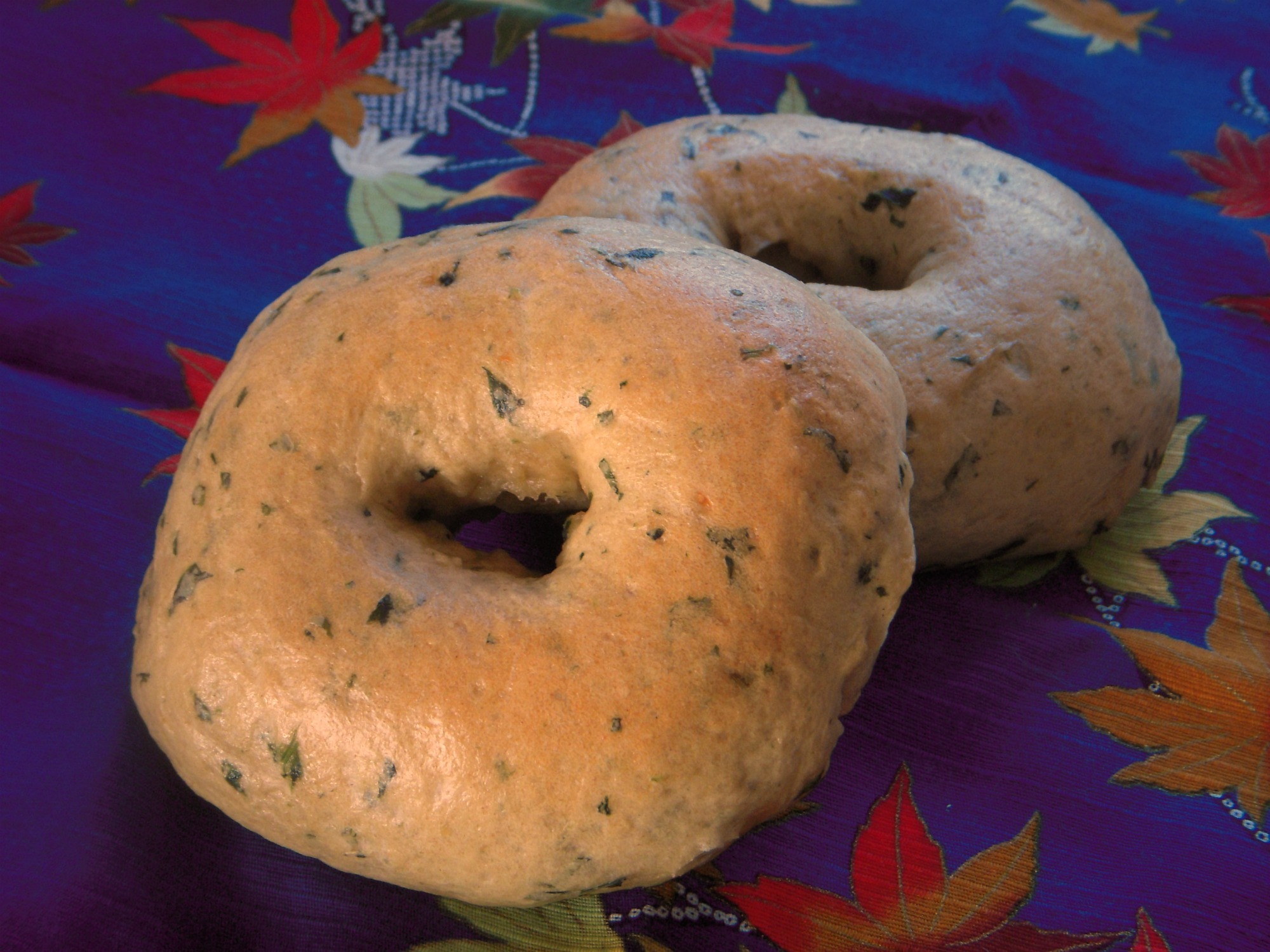
I used to think of bagels as a treat, an indulgence from a bakery that I wouldn’t dream of making at home. Okay, I still think of Zingerman’s “Enough Already” bagels that way, but in general, I’ve learned that it’s pretty easy to make bagels at home. I also pack them full of greens, so I rationalize that they are a little bit healthy and not a complete indulgence!

I love have cake, will travel‘s recipe for Kale Bagels. It is a super forgiving recipe, and the bagels always turn out perfectly, no matter what combination of greens I pack in them, or how I flavor the greens.

This time I used a mix of spinach and kale, and cooked them according to the recipe. The blend of nutritional yeast, tamari, olive oil, garlic, and tahini results in such a tasty sauce on the greens, I’m always tempted to gobble them up as a side dish… Don’t do that though! You need the greens for your bagels!

Once you’ve blended the greens with some warm water, made your dough and let it rise, it’s time for the fun part! Divide your dough into eight equal pieces.

Roll each piece into a ball and form the bagel by sticking your thumb through the dough ball. Stretch and twist the dough until the hole is an inch or so wide.

Let the bagels rest and rise again for 15 minutes or so. Then start some water boiling (you can add baking soda or salt to the water, but I’ve never found it necessary) in a wide shallow pan, and boil the bagels in batches for 30 to 60 seconds per side.

Remove the bagels from the water, place on baking sheet, and bake at 400ºF until your bagels are golden brown and sound hollow when you tap the bottom. This generally takes about 20 to 25 minutes.

Now enjoy your bagels! I’m partial to a warm bagel straight out of the oven slathered with cream cheese, but I also recommend a bagel breakfast sandwich with a fried egg and melted cheddar cheese. What’s your favorite way to eat a bagel?

Locally yours,

Lindsay-Jean

Posted in In the Kitchen (recipes & more) | Tagged , , , , , , , | 2 Comments

Easter Egg Dyeing Lessons

A couple of years ago I discovered the phenomena of dying Easter eggs with natural dyes: food, flowers, or spices. In honor of the bounty that flows freely from our coop every day – this seemed like a golden opportunity to experiment with using food items to change the color of our eggs.

Borden - Easter Eggs dyed with natural colors

The process is very easy. Take several eggs, cover them with water, add a teaspoon of white vinegar and add whatever colorant you want (turmeric, beets, black cherry juice, spinach, blueberries, chamomile tea, cranberries, red wine, etc.), bring the liquid to a boil and let the eggs cook gently for 10 minutes or so. If a stronger color is desired, then remove the eggs, strain the particles from the liquid and put the eggs back into the pot in the refrigerator overnight.

It sounded very reasonable. Yet once I started doing the deed, I experienced a series of both mental and practical hurdles.

Hurdle #1 – Our chickens lay green, blue and brown eggs and I refused on principal to go out and purchase white eggs.

Hurdle #2 – I wanted to experiment with blueberry juice, cranberry juice, carrot juice, chlorophyll and black cherry juice yet our stove has only four burners.

Hurdle #3 – I couldn’t help but wonder as I juiced the carrots down why I was using perfectly edible and delicious food to make dye for eggs. I opened up the freezer and poured out bouncy blueberries and cranberries lovingly harvested and frozen from my Locavorious CSA. I used almost a cup of black cherry juice.

I checked the color of the lightest brown eggs in the carrot juice – “Is that a change? Is it just the light? Are they any different?” – and wondered, why eggs?

When I was growing up, we would dye eggs using the little pellets in the bowls on the counter. On Easter morning my father, a.k.a. the Easter Bunny, would hide them in the back garden for us to find, and then we would head out for brunch at a fancy hotel in honor of my grandmother’s birthday. Then we would head to the Tidal Basin and admire the cherry blossoms in bloom. For the next week we would eat eggs for breakfast and have egg bumper car-esque competitions between the four of us to crack the shells.

Borden - Backyard eggs au natural

The egg is a symbol of rebirth, and thus is a good stand in for the story of Jesus Christ’s Resurrection. In Passover, the egg represents the ritual sacrifice at the Temple of Jerusalem. In the pre-Christian world the egg was a fertile symbol of the coming Spring and life about to burst forth from the warming earth.

Next year I am going to sidestep such hurdles. I will use food safe pens and draw on my already colorful eggs. I will use the stickers languishing in my wrapping paper box. I will celebrate the season without ending up with a collection of earth colored eggs.

Lettuce Lady,

Corinna

(Originally published in annarbor.com)

Posted in In the Kitchen (recipes & more) | Tagged , , , , | 2 Comments

Have You Tried: Making Pierogi?

It took me awhile to warm up to pierogi. My husband has valiantly tried over the years to convert me to the joys of Polish cuisine, and he’s succeeded in a few, okay, a couple of cases. I’m now a huge fan of sauerkraut – all thanks to The Brinery – but pierogi just left me lukewarm. I like pasta and I like potatoes, but the pierogi combination just didn’t work for me. A plate full of starch left me unsatisfied and craving veggies.


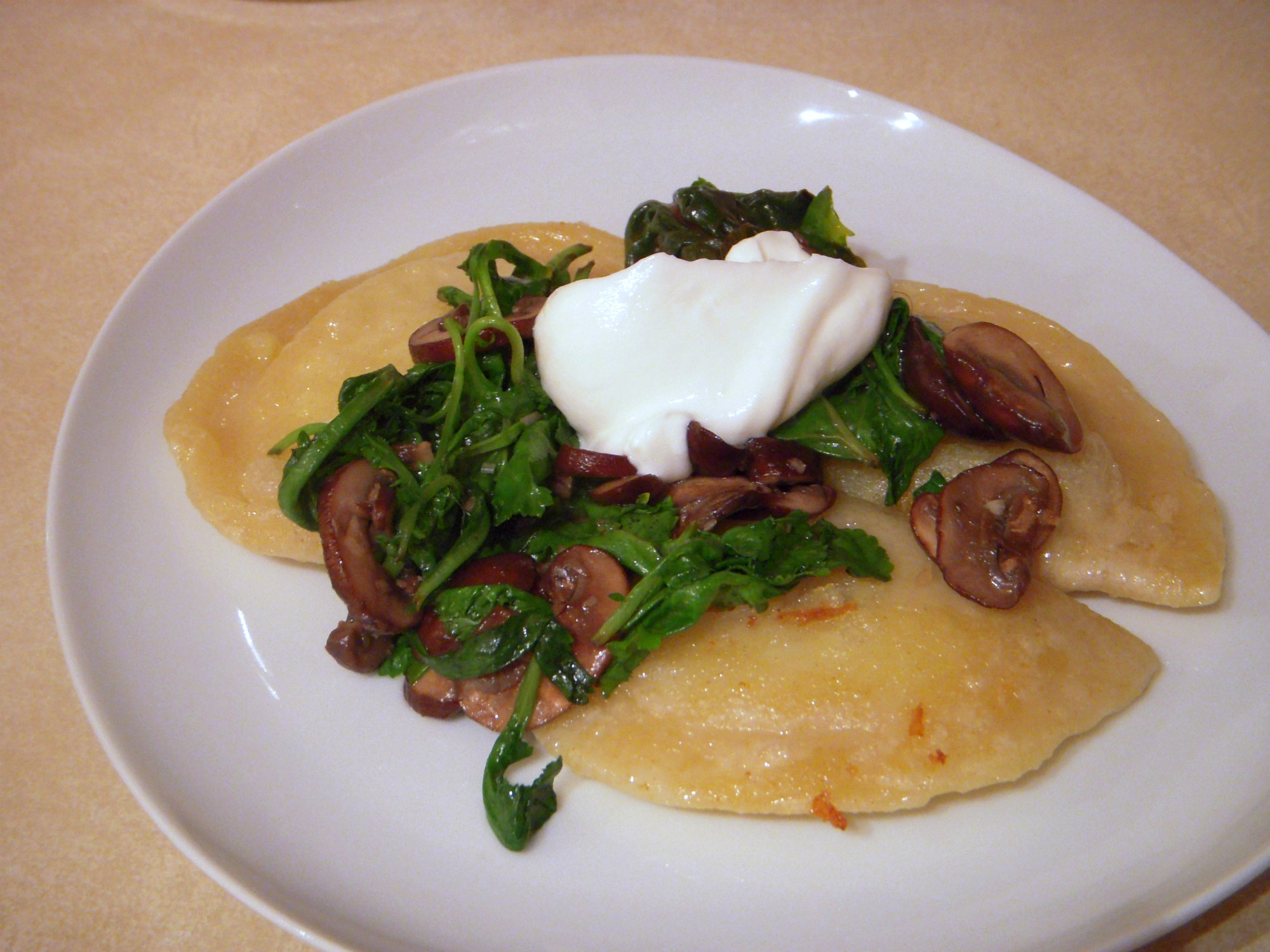
So that was my solution, I started topping my pierogi with sautéed mushrooms and greens from Brines Farm, and I quickly became a pierogi convert!


If you’ve ever made ravioli, dumplings, or potstickers, the technique is very similar, and if you haven’t, don’t worry. Pierogi making is a pretty simple process, and you’ll quickly get the hang of it!

I use a vegan pierogi recipe from the Post Punk Kitchen, and it is one of the few recipes that I don’t tweak. Not even the tiniest bit! I follow their suggestion to prepare the filling and the dough a night in advance, so the next day you just need to put the pierogi together and cook them.

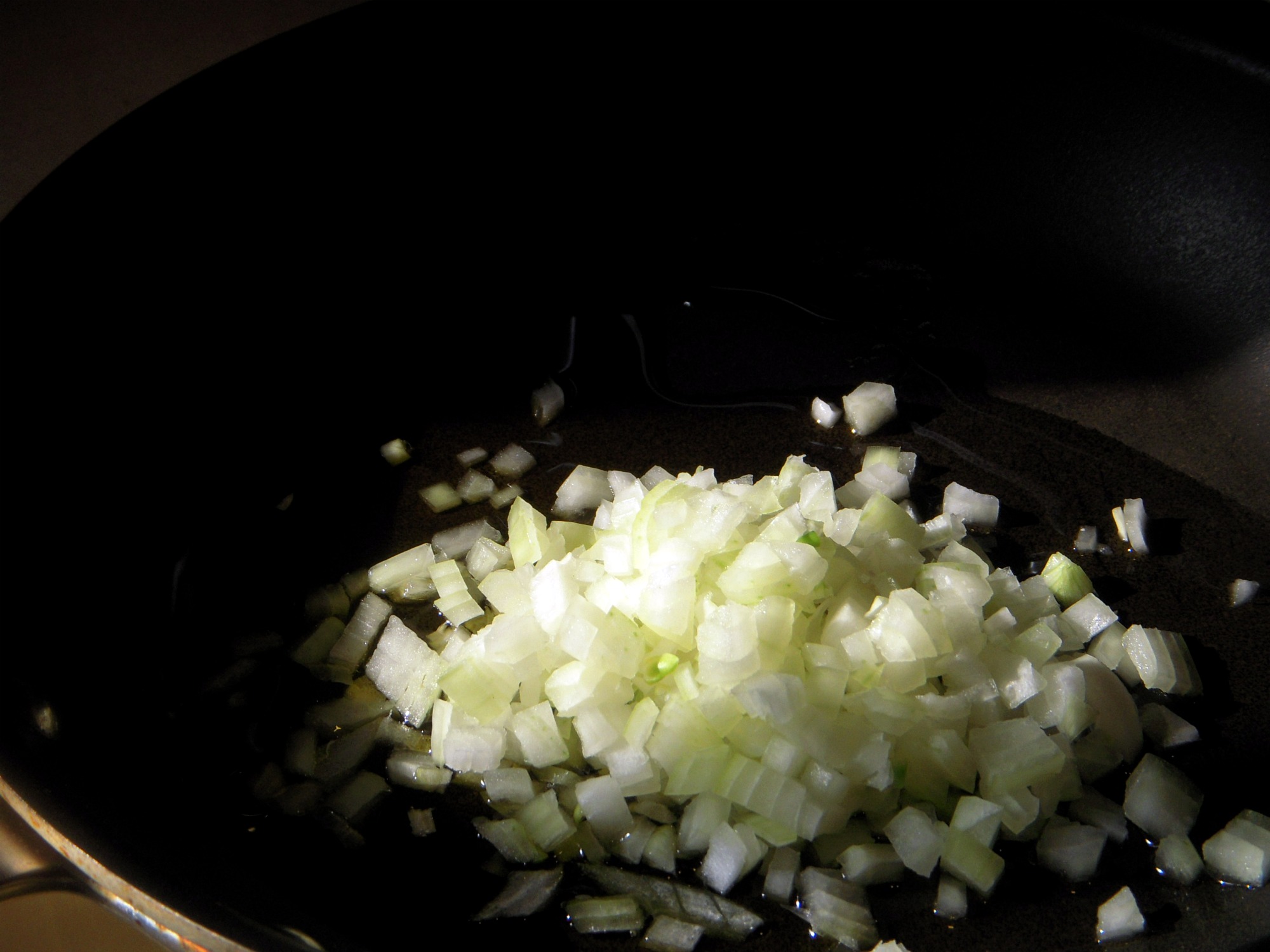
The filling starts with potatoes and onions, chop them both up!

And while your potatoes are boiling, saute the onions in a little bit of olive oil.

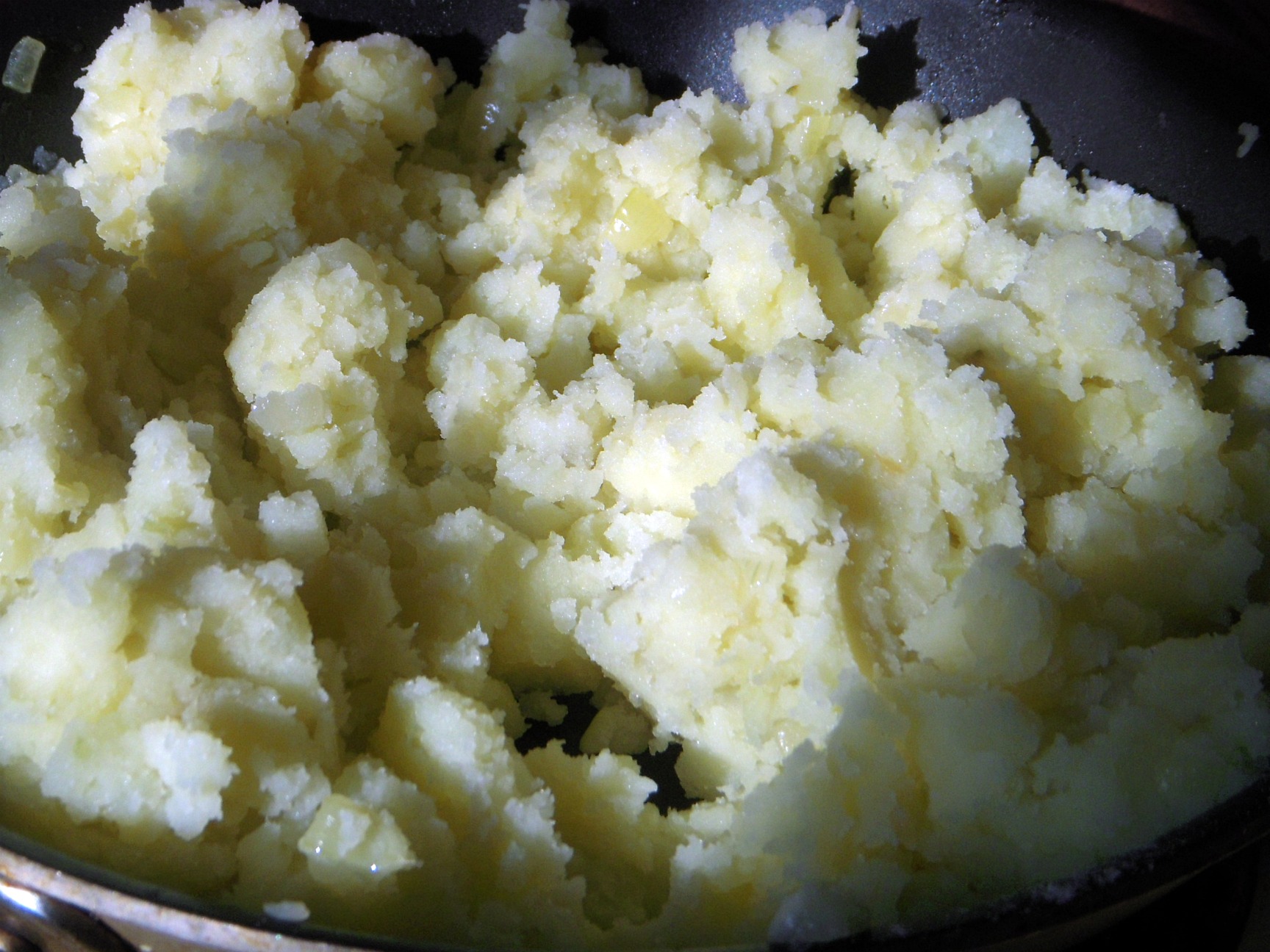
When the onions are tender, and the potatoes are soft, drain the potatoes and add them into the pan with the onions. Mash them up with a dash of salt and pepper, and set them aside to cool while you make the dough.

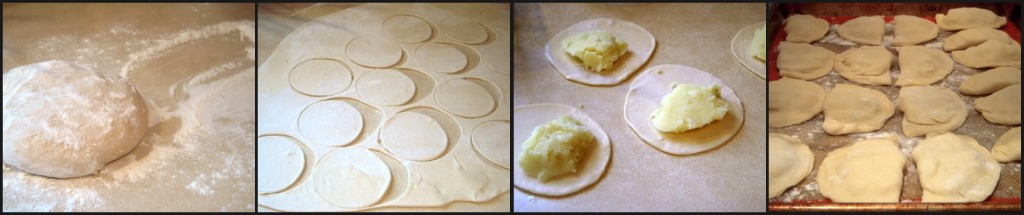
Mix together oil, water, flour, and salt and knead the dough until it is smooth and elastic. (At this point you can put the dough and the filling in the fridge and come back to pierogi making later if you’d like to.)

Roll out your dough, so it is very thin, but not so thin that you can see through it, and cut out circles using a cookie cutter, drinking glass, or an empty can. Add a small spoonful of the potato filling, lightly wet the edge of the circle, and pinch the pierogi closed. Now they can either be boiled, fried, boiled & fried, or frozen and saved for later. Enjoy!

Locally yours,

Lindsay-Jean

Posted in In the Kitchen (recipes & more) | Tagged , , , , , , , | 2 Comments

Post-Crisis Food Security

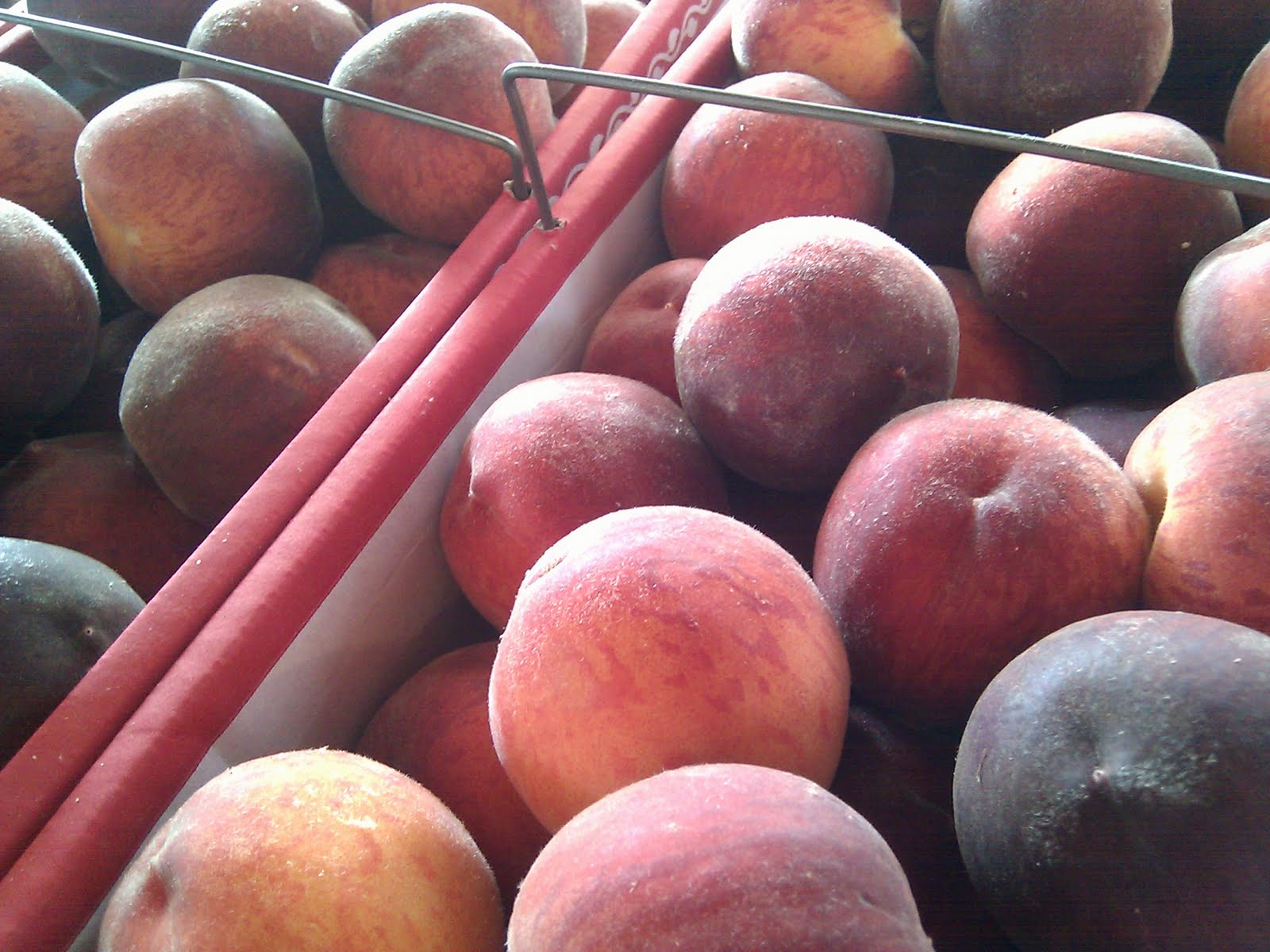
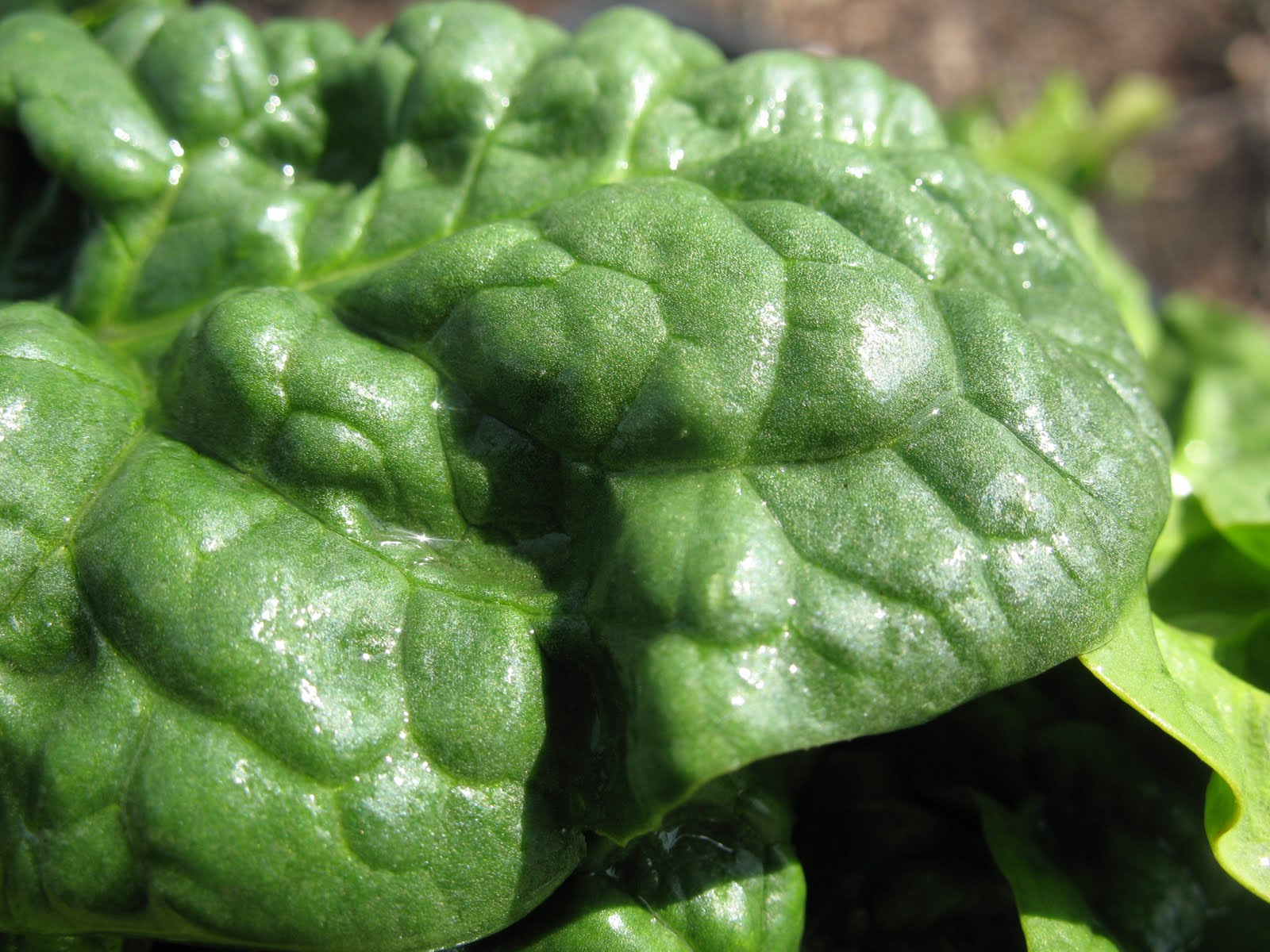
In the wake of the destruction of the nuclear plant in Japan, there is growing concern over how our food supply might be affected. People are worried about unknowingly eating dangerous amounts of  radiation in foods coming from Japan, and they have every justification in their concerns. About 4% of food in our country comes from Japan and farms up to 70 miles away from the plant have recently detected dangerous levels of radiation in spinach and milk. The same areas are also commonly known for their production of melons, rice, and peaches, so it is quite possible that contamination from the plant could potentially affect other food supplies, as well.


Michigan grown peaches from Kapnik Orchards

High levels of radiation can lead to cancer, and also may cause many other symptoms, including: nausea and vomiting, spontaneous bleeding, bloody diarrhea, blistering skin, hair loss, severe fatigue, mouth ulcers, and random infections.


With so many terrifying possibilities that could result from exposure to radiation, it is no wonder that people are currently questioning more than ever if their food is safe. Many restaurants have stopped using Japanese fish and produce, and some will not even serve spinach of any kind because they don’t want their customers to wonder if there might possibly be some infected spinach in the dish they are eating.


Michigan grown spinach from Sunseed Farm

While it is justified that people are concerned about the radiation and want to feel comfortable with whatever they are eating, it seems that there may not actually be much to worry about (at least for us here in the US).


Trace amounts of radiation have been found in milk in Arizona, California, and Washington, but experts say those levels would need to be about 5000 times higher than they are to be considered dangerous. Chances of contamination reaching American soil are extremely low, but many American farmers are, nonetheless, being careful and testing their soil for radiation. Many American restaurants are buying radiation detectors to make sure their food is safe, as well. Many restaurants and grocery stores have stopped selling Japanese fish and produce altogether—even that which passes the tests.

Furthermore, precautions are being taken by the Japanese government to ensure that they do not export any contaminated produce. Tests are being conducted on fish, grains, milk, vegetables, meat and eggs, and if any foods are found to be contaminated, distribution will be halted. Customs officials at both ends are carefully testing all Japanese food exports so that we face almost no risk of exposure.

So, while there may be lots of good food wasted and lost to cautious speculation, Americans can feel pretty confident that any Japanese food we are finding in our restaurants and grocery stores is safe for consumption. Rest assured!

Stay Fresh,

Lindsay Partridge


Sources and additional information:

Posted in Food Transparency (the issues) | Tagged , , , , , | 1 Comment

Baby Animals Wish You Happy Spring!

This slideshow requires JavaScript.

Listen to Beautiful Barnyard Harmonies! (Start at 1m: 22s)

Many thanks for your submissions! To visit these farms online:

Woodbridge Dairy Farm: Byron Center, MI
The Farm at Long Lane: Murdock, NE
Tara Firma Farms: Petaluma, CA
Hoover Farms: Tekonsha, MI
Northwind Farms: Tivoli, NY
Seymour Farmer Market: Seymour, CT

Director of Vegetable Outreach,

Cara Rosaen

Posted in Aw Snaps! (our best photos) | Tagged , , , , , , , , , | 1 Comment

We Want to see YOU!

If you’ve been hanging out on Real Time Farms lately, you may have noticed a few changes on the block. One of the biggest, and most noticeable at first glance, is the new site design. Doesn’t it look so schnazzy?

Aside from putting together our new look, which we certainly couldn’t have done without the amazing graphic design skills of Abby Tovell of T Squared Design Studio, the Real Time Farms programmers have been plugging away at some awesome new updates to the site. Some you might notice, others are sort of behind the scenes. Today I’d like to highlight one of the newest, most fun and exciting ways that every user can now interact with the site.

All users of Real Time Farms can now add their own profile picture–to do this, visit your profile (it’s the first page that appears when you sign-in or you can get there by clicking on your name in the upper right-hand corner of the homepage–screenshot below is an example) and click on “change picture” just below the little tractor in the box that is to the left of your name. Now, instead of just seeing the name of someone who posted a photo at your local farmers’ market, you can now also see their face. Perhaps you’ll run into them next time you’re at the market buying your weekly stash of veggies and you can tell them how much you loved their asparagus photos.


Another cool addition to our user profiles is the ability to select which farms or farmers markets are your favorites. Start typing the names of your favorite farms and markets into the green box on your profile page–see screenshot above–and then click the “Done Adding Favorites” button at the bottom. You can always return later to add more.

Adding a favorite farm means that your profile picture and name will now appear as a fan on the “people” page of that farm’s profile. Are you more than just a “fan”? Do you volunteer on this farm, or are you actually the farmer who runs it? You can now add that too! Just click on the “I am the farmer” link and your name and profile picture will appear in the appropriate place.

We hope you enjoy the new changes and take full advantage of them. We’d love to see all your bright, smiling faces up on Real Time Farms soon. Let’s give a big round of applause to Gaurav, the programmer that made these new features happen.

Voracious for Vegetables,

Meg

Posted in Messages From the Founders | Tagged , , , , , , , | Leave a comment

Farm Fresh Reading for Kids

It’s no secret kids love farms… Old MacDonald, anyone?

I recently stumbled across two beautiful children’s books by Pacific Northwest authors about farmers markets!

Photo source

To Market, To Market, by the tremendously talented Nikki McClure, follows a mother and son to the weekly farmers market, as “the reader learns how each particular food was grown or produced, from its earliest stages to how it ended up at the market. To Market, to Market is a timely book that shines awareness on the skill that goes into making good food” (Source).

Awesome! The art is beautiful, the story so meaningful.

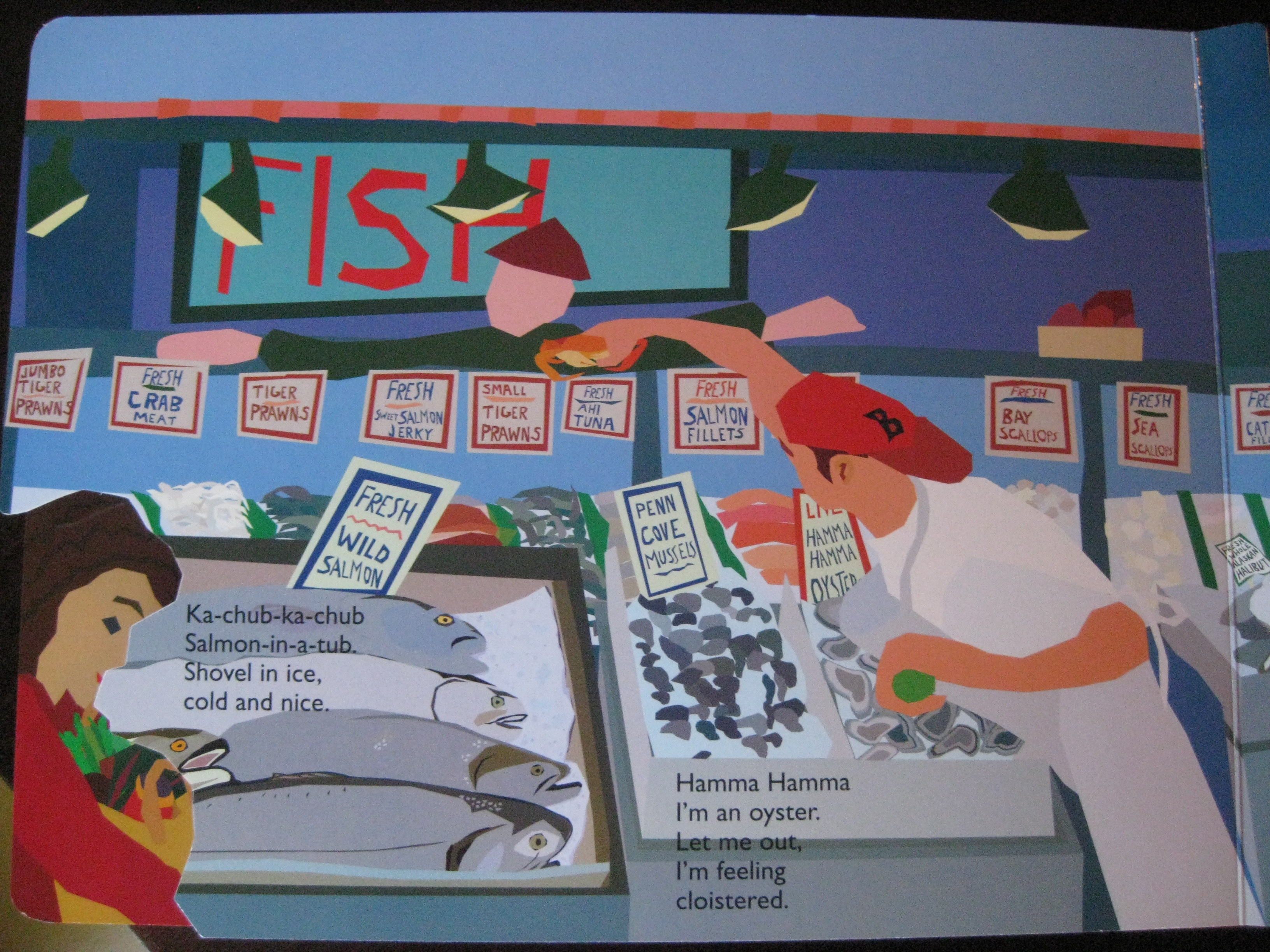
Another great farmers market book I picked up in my local bookstore is A Day at the Market, by Sara Anderson, about Seattle’s famous Pike Place Market.

“Sara Anderson captures the essence of the Market she treasures–not only its friendly cacophony, but also the richness of its colorful community, the secrets of its many nooks and crannies, and its irresistible summer bounty.”


Source

Bright, beautiful, and charming!

There are definitely many familiar scenes in this lovely book – I can’t wait to share it with all the kids (and kids-at-heart) I know!

There are many beautiful children’s books that celebrate the festive air, bright colors, and local flavors of a farmers market, but these two are regionally near and dear to me!

Do you have any favorite kid’s books that share the story of a farm or farmers market?

Reading away in Seattle,

Lisa

Posted in Between the Covers & Behind the Scenes (media), On the Playground (kids) | Tagged , , , , , , | Leave a comment