Three Cheers for Women

Today is International Women’s Day! A global day to celebrate the economic, political and social achievements of women past, present and future. What better way to commemorate this occasion than to share some words from the amazing women farmers that I’ve had the privilege to meet and work with?

Women and Farming
If you think about it from both a global and temporal perspective, women truly are the heart and soul of farming. Thousands of years ago, it was women who were planting, tending and harvesting in the fields while men hunted wild game, and in many places around the world those roles still exist. While women have been the masters of farming throughout history, farming in the U.S. has been widely regarded as a male occupation for many decades.

However, women farmers the U.S. are on the rise. I’ve heard it said that women are one of the fastest growing populations of farmers. This beautiful photo essay, published in the Washington Post online (June 27, 2009), states that “women now run one of every 10 American farms.” I interviewed three of these women to get a sense of what is motivating women to start a career in farming, and what keeps them there.

Meet the Farmers

  • Tracie SmithTracie’s Community Farm, Fitzwilliam, NH – Tracie owns and operates a successful, 300+ member CSA farm that she started 11 years ago, she also sells to local restaurants.
  • Amanda MaurmannStonewall Farm, Keene, NH – Amanda is the Garden Manager at a not-for-profit, educational and working farm where she grows produce, herbs and flowers to sell through a four season CSA, farm stand, and farmers market.
  • Stephanie PhillipsThe Family Farm, Belleville, MI – Stephanie operates a biodynamic farm homestead that has been growing organically since 1980. She sells through a CSA, to local restaurants, and farmers market.
Answering the Call – What Draws Women to Farming?
“When I was 18, I grew my first garden,” says Tracie. “While prepping the soil, planting, cultivating, and harvesting, I knew I was doing what I was meant to do. It felt right. I had a connection with the plants and the soil.”

Amanda and Stephanie also feel that farming is just what they are meant to do. However, these two women were also blessed to be part of farming from a young age–Amanda through her grandmother’s and Stephanie through her parent’s farm (the same farm she operates today). Both women tried pursuing a different path but found themselves returning to the occupation of their ancestors. “I went to school for something totally unrelated and didn’t come to [farming] until I was in my mid 20’s,” says Amanda. “It was like opening a door to a piece of yourself. Your heart remembers it.”

Stephanie’s deep connection to farming even predates her own presence on this earth. “I came back to Michigan to reclaim my family heritage,” she says, “to reconnect with the spirit of my Cherokee ancestors. I think this is ultimately what inspired me to farm. The spirit of the Earth is in my blood, in my family lineage. No matter how hard I tried to do and be something else, I could not deny the call of stewardship to the planet and humanity.”

Staying Power
Without doubt, farming is anything but a walk in the park. Farmers spend long hours under the hot sun and in bone-chilling blizzards–the fields and animals don’t take a vacation, so neither do you. Living and working in a society that asserts that hard, back-braking labor is a man’s job is at times an additional hurdle for women farmers. Aside from personal motivation and passion, I wanted to know, what keeps these women farming?

Stephanie found one of her most valuable resources to be community. “When I needed rain barrels, I got them. When I needed compost, I got it. Free labor, no problem! There is a wonderful community of people and organizations here in Southeast Michigan that are committed to supporting sustainable farms, businesses and farmers.” Similarly, Tracie lists family, friends, and community-based organizations as some of her strongest supporters.

Amanda cites not only the community at large but a community among women farmers in Southwestern New Hampshire as an important resource. “Women farmers in this area have a strong bond with each other, we are connected in a powerful way. We go for months without speaking to each other, but whenever we need anything we can turn to one another. It’s a great supportive network.” In fact, Amanda told me that farmer Tracie was a huge inspiration to her when she was first considering changing her career to farming. “I thought, if she could do it, so could I,” says Amanda.
Farming into the Future
One thing is for sure, the number of women farmers is on the rise and their passion and drive will undoubtedly carry them far into the future of farming.

Want to learn more about how women are a powerful force, changing the face of farming in the United States? There are a number of organizations that have formed to specifically support women farmers (for example, UVM’s WAgN and MSU’s Women’s Agricultural Community Web Resource), and books that have been written on the subject of women in agriculture (such as, Farmer Jane & Women of the Harvest).

What’s the best thing you can do to support women farmers?

  • Build a community that supports all of its farmers, men and women alike.
  • Volunteer at a local farm or for organizations that help local farmers.
  • Buy direct from farmers at Farmers Markets and farm stands.
  • Sign up for a CSA–many are taking applications now for summer shares!
  • Seek out and/or request local food options at grocers and restaurants.

Voracious for Vegetables,

Meg
Posted in On the Farm | Tagged , , , , , , | 2 Comments

Savor the Season: Raspberries

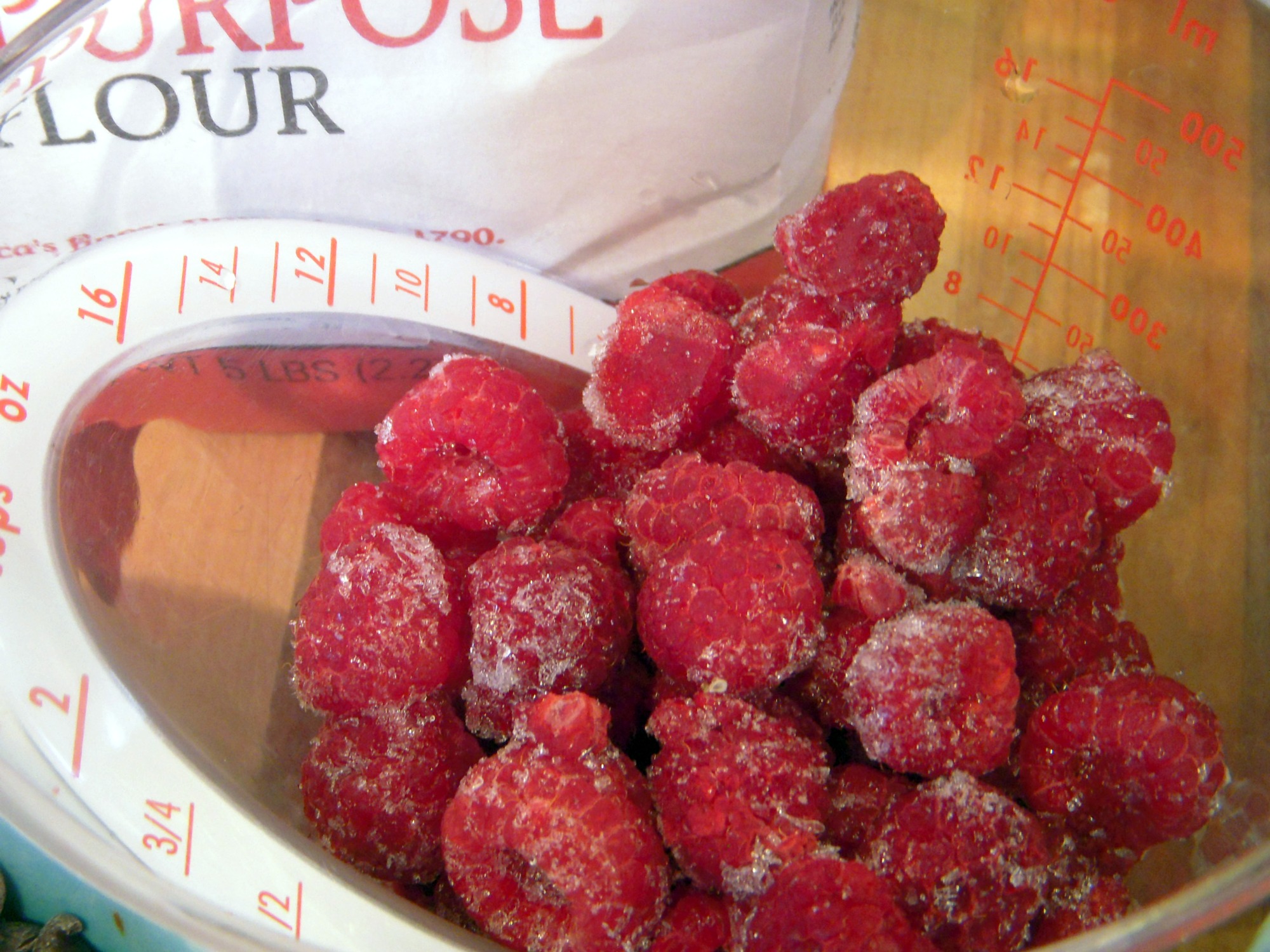
Alright, it’s just wishful thinking that raspberries are in season here in Michigan. Even though they aren’t really in season at the moment, by freezing summer treats like raspberries, you can enjoy them year round!

I’m kind of on a scone kick lately, and this raspberry and chocolate tea scone recipe caught my eye. Besides, anything that adds chocolate into a breakfast food sounds good to me.

The dough came together really easily, just remember to work quickly when you incorporate the frozen raspberries and liquids. If you over-stir you’ll end up with completely pink scones.

I ended up not waiting for breakfast, and enjoyed a warm scone straight out of the oven with a little scoop of Jeni’s black currant sorbet (an Ohio treat worth searching out!). The flavor combination was really tasty, but honestly I was a little disappointed in the texture of the scone. Hey, not every kitchen experiment can be a complete success, right? I’m planning on trying these again with the dry/wet ratio from my last scone adventure, and then adding the raspberries and chocolate in (maybe white chocolate next time!). What are you favorite ways to use frozen bounty from the summer?

Locally yours,

Lindsay-Jean

Posted in In the Kitchen (recipes & more) | Tagged , , , , , , , | 2 Comments

Peasful Places

Greetings from Seattle!

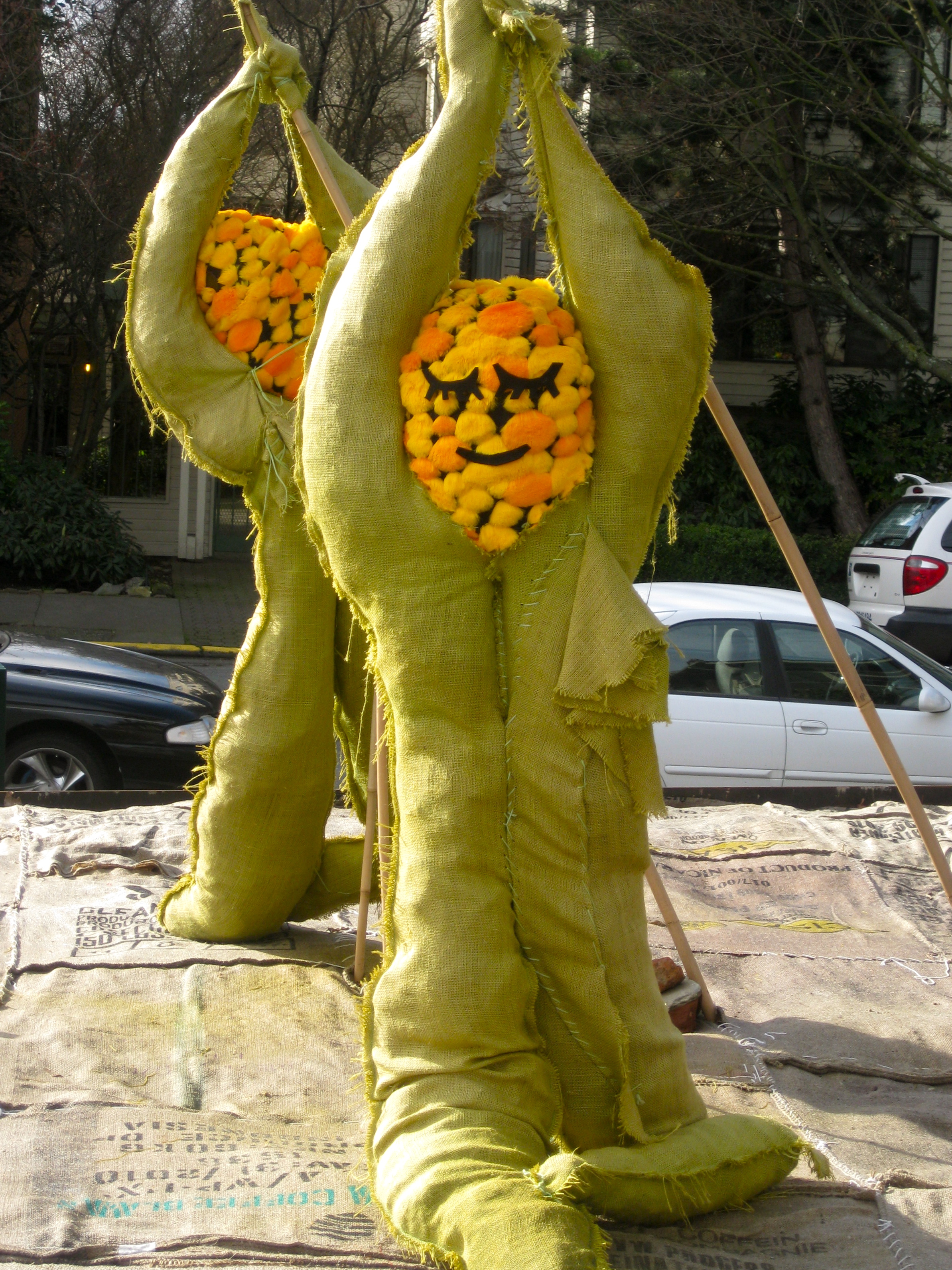
I made a pleasant discovery just a few blocks from my home this week:

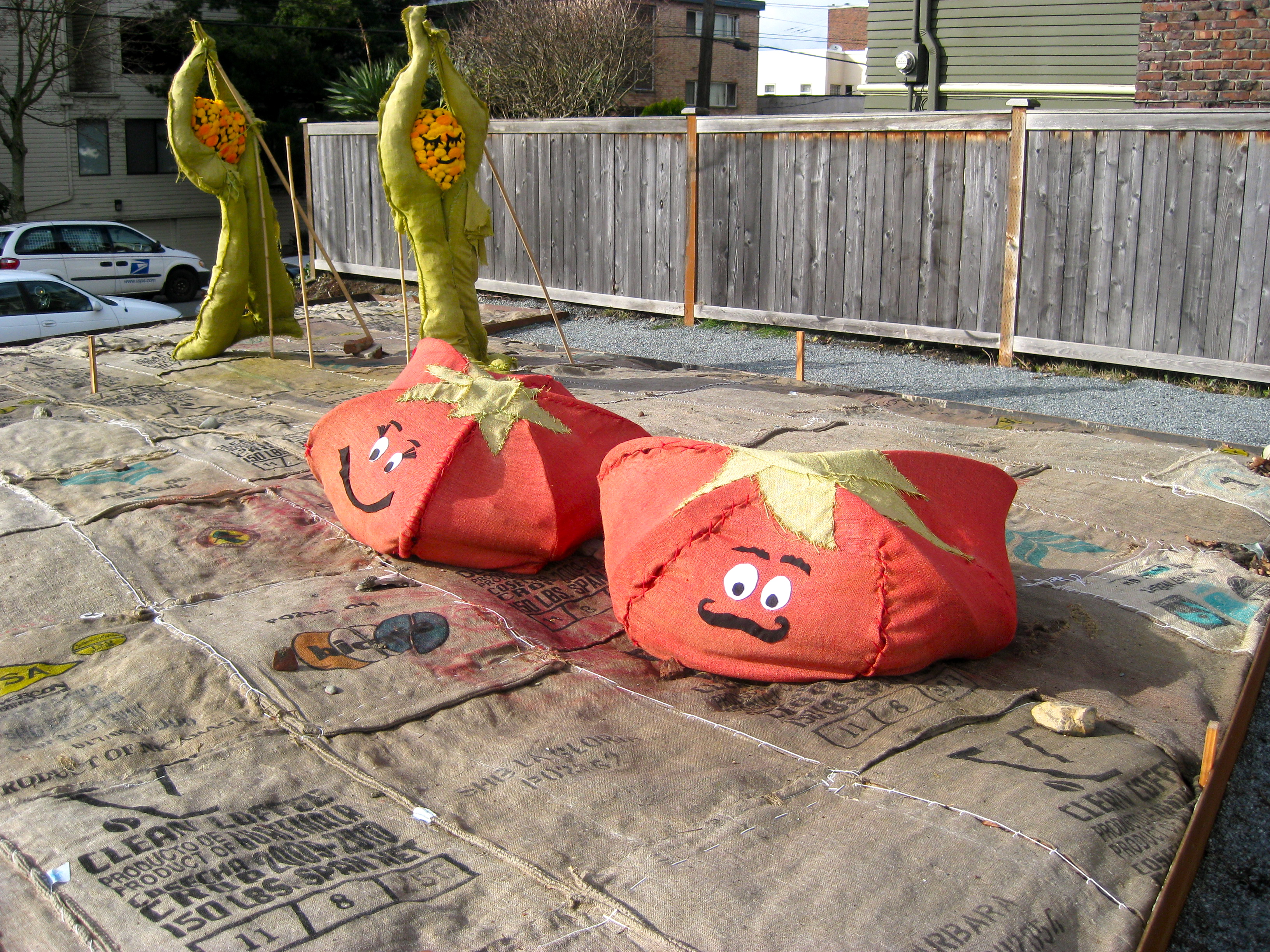
Peasful pods resting under a burlap quilt.

Corn practicing yoga.

And happy (and mustachioed) tomatoes keeping an eye on things.

What’s going on here?

This is a Seattle park on the corner of two busy streets. This .21 acre space used to be a parking lot, but in 2008 the Seattle Parks Department decided to turn it into a green space. Unpaving Paradise, a project started by the Capitol Hill Community Council’s Open Space Committee, has done a great deal and continues to work to raise money and community involvement in the brand new park.

The park has lawns, an area for skateboarding, and a P-Patch. P-Patches are community gardens, and there are 73 of them in Seattle! You can read more about the Seattle Department of Neighborhoods P-Patch Community Gardening Program here, but here’s just some of what they do: grow community, practice organic gardening, feed the hungry, and improve access to organic, culturally appropriate, and local food!

Amazing stuff!

The P-Patch is under a coffee bean sack quilt for the winter, but I can’t wait to see (and be a part of!) how the garden grows once spring rolls around and we wake up those peas!

Posted in On the Farm | Tagged , , , , , , , , , | 1 Comment

Food and Film: A Love Story

Ever since the widespread release of the movie Food, Inc. in the summer of 2009, film and food seem to be on a honeymoon of sorts. New flicks documenting the state of our food system are released almost as frequently as the cows need milking, and food film festivals have been taking place in cities coast to coast (some of the biggest scheduled for 2011 are in NYC and Chicago, but in the past festivals have also been held in Kansas, Tennessee, Alaska, Texas and Oregon).

When I lived in New Hampshire, I worked to organize a committee of local community members to plan our 3rd Annual “Feast on This Film Festival.” To pick which movies we wanted to show we searched Google, Netflix, and at the local public library. Our list of possible films quickly grew to over 58 movies and I have no doubt this list would be much larger now.

Just after moving back to my home state of Michigan, I was excited to learn that a handful of Ann Arbor organizations and businesses were knee-deep in planning the Michigan Good Food Film Festival. This event, to be held at Washtenaw Community College on Tuesday, February 28, 2011 from 6-9pm, is a traditional film festival–where filmmakers submit entries into a competition–with an über-local twist–Michigan students and community members are urged to consider what good food means to them. I’m looking forward to going and seeing all the new films from budding filmmakers about food and farming in Michigan. Hope to see you there!

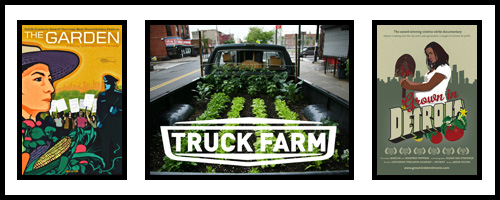
Looking for some inspiring food and farming movies for your next event? Here are some of my personal favorites:

Movies I haven’t seen but I’ve heard great things about:

And Coming Soon–movies still in production that look really, really good:

Voracious for Vegetables,

Meg

Posted in Between the Covers & Behind the Scenes (media) | Tagged , , , , , | 2 Comments

Have You Met: Jerry Hebron?

This past summer, I decided I wanted to spend more time in Detroit doing some urban gardening. I called up the volunteer coordinator of the Greening of Detroit to find out about volunteer days and she sent me to the Oakland Community Garden on the north end of the city. There I met Jerry Hebron, who immediately inspired me into getting involved in the growing Detroit urban gardening movement. Jerry is the Executive Director of the North End Christian Community Development Corporation, a non-profit dedicated to youth development and the cultural and economic revitalization of North end area of Detroit. The primary activity of the organization is in the garden, which has recently been extended in to a newly built greenhouse.

Jerry started the Oakland Community Garden in 2009 with the support of the Greening of Detroit. After spending most of her life working as a real estate agent in Detroit, she retired to start the garden. She employs the homeless and people who just got out of prison to help them get some work experience, build up their resumes, and make some money. She also gives work opportunities to children from the community, who get to earn some money by gardening and then selling what they help to harvest in the local markets.

Any community member is free to come take anything they want from the garden. Jerry encourages them to come get involved and help in the garden, but it is not a requirement for getting food. Access to food is one of the main problems in Detroit, and Jerry wants to help change that. People need access to cheap, healthy food and the best way to do that is by creating a strong local food system.

In June, Jerry worked with a couple other CDC’s to organize an eco-fair at the Vanguard CDC. Jerry and the Greening of Detroit both had tables and were handing out seeds, compost, and containers and were instructing people on growing vegetables and herbs at their own homes. People were extraordinarily responsive and were very excited to go home and plant their seeds. Most of them said they knew nothing at all about gardening and never would have thought of doing this without the information provided at the fair. Meanwhile, the Healing Support Network was there giving healthy cooking demonstrations and handing out food samples. Community members who came to the eco fair left not only with full stomachs, but with a collection of new, useful information and the opportunity to begin a more economically and environmentally sustainable and healthy lifestyle.

The eco-fair was one example of many efforts made by Jerry to help people help themselves and to make Detroit a healthier, more sustainable city. She wants to see the city flourish and improve the quality of life for the people who live there.

Stay Fresh,

Lindsay Partridge

Posted in Food Transparency (the issues) | Tagged , , , , , , , | Leave a comment

Savor the Season: Acorn Squash

The Real Time Farms Headquarters had a plump acorn squash from Brines Farm (hurray for cold storage for extending what’s in season!) lying around, just begging to become something delicious. As I mentioned recently, I’m quite enamored with Yotam Ottolenghi’s cookbook Plenty, and as soon as I saw that squash, I knew just what I wanted to cook. Ottolenghi’s “Crusted Pumpkin Wedges with Soured Cream” with the squash used in place of pumpkin.

I thinly sliced and lightly oiled the acorn squash

And then I prepped the crust ingredients: fresh parsley and thyme, lemon zest, Parmesan cheese, panko (Japanese bread crumbs), and salt and pepper.

The crust mixture gets evenly spread out across the squash slices, and lightly patted down (so it sticks to the oil) and then the squash is baked until it is soft and the crust is golden and toasty. The crusted wedges are served with sour cream mixed with freshly topped dill. The wedges were tasty – the soft squash paired with the stuffing-esque crust and a dollop of sour cream reminded me of Thanksgiving, and made for a nice winter lunch.

Unfortunately I couldn’t find this recipe legally reprinted online, so you might have to pick up the book, or just wing it!

Locally yours,

Lindsay-Jean

Posted in In the Kitchen (recipes & more) | Tagged , , , , , , | 4 Comments

Movers & Shakers: Ian Calder-Piedmonte, Cofounder and Farmer, Balsam Farms

It’s a lot of hard work and yet, a lot of laughs on Balsam Farms on Long Island, New York. “When you’re working in the fields, much of your work could be thought of as monotonous, but you’re with a lot of people and there’s a lot of joking and laughing….lot’s of funny things happen….if you can’t laugh at some of the problems then you’d be in trouble.” Ian Calder-Piedmonte explains.

This now 50-acre vegetable and fruit farm grows produce for upwards of 40 restaurants, sells at six farmers’ markets, maintains many happy customers at their farm stand, and most recently began supplying fresh fruit and vegetables to a local school. While many people with a degree from Cornell might decide to go the traditional road of a business executive, an engineer, or a doctor, Ian decided to join the ranks of his good friend Alex Balsam, also a Cornell graduate, on his farm. Together, they have created something quite spectacular.

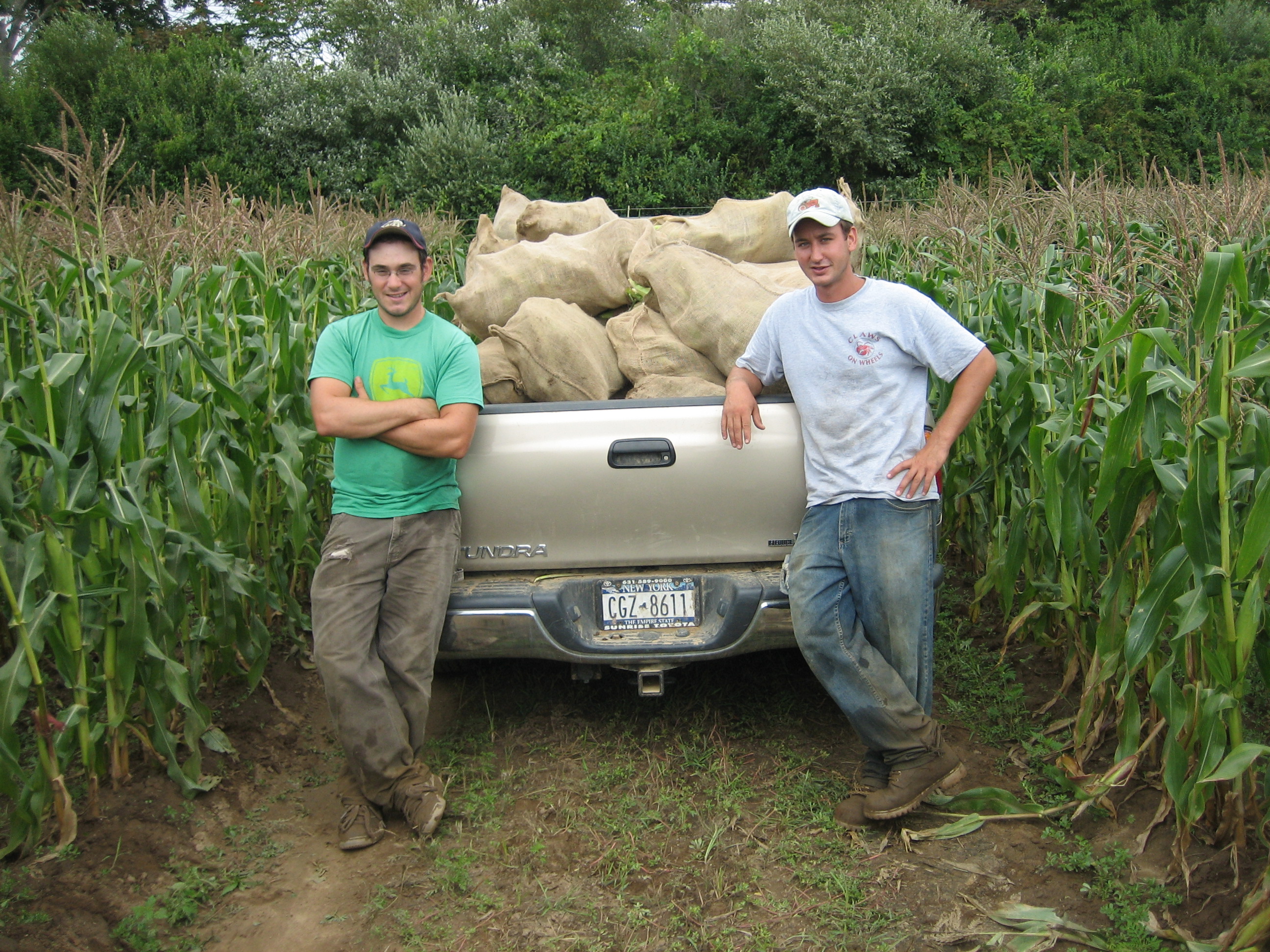
Alex Balsam (left) and Ian Calder-Piedmonte (right)

Alex and Ian have managed to grow Balsam Farms, once on small, few-acre, summer-only farm, to what it is now. They have expanded its acreage and its crop diversity, hired employees, bought additional equipment, and can now make a living doing what they love. “It wasn’t always this way”, Ian notes. “A lot of people seem to think it’s easier than it is. Successful people want to quit their jobs as doctors or lawyers and become a farmer, and they expect to do it and make the same salary. I think it’s great that they want to be farmers, but I find it trivializing when people think it will be a walk in the park. We work really hard at what we do. Sometimes I think people don’t realize the amount of work that goes into it.”

Ian was raised on 65 acres in a small Midwestern town. His parents created a bit of a pastoral paradise;  raising and training race horses, growing vegetables, fruits, and flowers in their spare time. Ian’s father even had a band, when Ian was very young, aptly named “The Brussel Sprouts”. They would record in one of the side-buildings, “The Grainery”. I asked Ian if his father recorded any songs in ode to any member of the vegetable or fruit kingdom, but alas, there were none. He reassured me, though, that they did record a number of songs about country life. Ian’s mother’s family, The Calders, had and still maintain a very successful dairy, Calder Dairy. “I never worked on the farm,” Ian explains, “but I spent a lot of time there. It played a role in my appreciation for farming”.

Growing up, Ian was commuting to and from a college-prep high school in a nearby town, and upon graduation was accepted into Cornell. He met his future partner freshman year. “Alex was always into farming,” Ian explains. Alex Balsam was renting and farming a few acres during the summers while attending Law School. Ian decided to join him for the summer to try it out. “I fell in love with it,” Ian exclaims.

I was curious to know Ian and Alex’s keys to financial sustainability. “It’s never really mentioned a lot in discussions of sustainable farming – but it should be” Ian says. “For the first number of years I worked on the side. It’s not a way to get rich quick. We had to carve out our own niche. We worked, and then invested back into the company to grow it. Now, I’m making enough money to live off of. It’s really the love of farming that makes me keep doing it.” But what specifically, I wondered, do he and Alex do to secure and grow their revenue?

Ian explained that diversifying his business and his crop is essential to their success. “We grow a lot of different crops. If the weather or something fails one year, we’ll never be without anything to sell.” This requires continual study on how to grow different types of plants, as well as a host of different tools for growing them. Similarly, he diversifies his revenue streams. “We try not to sell all to one place. About half of our business is wholesale, and about half of it is retail. We sell to restaurants, groceries, a local school, and directly to consumers at our farmstand and at farmers’ markets.”

Balsam Farm’s success is also a result of their attention to quality and to their customers needs. “I often think back to the model of my uncle and grandfather’s at Calder Dairy. They have built a very recognizable brand. They still produce all of their own milk and ice-cream and deliver it in glass bottles. People know when they are buying Calder Dairy, they recognize it and what makes it special. I want a Balsam Farms’ tomato to have the same brand appeal.” Ian explains, “beyond just the quality of produce, it’s about being reliable. We deliver 7 days a week, and if our customers need something, we will get it for them. We have to be consistent. By having a consistent supply, we can almost guarantee we will have an item throughout the course of the season. We try to avoid any sort of gaps.” It’s obvious that Ian also spends a lot of time nourishing his relationships with his customers as well. Even though his business has grown, he still does 70-75% of the deliveries himself.

With so much success, albeit it all with a lot of hard work, I can’t wait to see how Balsam Farms evolves. “As a farm it’s important to stay optimistic. Everyone will make mistakes. You can look at them as a lesson learned or a failure. You could really get down about that, or you can learn, and the next year get a little bit better.” With an attitude like that, I know I can plan on being able to stop and enjoy one of those Balsam Farms’ heirloom tomatoes for years to come.

Your Director of Vegetable Outreach

Cara Rosaen

————-

Ian’s farming resource recommendations (though, I should note, he does maintain that the best way to learn is just to get your hands dirty and do your best):

Books:
Building Soils for Better Crops: Sustainable Soil Management
The Heirloom Tomato: From Garden to Table: Recipes, Portraits, and History of the World’s Most Beautiful Fruit.

Conferences:
Northeast Organic Farming Association – NY Conference
The Empire State Fruit & Vegetable Expo

Posted in On the Farm | Tagged , , , , , , , , | 2 Comments

Let’s Swap Seeds

After experiencing the “blizzard” (aka Snow-mageddon, Blizzaster, or Snowhere Near Expectations, depending on your location) that just swept through the eastern half of the US, it’s somewhat difficult to believe that now is the right time of year to start thinking about seeds and gardens and green plants reaching up through the soil. However, January 30 was “National Seed Swap Day”—a day dedicated to

  • sharing open-pollinated seeds suited to local conditions,
  • socializing with other gardeners,
  • and preparing for spring gardening season

If you think about it, a seed swap or seed exchange at its very basic level has probably been around since the very beginning of agriculture, so it’s not really a new concept. But today’s seed swap can come in many different forms; from annual local celebration events that include an educational component like the Sustainability Project’s Seed Celebration in Gilsum, NH, to more seasonal seed exchange communities such as the Olympia Seed Exchange in Olympia, WA, to online seed swaps that bridge the miles between participants like GardenWeb’s Online Seed Exchange.

Seed swaps today serve an important role in preserving heirloom plant varieties that may otherwise go extinct if they aren’t reproduced by more people. They also help preserve the cultural heritage of an area by upholding and distributing the varieties that are not much a part of mainstream agriculture. These values align closely with the non-profit membership organization Seed Savers Exchange which is dedicated to saving and sharing heirloom seeds; not to mention the Global Seed Vault in arctic Norway that serves as the veritable Fort Knox of seed saving.

Don’t know much about saving your own seeds? Here are some great resources to help you get started!

So ignore the fact that snow piles abound this time of year and start thinking about what seeds you might want to plant in your garden, window box or farm fields. Find a seed swap or seed exchange near you or maybe even start one of your very own.

Voracious for Vegetables,

Meg
Posted in Food Transparency (the issues) | Tagged , , , , , , , , , | 1 Comment

What’s the Difference: Honey

What’s the difference, indeed. Honey is most definitely a product of where it’s made. Depending on the nectar the bees collect, honey will vary hugely in flavor and coloring. That’s why you’ll see different flavors (example: Tupelo Honey, Clover Honey) named after the plants the bees visit. According to The National Honey Board, even nectar collected from the same flowers at different blooming times can produce different flavored honey.

So I guess there is always a difference when we’re talking honey!

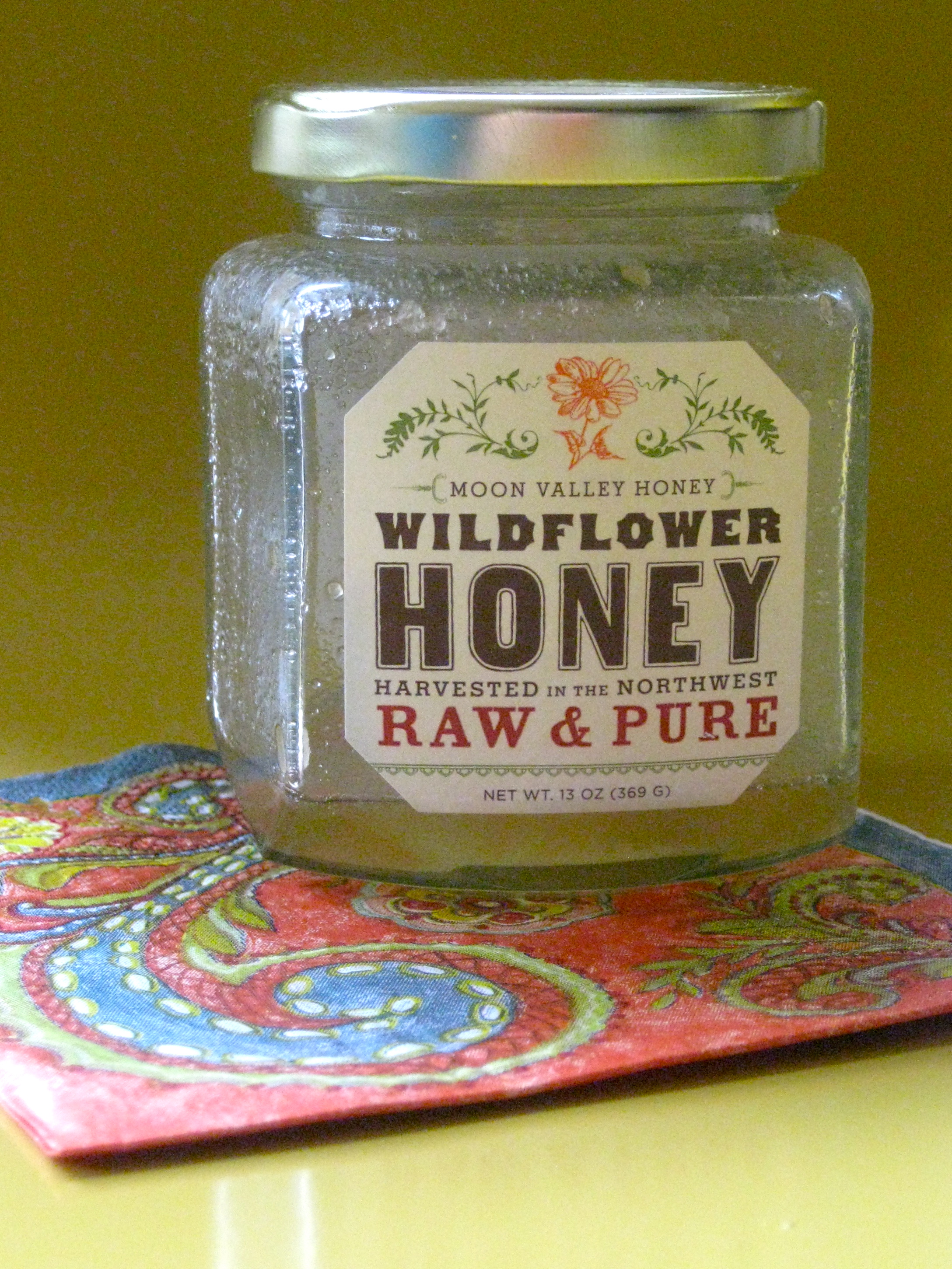
This is from Moon Valley Honey, which is located in the foothills of Washington’s Cascade Mountains.

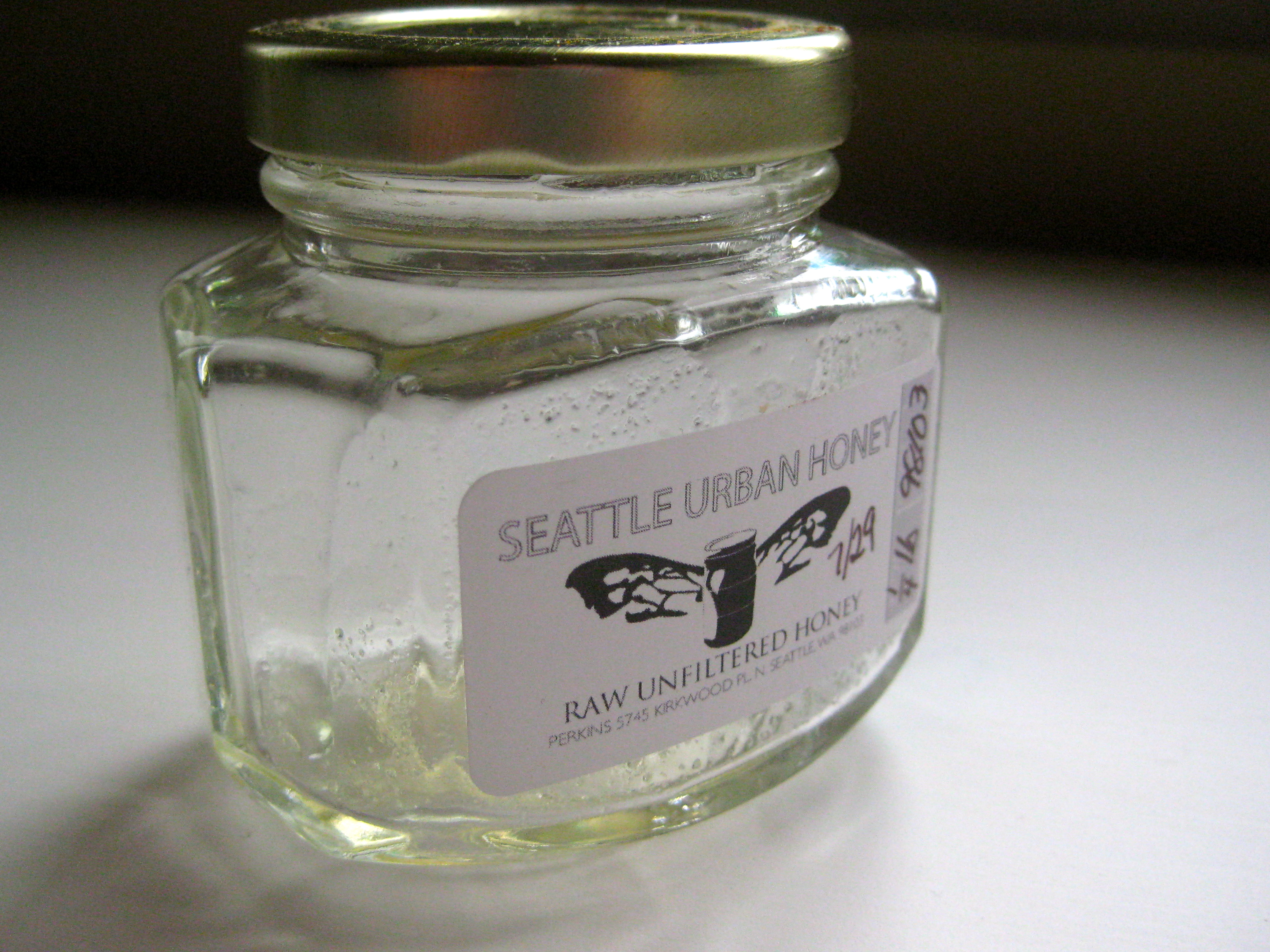
And this is from Seattle Urban Honey:

As you can see, all of my honey has been much loved and nearly consumed!

You can also see that there is a zip code on the side of the label of the Seattle Urban Honey. This honey came from bees that live just a mile or two from me. Super local!

The flavors are definitely different! The Seattle Urban honey is more floral, and the color is lighter and clearer. The Moon Valley honey is more buttery, and the color is more golden and opaque. I’m no honey tasting expert, but it’s so interesting to take the time to note the differences brought to us by different plants and animals.

Honey aficionados know the importance of location when tasting honey -you can do a honey tasting just like a wine tasting, picking up on the complex flavor notes!

There is a lot to learn from the beekeepers -the folks that sell honey can tell you a lot about the flavors to expect in the honey their bees produce.

So go local with your honey -it will always be a unique reflection of where you (and those hardworking bees!) live.

Staying sweet in Seattle,

Lisa

Posted in In the Pantry (food artisans) | Tagged , , , , , , , , | 5 Comments

Message From the Founder: What it Means to be a Social Venture

A question we are often asked is:

Why is Real Time Farms a for-profit company instead of a non-profit?  And as a for-profit, why are you taking donations as part of the SeedStarter campaign?  We want to take the time to explain how we view ourselves as a for-profit social venture, and how SeedStarter fits into this.

A Social Venture

There is a growing awareness that applying the agility, ingenuity and high risk / high reward approach of a for-profit startup to a social problem is an effective alternative to non-profits.  A recent article about Social Enterprise on greenmarketing.tv explains that whereas non-profits, “rely primarily on charitable contributions, public funding and foundation grants to support their programs and cover their administrative overhead”, social enterprises, “rely primarily on their earned income stream, and like any other company, if needed, it takes loans, invites capital investments, forms partnerships etc. in order to expand its business activities.”  Simply put, if a social venture succeeds in developing a scalable business model that complements its social mission, it will not only be self sustaining in its efforts, but have the resources to do things that non-profits typically have a harder time doing, like pay competitive salaries for top talent.

But a for-profit social venture has more than one bottom line; it must have a clear social impact that it can be accountable to as much as its profits.  This is why Michigan’s Social Venture Fund invests in, “sustainable, innovative, for-profit companies that place the generation of a significant social impact at the heart of their mission and way of doing business.”

Emerging Business Structures

In recognition of this middle ground between non-profits and for-profits, new legal structures are emerging including B-corporations and L3Cs (Low-Profit Limited Liability Corporations).  Both recognize that applying the power of a for-profit model towards social impact is a powerful idea that merits new legal structures.  The legal structures aim to make it easier for foundations and individuals to make donations or program related investments to a for-profit entity while being assured the for-profit sticks to its social mission.  Given that the L3C model is available in Michigan, it is the closest fit for Real Time Farms, and we have considered converting from an LLC to an L3C.  At this time however, L3C’s don’t have the legal teeth to afford us tangible benefit or accountability beyond making a declaration of our social mission, so changing our legal structure has not been at the top of our priority list.

How Real Time Farms Fits

Real Time Farms mission is to make food transparency easy, participatory and fun.  Mark Bittman of the New York Times writes that we are experiencing  an “increased awareness of industrially raised animals and over processed food and ultimately an interest in local ingredients, in vegetables, in sustainability, in human health…” and yet finding alternatives is difficult.  By developing an easy to use guide that makes it easy to trace food back to its origins and learn about how it was grown or produced, we believe we will lead people to choices that are healthiest for themselves and our planet.

We have also developed a business model around providing tools to allow restaurants, caterers and food vendors to show how their menu items are sourced, linking each ingredient back to the farm it came from.  By making it easy to plug into the growing guide, it is a win both for restaurateurs who need to convey the value added by their thoughtful sourcing and to consumers who would like to find a place to eat that meets their standards of food production.  Restaurants pay a monthly subscription fee to be on Real Time Farms, and the revenue is used to sustain our efforts to continuously improve our food guide.  If and when we grow our business to bring in substantial revenue, we’ll be able to grow our team, pay competitive salaries to top talent and recoup some of the costs we have put into starting our business.

Why SeedStarter

We just explained how Social Enterprises are different from non-profits, and how Real Time Farms fits that model.  So why are we taking donations as part of our SeedStarter fundraiser?  If we are a for-profit, why not take on investments instead?

The main reason we created SeedStarter was to provide a simple way for people who believe that our success will be a good thing for food transparency to help us reach the point of financial sustainability.   At that point, we will continue to grow our guide without needing any additional outside donations.  Much like campaigns on KickStarter and similar sites, we are seeking a one time boost.  By accepting donations of any amount, it is an easy no strings attached way to help us, and while a donation clearly does not yield any financial returns, we hope to provide significant returns on that investment in terms of improved food transparency and thus individual and environmental health.

We have no intention of regularly holding fundraisers once we are financially sustainable; our scalable business model will provide us the financial resources to continue to work on food transparency for years to come.

And while we have taken equity investment in the past, the complexity associated with offering equity to individuals who simply would like to give $20 to help us scale out this spring seems like overkill.  That said, if you are someone who would like to make a significant investment in Real Time Farms, please do contact us.

Summary

Real Time Farms is a for-profit social enterprise that first and foremost aims to make food transparency easy while sustaining itself with scalable business models that will provide us the resources to have an ever growing impact.  If you believe in our mission to improve food transparency, our SeedStarter program is an easy way to chip in to help us reach financial sustainability this spring.

Karl Rosaen, Founder, Real Time Farms

Posted in Messages From the Founders | Tagged , , , , , , , , | 2 Comments