Young Foodies: Elana Taubman

I met Elana Taubman during our sophomore year at the University of Michigan in Environment 270, taught by Ivette Perfecto. Throughout the semester, Ivette continued to return to a focus on the urban/organic agricultural revolution in Cuba, which she pointed out has occurred as a direct result of the Soviet blockade. Being cut off entirely from outside resources, notably food, fertilizer, and pesticide imports, forced the island to develop a self-sustainable food system to feed its residents.  The Cuban example got Elana thinking about urban agriculture and its potential impacts on development and food security.

During her semester abroad in Costa Rica, Elana did an independent project on food systems, studying farmers’ markets and urban agriculture in San José.  She interviewed farmers’ market managers and vendors at the San José central market with the intent of finding out where food was coming from. She was surprised to find out that the local food system in Costa Rica was not nearly as developed as she had imagined it would be, and that much of the available produce had come from Panama, Mexico or Nicaragua. She noticed that there were a lot of people doing little things for the local food system, but says there was nothing resembling a movement. “Now that Costa Rica is part of NAFTA,  it can get potatoes super cheap from Nicaragua, so it doesn’t need to rely on local agriculture for produce,” Elana explains.

“People in San José are very into the idea of the ‘American Way of Life,’ which to them means being a middle-class worker and getting away from farming roots,” she says. Almost everyone in the city had front lawns but would not grow anything and preferred to buy their food from a grocery store. She noticed that the only people that really got in to gardening were those who lived far from a grocery store, and thus did it out of necessity. “It’s a sensical trend,” Elana says. “If you need it, it will happen.”

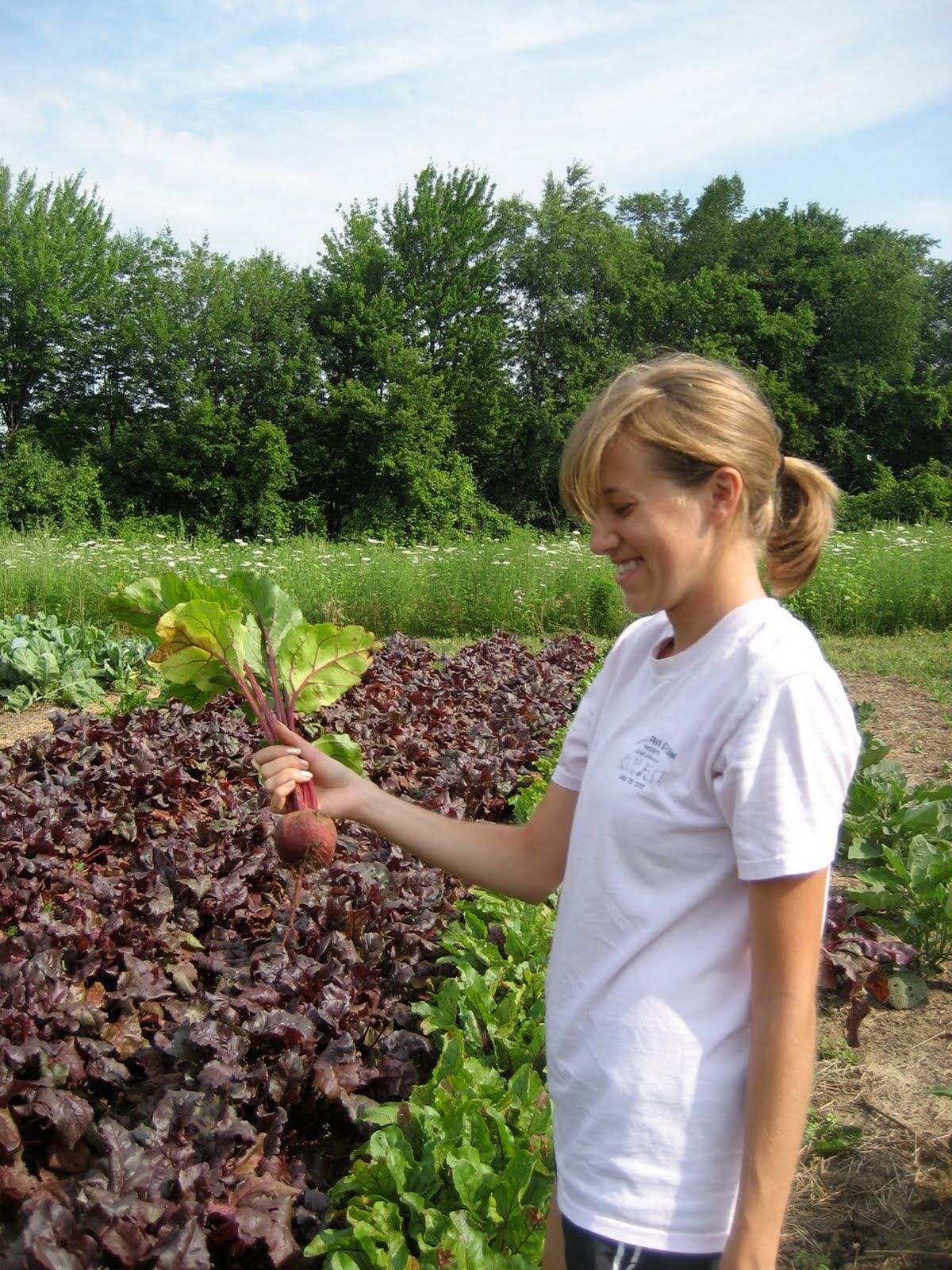
Upon her return from Costa Rica, Elana spent this past summer interning on East New York Farms! in Brooklyn, in the middle of a food desert. The urban garden employed exceptional youth interns who got to learn all kinds of different skills through gardening, composting, and selling produce at the farmers’ market twice a week. Produce from the garden was sold very cheaply at the local farmers’ market. “It was really cool because I don’t think the people in East New York would have had the vegetables had it not been for us,” Elana notes of the garden’s success in the area.
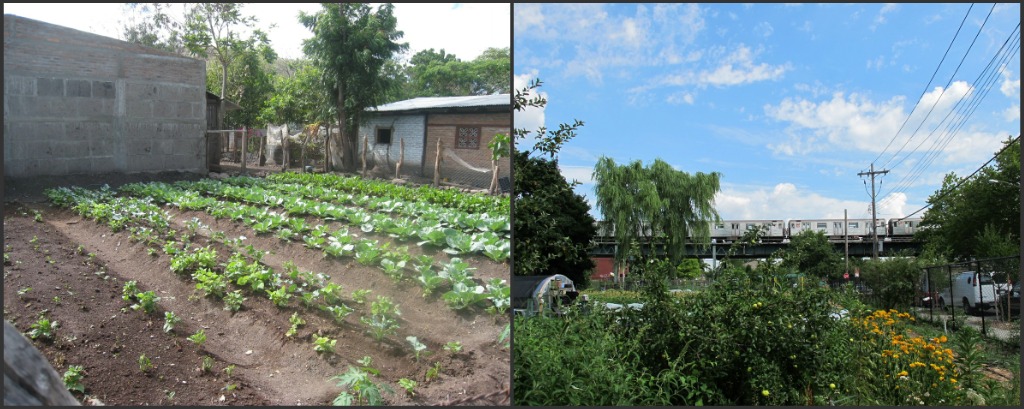
Elana’s experience begs the question– Do we need a food desert to make local and/or urban agriculture a necessity and thus to develop a movement? What do you think?

Stay Fresh,
Lindsay Partridge

Posted in Food Transparency (the issues) | Tagged , , , , , , , , , | 2 Comments

Have You Tried: A Pomegranate?

Pomegranates are tasty fruits, and the edible part is actually the pulp-encompassed seeds. In the United States they are mainly grown in warmer places like California, so they are a treat that I don’t often buy for myself. Luckily though this one was a gift. I love gifts of food!

Pomegranates can be messy to cut and de-seed, so it’s not surprising that there are a number of methods for removing the seeds. I used to always use the underwater method, but then I read over and over again about a newer method of cutting the pomegranate in half and whacking at it with a wooden spoon. That sure seemed easier, but when I tried, only a handful of seeds fell out, no matter how hard I hit it. Sooo I went back to the underwater method.

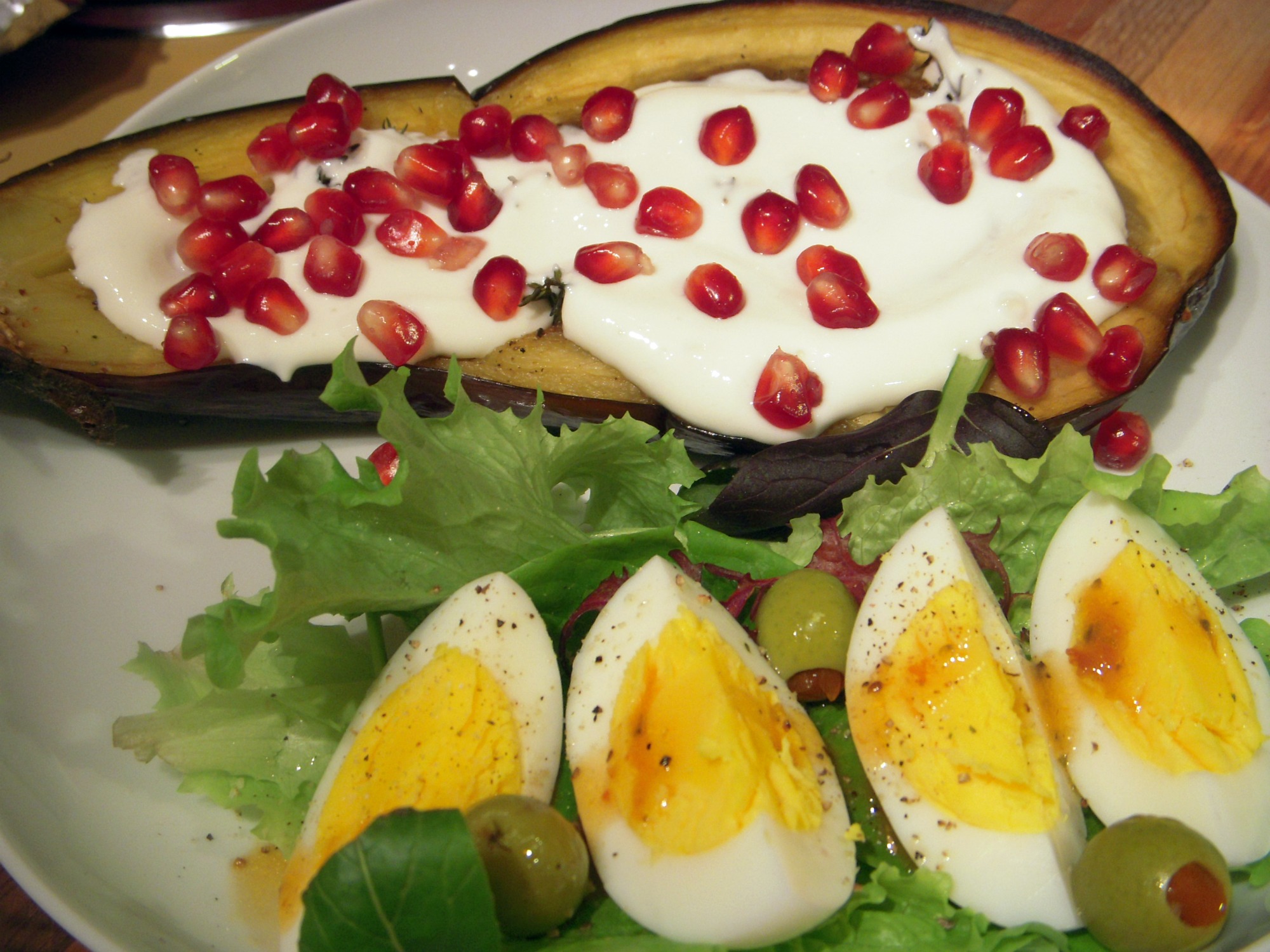
I received Yotam Ottolenghi’s cookbook Plenty (I got the UK version, the US version is available for pre-order if you’d like to see more familiar units of measurement!) as a Christmas gift, and I can’t wait to cook every single item in it. Bear with me please! Since I obviously wanted to make good use of my pomegranate, I decided to make Ottolenghi’s Aubergine with Buttermilk Sauce. I started by roasting halved eggplants (or “aubergines” if you’re European) that smothered in olive oil and kissed with salt, pepper, and thyme.

Once the eggplant is roasted to the point of deep golden perfection, it gets dressed with a buttermilk sauce and sprinkled with lots of pomegranate seeds. The combination of flavors were really complementary and highlighted the lovely pomegranate. If you’d like to try this for yourself, the recipe can be found on The Guardian’s website here, or you can watch a video of Ottolenghi preparing the dish here.

What’s your favorite way to use a pomegranate?

Locally yours,

Lindsay-Jean

Posted in In the Kitchen (recipes & more) | Tagged , , , , , | 2 Comments

Have You Tried: Rutabagas?

Have you? Or have you just walked by the waxy little orbs of root vegetable thinking, “those purple turnips over there look awfully pretty” or “I guess I’ll just get more carrots, you can’t go wrong with carrots” or “Root vegetables? Where are the potatoes!?”

I can’t blame you, especially regarding stockpiling potatoes. And you really can’t go wrong with carrots. But! It’s time for the humble rutabaga to shine!

Rutabagas are tasty and they’re available in the middle of winter. According to Wikipedia, rutabagas originated as a cross between a cabbage and a turnip. Crazy! They’re sometimes called Swedes or Swedish turnips in Europe.  And you can cook them just about any way you would cook potatoes, but they add a little something different to the table.

Lovely rutabagas from Stoney Plains Organic Farm

I made 3 dishes using rutabagas. First, I made a rutabaga puree, which is essentially like making mashed potatoes except using rutabagas. Peel ’em, chop ’em, boil ’em, mash ’em with some butter and milk or broth.

Super simple, very tasty. A twist on the old mashed potatoes dish. This is delicious on it’s own, but would be very lovely over a bed of cooked kale or other winter green.

Of course, you could also roast your rutabaga alongside all your other favorite vegetables. Chop up all those potatoes you’ve been stockpiling, along with some carrots, parsnips, sunchokes, and so on. Toss them in  a little olive oil, salt and pepper (and maybe some thyme!) and roast them in a 400 degree oven for, say, 45 minutes or until soft.

Hearty!

But the rutabaga dish nearest and dearest to my heart is the pasty. I grew up in Michigan’s Upper Peninsula, where pasties are a big deal.

The pasty deserves to be a big deal.

Anyway, I made them at home for the first time!

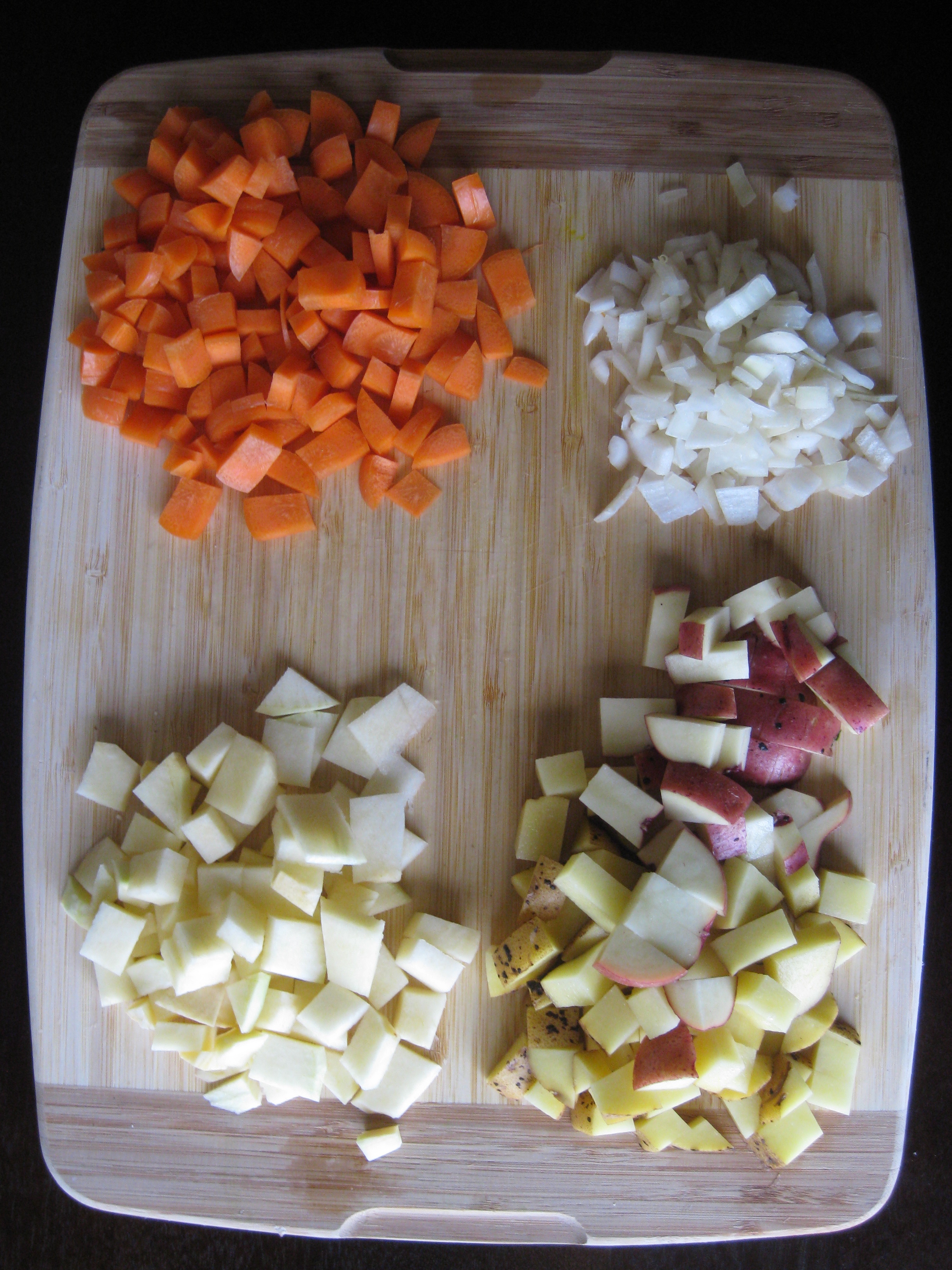
Just dice carrots, potatoes, onions and rutabagas and mix together. Traditional pasties have beef or sometimes venison, which you would also dice finely and mix with the vegetables, but I’m a vegetarian, so just the veggies for me.

Make some simple dough – I used a recipe from here. Roll out your dough, fill with vegetables, and crimp edges closed. Like so:

Transfer pasties to a greased cookie sheet and bake at 350 degrees for 65 minutes. Serve with ketchup. Yes, ketchup.

So, the next time you’re shopping at the farmers market, pick up a rutabaga or two. You can make a lot of tasty things with this unassuming vegetable.

Seriously, try making pasties, adding your favorite ingredients. It’s fun.

Posted in In the Kitchen (recipes & more) | Tagged , , , , , , , | 8 Comments

Slow-Food Fast-Food

Since grassroots organization Slow Food was founded 21 years ago, “slow food” has been coined as a term that describes good food that is sourced with consideration and carefully prepared with respect for the ingredients and the final product. As food production has become increasingly industrialized and fast food has become the norm, more and more people are beginning to worry about the effects that may have on the health of the environment, their communities, and themselves.

According to the Slow Food Website, the organization was founded to “counter the rise of fast food and fast life, the disappearance of local food traditions and people’s dwindling interest in the food they eat, where it comes from, how it tastes and how our food choices affect the rest of the world.” Thanks to the slow food mentality, restaurants that source locally, use fresh sustainably grown ingredients and prepare delicious food from scratch have been popping up all over the place.

Up to this point, however, the slow food movement has been characterized primarily by high-end restaurants that most people can not afford to frequent on a regular basis, or even at all. People continue to eat many of their meals at fast food restaurants, where they feel at ease in a casual setting, and can eat quickly and at a low-cost. But, what if the two did not have to be mutually exclusive? What if we could order our food at a counter, pay a reasonable price, and still be confident in the way it was sourced and prepared?

Fortunately, we are at the height of what I believe is a growing “slow-food fast-food” movement, in which this vision is becoming a reality. Fast food restaurants that follow the slow food model are beginning to break down the elitism typically associated with the slow food movement. In my opinion, it is an important step in making healthy food that supports local producers accessible to everyone.

In December, Ann Arbor chef Eve Aronoff opened Frita Batidos, a casual dining establishment, where customers order burger-esque “fritas” and other creative Cuban-inspired delicacies at a counter and sit at communal picnic tables while they wait. Everything at Frita Batidos is prepared in-house from scratch and sourced from local farmers whenever possible. Dishes average at about $7 or $8, my personal favorite being the coconut ginger rice with black beans, muenster cheese, and cilantro lime salsa for a reasonable $6.

Bark Hot Dogs in Brooklyn sources from primarily local producers and supports complete food transparency by providing a list of the sources of every ingredient to customers. Burgers range from $6 to $9 and hot dogs will only cost you about $5.

Local is a family owned fast-food restaurant in Northampton, MA that aims to provide fresh, delicious, and well-priced food, while supporting the community through the use of local produce, products, and services. Local’s burgers cost between $5 and $7, and Northampton resident Leanna First-Arai proclaims that they have the best veggie burgers in the world.

Back in Ann Arbor, Grange Kitchen & Bar just announced an exciting new event all month long in February. Join Grange as they take on fast food classics, slow food style.  Weekly specials all month long feature housemade, sustainably raised, and locally grown products.  You’re not going to want to miss these made-from-scratch, fast food favorites from Chef Brandon and his team – check out the special menu on Real Time Farms here (Under “Fast Food Slow in February)!

Look out for more slow-food fast-food joints on Real Time Farms in the future!

Stay Fresh,

Lindsay Partridge
Posted in At the Table (eateries) | Tagged , , , , , | 3 Comments

Applications Open! Food Warriors Summer Internship Program

Real Time Farms (LLC) is a social enterprise that aims to bring transparency to our food system. (Help make it happen!) Our online local food guide helps consumers learn where their food comes from, whether eating in or eating out.

Food Warriors Summer Internship Program

We are looking for a 2011 cohort of interns from Los Angeles, New York City, Seattle, Boulder, and across the state of Michigan.

Program Goals:

  • Experiential education of our regional food webs, particularly how our food is grown and sourced. By talking to growers and food artisans themselves, interns will gain a deep understanding of food production practices.
  • Train future leaders in the growing local food movement.
  • Map your local food web (farms, food artisans, farmers markets, and locally-sourcing restaurants).
  • Capture excitement and involvement of young people passionate about bringing transparency to our food system.
  • Give students a voice in the evolution of Real Time Farms.

Program Content:

  • Collect and document growing practices and images from your region’s local farms. Learn about the complexities and nuances of farming practices in your area.  This information will be used on Real Time Farms.
  • Collect farmer interviews for the site (written, audio, video) and/or blog.
  • Document relationships between farms, farmers markets, and restaurants in your region.
  • Write regularly for the RTF blog. Interns will have the freedom to write about topics that excite them related to their region’s local food system (e.g. interviews with local farmers, chefs, food system movers and shakers, food artisans, etc.)

Eligibility:

  • Live in the greater Los Angeles, New York City, Seattle, or Boulder areas, or in the state of Michigan
  • Available 15-20 hours per week – this is an unpaid internship with the possibility of receiving college credit
  • Currently enrolled college student
  • Available mid-May through mid-August (dates flexible)
  • Available weekly for a Skype group meeting with cohort and Real Time Farms Intern Director  (time and day TBD)

Application Process: Due Feb. 16, 2011

Complete and submit three essay questions below to Real Time Farms Intern Director, Lindsay Partridge, at lindsayp@realtimefarms.com.

  • Why do you want to intern for Real Time Farms?
  • Why is it important for you to know about where your food comes from?
  • Prepare a sample blog post on a related topic of your choosing (Be creative! Feel free to add photos!)

Any questions? Comments? Feel free to contact us at feedback@realtimefarms.com.

Notice of acceptance will be sent by March 1, 2010

Posted in Food Warrior Interns | Tagged , , , , , , , , | 6 Comments

Pike Place Market

Hello from Seattle!

I took a walk to Pike Place Market today.

As you may know, Pike Place Market is a huge Seattle attraction, featuring fellas flinging fish, the first Starbucks, unique shops, and stalls filled with produce and food artisans. According to their website, Pike Place Market has been around for over 100 years and was originally established to connect farmers directly to consumers. The Market has 200 year-round businesses, 190 craftspeople, and around 100 farmers who rent table space by the day.

Is Pike Place Market what you think of when you think of a farmers market?

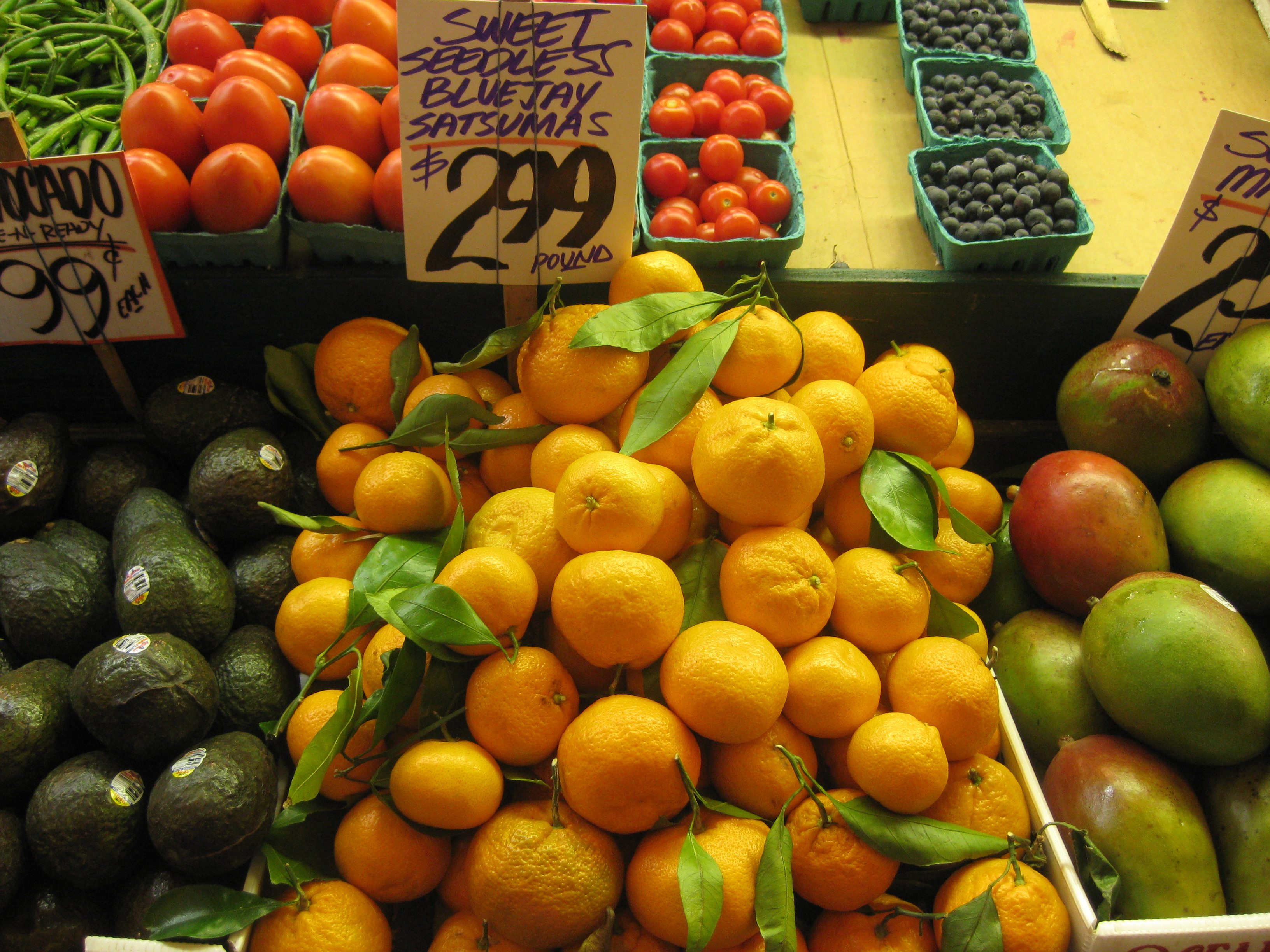
Certainly in the permanent shops, many of which sell produce, you can find all sorts of fruits and veggies that definitely are not farmed in Washington (though I sure wish we grew satsumas and avocados here!).

But I also recognized some small farms and food artisans I’d seen at other Seattle farmers markets.

These beautiful tulips are grown in greenhouses by Alm Hill Gardens, a small family farm from Everson, WA.

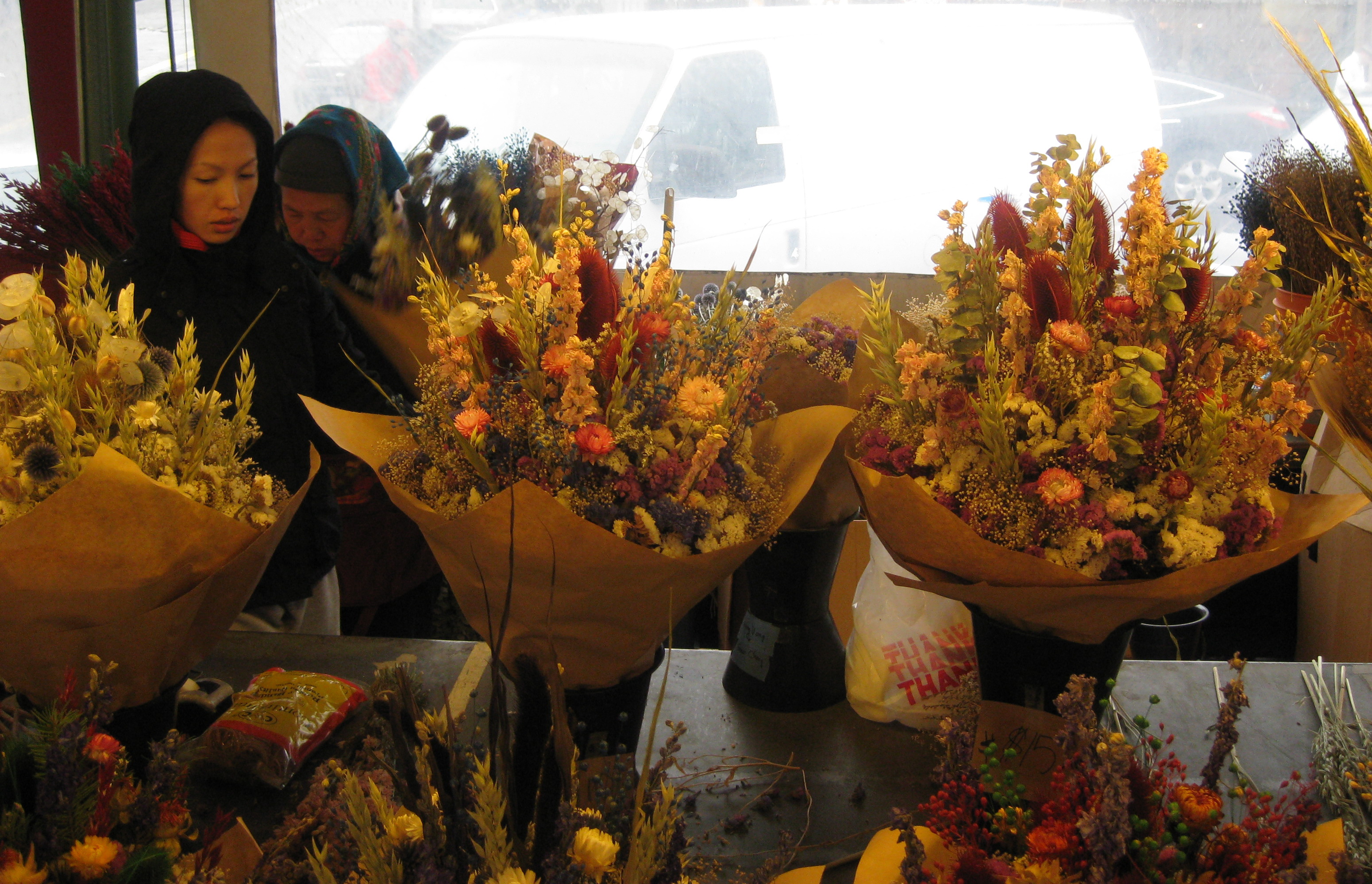
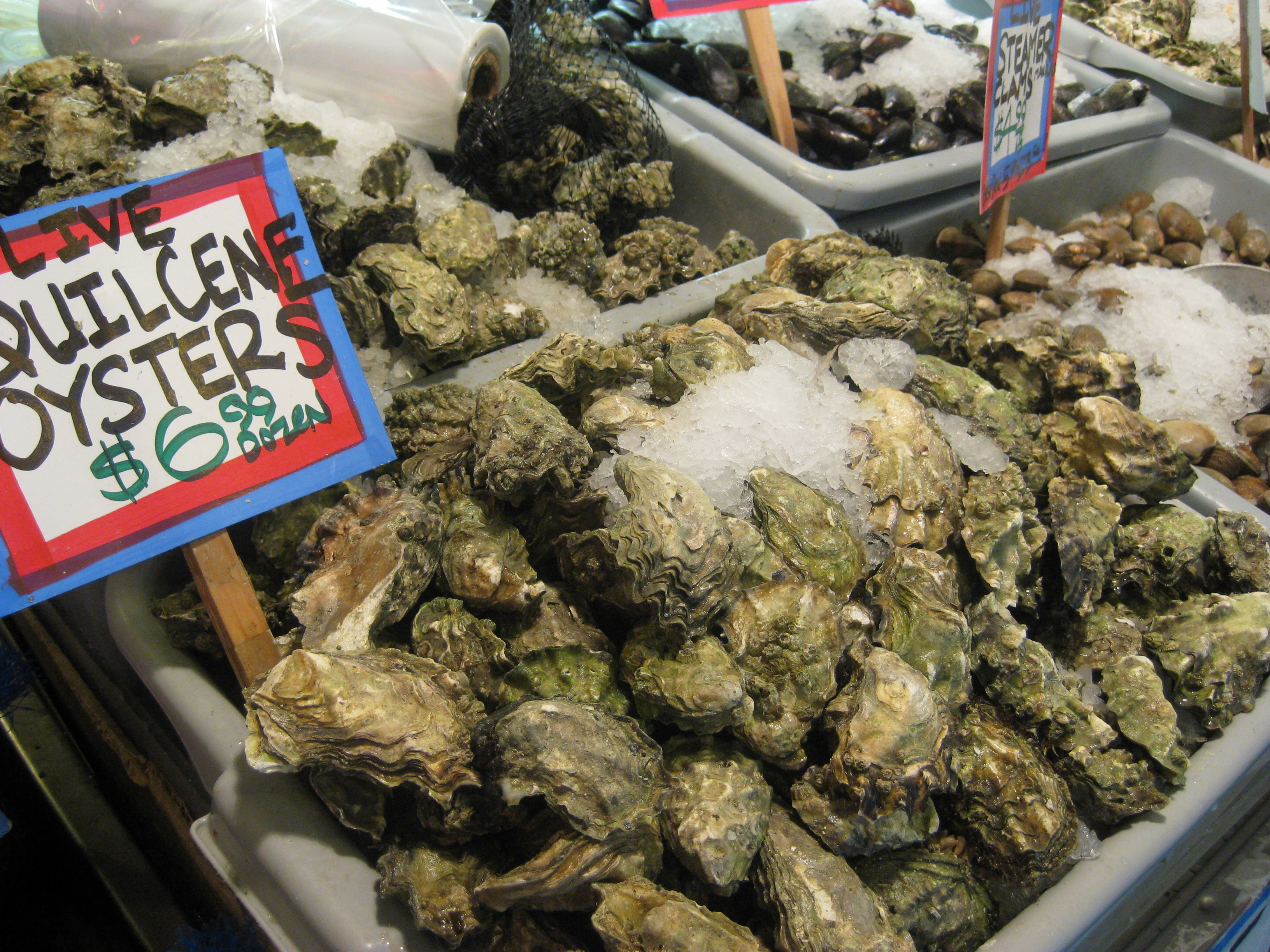
Pike Place Market is filled with tables of local Washington food, fish and flowers.

In the summer and fall, even more local farmers fill the tables at Pike Place Market, which is open every day. The market has a long tradition of supporting the connection between producer and consumer, and provides lots of information on this site about the farmers, artisans, and business owners who populate the market.

Pike Place Market is an exciting place to visit – there are usually lots of tourists (though not too many on a cold Wednesday!) and the farmers and vendors are lively and eager to engage passers-by. Everyone I met was excited to help me and answer questions and even pose for photos!

To me, Pike Place Market is its own thing: not a farmers market in the same sense as the neighborhood markets I frequent weekly, but a lively, amazing place where I can support local business people and still find farm fresh (or fresh caught!) food.

What do you think about markets like Pike Place Market? Have you ever visited Pike Place Market? Let’s hear your thoughts and experiences!

Cheers!

Lisa

Posted in At the Market (farmers market), In the Pantry (food artisans) | Tagged , , , , , , | 1 Comment

Have You Tried: a Black Radish?

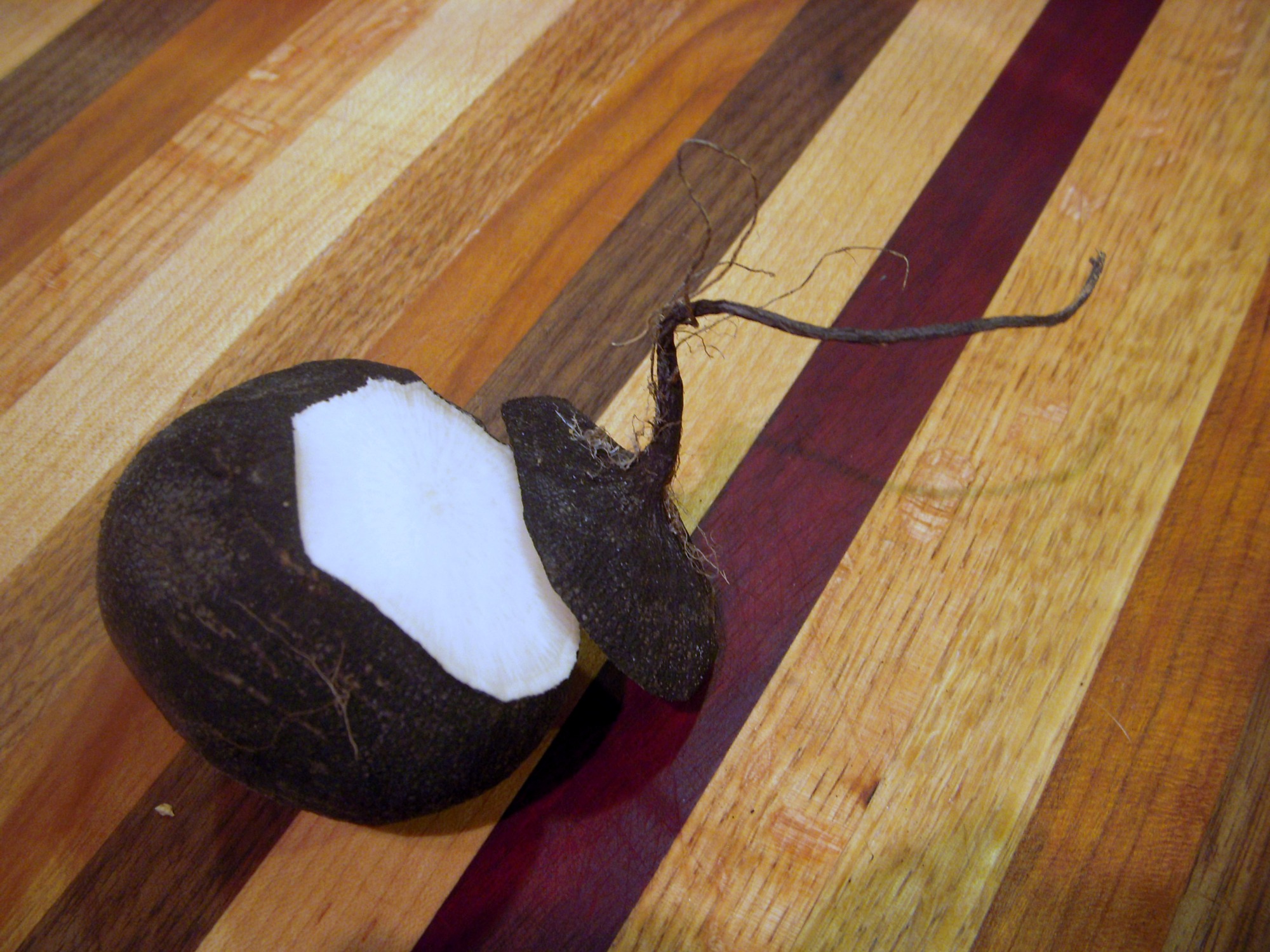
I’d never tried a black radish before, in fact, I thought it was a beet upon first glance at the farmers market.

The friendly folks at Garden Works quickly set me straight though, and mentioned that it was a good complement to egg dishes.

I thought it would be a nice addition to a frittata, but I had an unusual craving for potato salad (unusual because I’m normally not a big fan of potato salad), so that’s what I made.

I boiled diced potatoes, drained them once they were just tender, and grated up my black radish. I tossed them both together with a little bit of Japanese mayo, salt and pepper, and served it up on a bed of greens. It was simple and tasty, and the black radish provided the perfect amount of spicy bite to the salad.

As a side note, after discussing with friends that I don’t ever eat American mayos (they taste eggy and don’t appeal to me), but that I love Japanese mayos (no eggy taste and a nice tang!), I finally decided to look up the difference. Turns out that while most American mayos are made with distilled vinegar, Japanese mayo is typically made with rice vinegar (oh and a little MSG…).

Locally yours,

Lindsay-Jean

Posted in In the Kitchen (recipes & more) | Tagged , , , , , , , , | 2 Comments

Real Time Farms 2010: Year in Review

And what a year it was!

Just a few of the many highlights:

What we’re looking forward to:

  • A launch redesign happening soon – stay tuned!!
  • We are preparing to add restaurants in major metropolitan areas in the Spring!
  • We are launching our Food Warriors internship program for university students to become local food ambassadors for their region, help populate Real Time Farms with data, and engage people in their area. Interested? Applications available soon!
  • We have also partnered with 2 musicians, Lafe Dutton and Coco Kallis who make a Get Fresh! tour of 100 farmers markets every year. We’ll be sponsoring them next year and they will be collecting data for Real Time Farms at every market and sharing stories on our blog.

Thanks for all of the support and encouragement this year and we look forward to growing with you in the years to come!

The Real Time Farms Crew

Posted in Aw Snaps! (our best photos) | Tagged , , | Leave a comment

Phototiful! Snapshotabulous! Picturific!

However you describe them, thousands of lovely photographs were shared on Real Time Farms this year, so we wanted to select a handful that represent the Best Photos of 2010. They highlight favorite farmers and food artisans, bustling farmers markets, a plethora of produce and even an apple costume!

This slideshow requires JavaScript.

Thank you for contributing these amazing images, and please keep them coming! We’re hoping that next year’s slideshow is so packed with images you’ll need to pop up some popcorn to accompany it!

Best wishes,

the Real Time Farms Team

Posted in Aw Snaps! (our best photos) | Tagged , , , , , , , | 2 Comments

Savor the Season: Kale

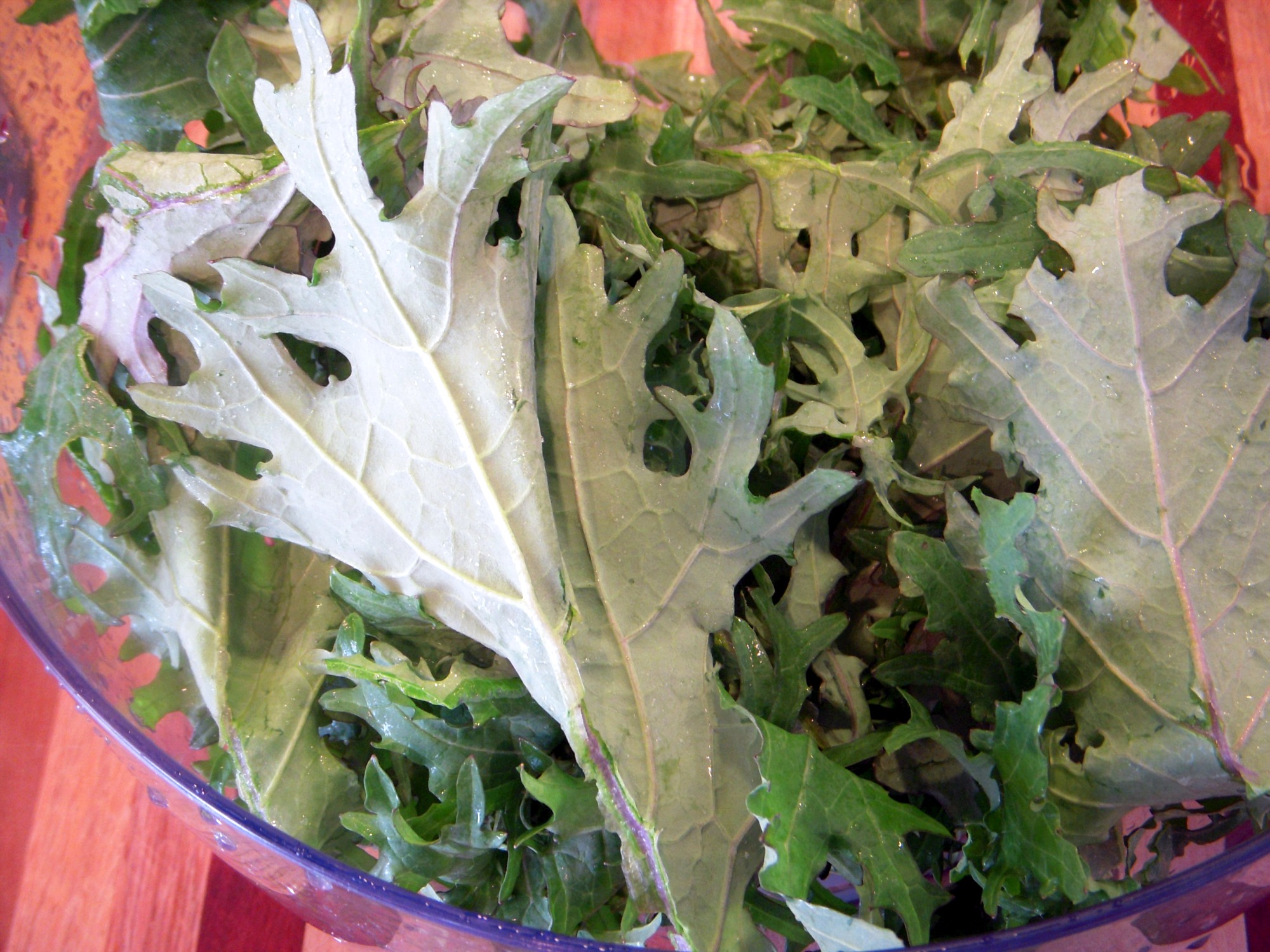
As a part of our winter CSA with Brines Farm, we received some Red Russian Kale in with our lovely assortment of greens. I’m a huge fan of kale, and enjoy it sauteed, roasted, blended into soups – you name it, I’ll eat it! I wanted to try something different this time though, and I thought the Turnip Green Tart Recipe from Heidi Swanson at 101 Cookbooks would be perfect.

Heidi’s recipe calls for a cornmeal tart shell, but I already had a basic crust waiting for me in the freezer, so I let that thaw out and was ready to go. If you go with her tart shell recipe, I wholeheartedly agree with the suggestion to make two at a time. Whether tart shells, pie crusts, or pizza dough, make more than you need, pop the extra in the freezer, and save yourself a little bit of effort next time.

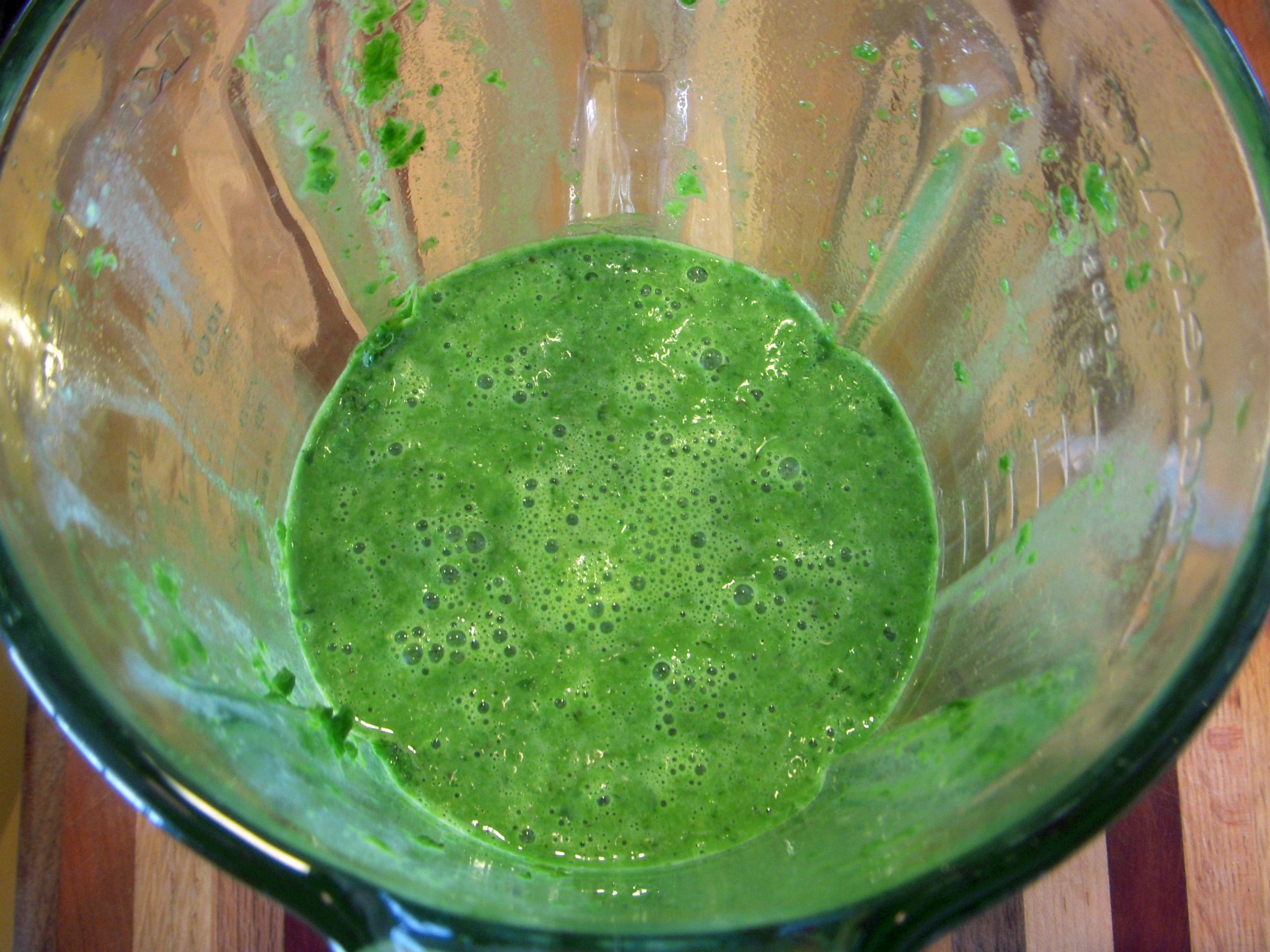
For the filling, I used my kale instead of turnip greens, and substituted sour cream for the heavy cream. Then I blended up all of the other ingredients (except for the herbs de Provence – only because I forgot to add them) into a very green frothy filling.

After about 30 minutes in the oven, my tart was ready, and I was happy that it retained its vibrant hue! The tart was silky smooth (think pumpkin pie texture), and the hint of garlic and mustard were great compliments to the kale. A little something was missing for me though. I think next time I would definitely use the cornmeal tart shell, and add some cheese. Either the gruyere on top that Heidi suggests or perhaps some chunks of feta mixed into the filling after it is blended.

Either way, a savory tart is a great way to eat your greens!

Locally yours,

Lindsay-Jean

Posted in In the Kitchen (recipes & more) | Tagged , , , , , , | 2 Comments